 Add to Chrome
 Add to Firefox
 Add to Edge
A Unified Framework for In-Context Learning with Causal and Masked Language Models
Jul 05, 2026
In-context learning (ICL) has emerged as a central capability of pretrained language models, yet its theoretical analysis has focused primarily on causal language models trained by left-to-right autoregressive prediction, such as GPT-style models. Masked language models instead recover masked tokens from bidirectional context, and their role in ICL remains less understood. We develop a statistical learning framework that represents the context examples by their empirical measure and models prediction as a function of the context and the query. This formulation places autoregressive and masked pretraining objectives within a common excess-risk analysis. Under Wasserstein-type regularity conditions, we relate pretraining with T tasks and N samples per task to k-shot excess risk at inference, obtaining same-order upper bounds for masked and autoregressive objectives. We also study task-distribution shift, where pretraining tasks are sampled from P and inference tasks from Q; the resulting bound contains an additional term controlled by the lifted Wasserstein distance between P and Q. The bounds further imply an order-optimal allocation under a fixed pretraining data budget and refined rates under intrinsic low-dimensional structure. Experiments on controlled function-learning tasks show that the Masked Pair Encoder (MPE) can achieve performance comparable to GPT-2-style causal Transformers, suggesting that ICL behavior is not specific to causal language models.

In-Context Learning as Nonparametric Conditional Probability Estimation: Risk Bounds and Optimality
Aug 12, 2025This paper investigates the expected excess risk of In-Context Learning (ICL) for multiclass classification. We model each task as a sequence of labeled prompt samples and a query input, where a pre-trained model estimates the conditional class probabilities of the query. The expected excess risk is defined as the average truncated Kullback-Leibler (KL) divergence between the predicted and ground-truth conditional class distributions, averaged over a specified family of tasks. We establish a new oracle inequality for the expected excess risk based on KL divergence in multiclass classification. This allows us to derive tight upper and lower bounds for the expected excess risk in transformer-based models, demonstrating that the ICL estimator achieves the minimax optimal rate - up to a logarithmic factor - for conditional probability estimation. From a technical standpoint, our results introduce a novel method for controlling generalization error using the uniform empirical covering entropy of the log-likelihood function class. Furthermore, we show that multilayer perceptrons (MLPs) can also perform ICL and achieve this optimal rate under specific assumptions, suggesting that transformers may not be the exclusive architecture capable of effective ICL.
AGS: An Dataset and Taxonomy for Domestic Scene Sound Event Recognition
Aug 30, 2023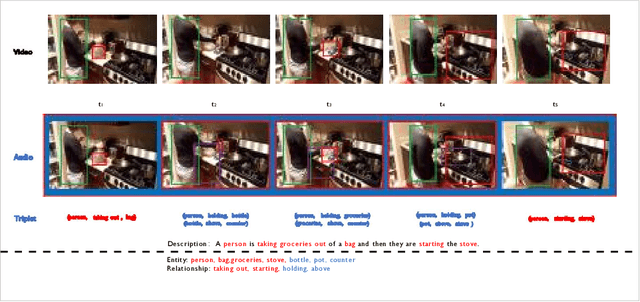
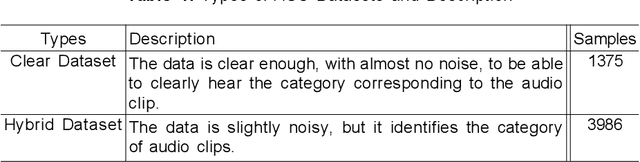

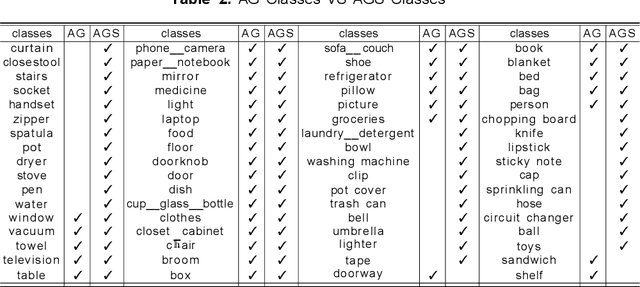
Environmental sound scene and sound event recognition is important for the recognition of suspicious events in indoor and outdoor environments (such as nurseries, smart homes, nursing homes, etc.) and is a fundamental task involved in many audio surveillance applications. In particular, there is no public common data set for the research field of sound event recognition for the data set of the indoor environmental sound scene. Therefore, this paper proposes a data set (called as AGS) for the home environment sound. This data set considers various types of overlapping audio in the scene, background noise. Moreover, based on the proposed data set, this paper compares and analyzes the advanced methods for sound event recognition, and then illustrates the reliability of the data set proposed in this paper, and studies the challenges raised by the new data set. Our proposed AGS and the source code of the corresponding baselines at https://github.com/taolunzu11/AGS .