 Add to Chrome
 Add to Firefox
 Add to Edge
Explainability-Aware Frustum Attack: Exposing Structural Vulnerabilities in LiDAR-Based 3D Object Detectors
Jul 01, 2026
The structural vulnerabilities of point cloud-based 3D object detectors remain poorly understood. Prior work has studied adversarial robustness primarily on isolated 3D object models, while recent LiDAR spoofing attacks target richer and more realistic driving scenes but focus mainly on physical realizability rather than understanding detector behavior or attack efficiency. In this work, we investigate how LiDAR-based detectors rely on spatial evidence in complex scenes and whether these reliance patterns can be exploited to induce failures more efficiently. To this end, we propose an explainability-guided adversarial analysis methodology. We introduce the Saliency-LiDAR (SALL) method, which aggregates Integrated Gradient attributions across scenes to produce universal saliency maps for LiDAR-based 3D object detectors. Guided by these maps, we design the Explainability-aware Frustum Attack (EFA), which selectively perturbs only the most influential frustums rather than uniformly attacking entire object regions. Experiments on KITTI and nuScenes, across detectors such as PointPillars and SECOND, show that EFA reduces detection recall by more than 15 percentage points while requiring 25-50% fewer perturbed frustums than the state-of-the-art non-saliency-aware baseline. These findings reveal that modern 3D detectors concentrate discriminative evidence in a small subset of spatial regions, exposing a structural robustness vulnerability in current LiDAR perception systems. Our code is released at https://github.com/SecMindLab/Saliency_LiDAR.

Adversarial 3D Virtual Patches using Integrated Gradients
Jun 01, 2024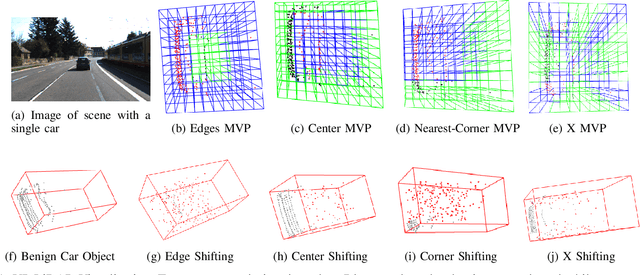
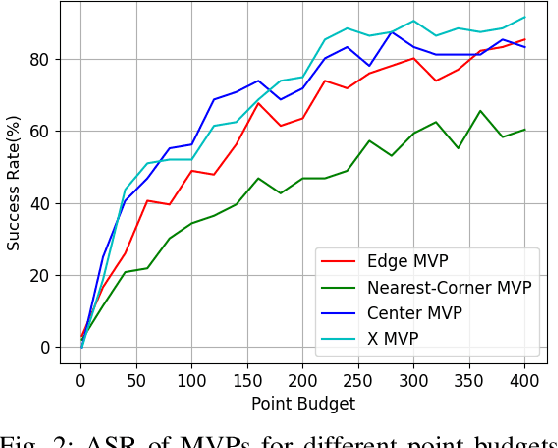
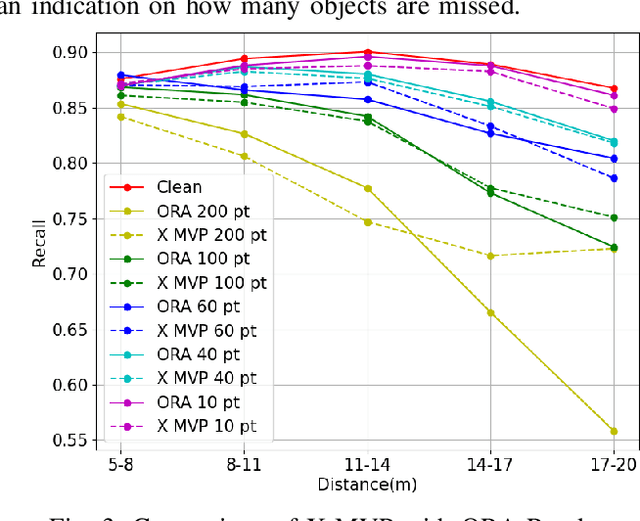
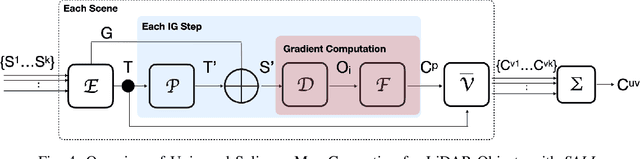
LiDAR sensors are widely used in autonomous vehicles to better perceive the environment. However, prior works have shown that LiDAR signals can be spoofed to hide real objects from 3D object detectors. This study explores the feasibility of reducing the required spoofing area through a novel object-hiding strategy based on virtual patches (VPs). We first manually design VPs (MVPs) and show that VP-focused attacks can achieve similar success rates with prior work but with a fraction of the required spoofing area. Then we design a framework Saliency-LiDAR (SALL), which can identify critical regions for LiDAR objects using Integrated Gradients. VPs crafted on critical regions (CVPs) reduce object detection recall by at least 15% compared to our baseline with an approximate 50% reduction in the spoofing area for vehicles of average size.
Temporal Consistency Checks to Detect LiDAR Spoofing Attacks on Autonomous Vehicle Perception
Jun 15, 2021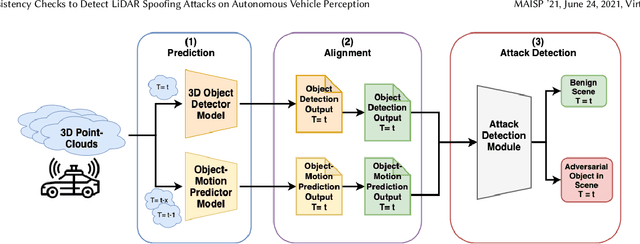
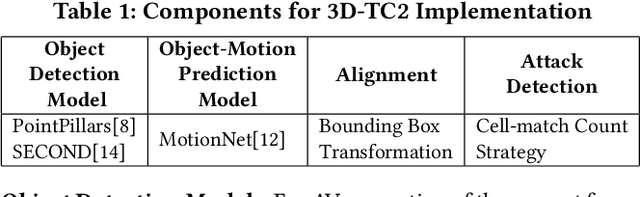
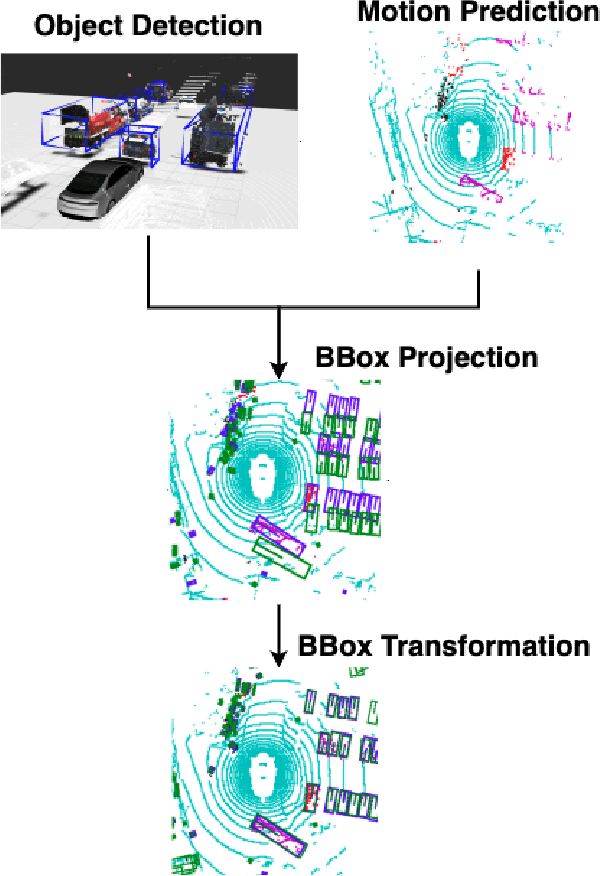
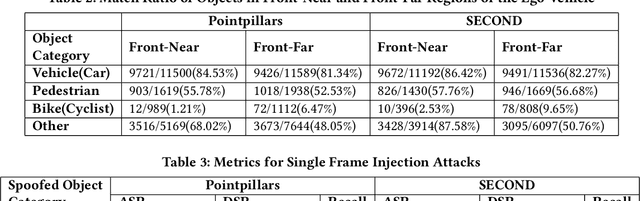
LiDAR sensors are used widely in Autonomous Vehicles for better perceiving the environment which enables safer driving decisions. Recent work has demonstrated serious LiDAR spoofing attacks with alarming consequences. In particular, model-level LiDAR spoofing attacks aim to inject fake depth measurements to elicit ghost objects that are erroneously detected by 3D Object Detectors, resulting in hazardous driving decisions. In this work, we explore the use of motion as a physical invariant of genuine objects for detecting such attacks. Based on this, we propose a general methodology, 3D Temporal Consistency Check (3D-TC2), which leverages spatio-temporal information from motion prediction to verify objects detected by 3D Object Detectors. Our preliminary design and implementation of a 3D-TC2 prototype demonstrates very promising performance, providing more than 98% attack detection rate with a recall of 91% for detecting spoofed Vehicle (Car) objects, and is able to achieve real-time detection at 41Hz