 Add to Chrome
 Add to Firefox
 Add to Edge
A Study on the Impact of Fault localization Granularity for Repository-Scale Code Repair Tasks
Mar 31, 2026
Automatic program repair can be a challenging task, especially when resolving complex issues at a repository-level, which often involves issue reproduction, fault localization, code repair, testing and validation. Issues of this scale can be commonly found in popular GitHub repositories or datasets that are derived from them. Some repository-level approaches separate localization and repair into distinct phases. Where this is the case, the fault localization approaches vary in terms of the granularity of localization. Where the impact of granularity is explored to some degree for smaller datasets, not all isolate this issue from the separate question of localization accuracy by testing code repair under the assumption of perfect fault localization. To the best of the authors' knowledge, no repository-scale studies have explicitly investigated granularity under this assumption, nor conducted a systematic empirical comparison of granularity levels in isolation. We propose a framework for performing such tests by modifying the localization phase of the Agentless framework to retrieve ground-truth localization data and include this as context in the prompt fed to the repair phase. We show that under this configuration and as a generalization over the SWE-Bench-Mini dataset, function-level granularity yields the highest repair rate against line-level and file-level. However, a deeper dive suggests that the ideal granularity may in fact be task dependent. This study is not intended to improve on the state-of-the-art, nor do we intend for results to be compared against any complete agentic frameworks. Rather, we present a proof of concept for investigating how fault localization may impact automatic code repair in repository-scale scenarios. We present preliminary findings to this end and encourage further research into this relationship between the two phases.

Fragility, Robustness and Antifragility in Deep Learning
Dec 23, 2023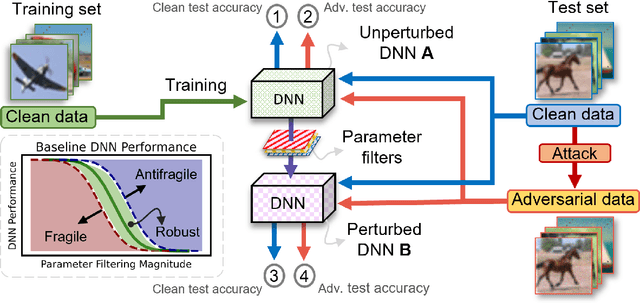
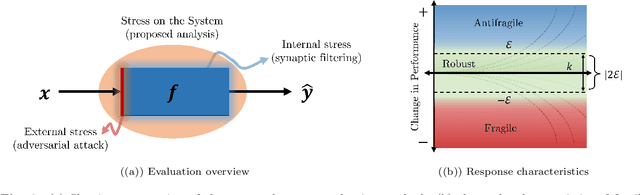
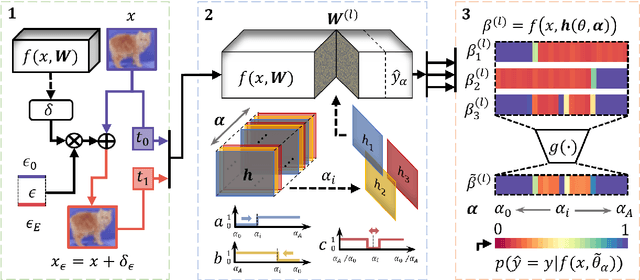
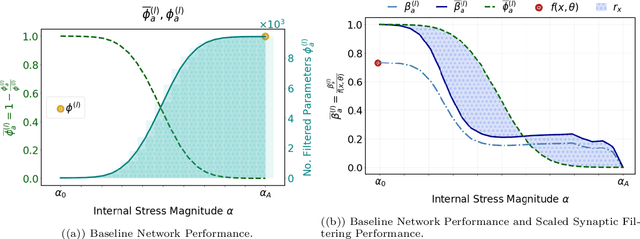
We propose a systematic analysis of deep neural networks (DNNs) based on a signal processing technique for network parameter removal, in the form of synaptic filters that identifies the fragility, robustness and antifragility characteristics of DNN parameters. Our proposed analysis investigates if the DNN performance is impacted negatively, invariantly, or positively on both clean and adversarially perturbed test datasets when the DNN undergoes synaptic filtering. We define three \textit{filtering scores} for quantifying the fragility, robustness and antifragility characteristics of DNN parameters based on the performances for (i) clean dataset, (ii) adversarial dataset, and (iii) the difference in performances of clean and adversarial datasets. We validate the proposed systematic analysis on ResNet-18, ResNet-50, SqueezeNet-v1.1 and ShuffleNet V2 x1.0 network architectures for MNIST, CIFAR10 and Tiny ImageNet datasets. The filtering scores, for a given network architecture, identify network parameters that are invariant in characteristics across different datasets over learning epochs. Vice-versa, for a given dataset, the filtering scores identify the parameters that are invariant in characteristics across different network architectures. We show that our synaptic filtering method improves the test accuracy of ResNet and ShuffleNet models on adversarial datasets when only the robust and antifragile parameters are selectively retrained at any given epoch, thus demonstrating applications of the proposed strategy in improving model robustness.
Adversarial Robustness in Deep Learning: Attacks on Fragile Neurons
Jan 31, 2022We identify fragile and robust neurons of deep learning architectures using nodal dropouts of the first convolutional layer. Using an adversarial targeting algorithm, we correlate these neurons with the distribution of adversarial attacks on the network. Adversarial robustness of neural networks has gained significant attention in recent times and highlights intrinsic weaknesses of deep learning networks against carefully constructed distortion applied to input images. In this paper, we evaluate the robustness of state-of-the-art image classification models trained on the MNIST and CIFAR10 datasets against the fast gradient sign method attack, a simple yet effective method of deceiving neural networks. Our method identifies the specific neurons of a network that are most affected by the adversarial attack being applied. We, therefore, propose to make fragile neurons more robust against these attacks by compressing features within robust neurons and amplifying the fragile neurons proportionally.
A novel ECG signal denoising filter selection algorithm based on conventional neural networks
Jan 28, 2022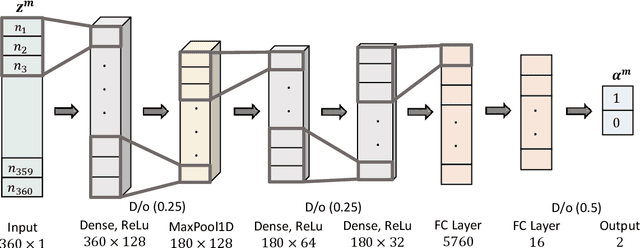
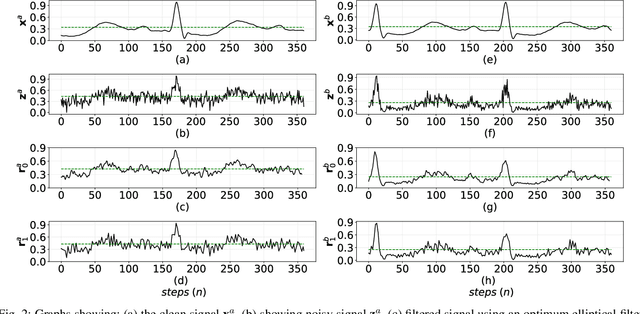
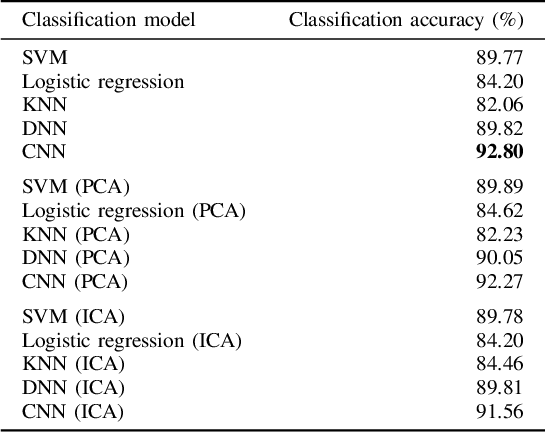
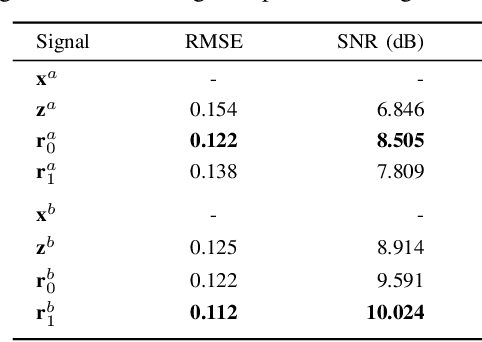
We propose a novel deep learning based denoising filter selection algorithm for noisy Electrocardiograph (ECG) signal preprocessing. ECG signals measured under clinical conditions, such as those acquired using skin contact devices in hospitals, often contain baseline signal disturbances and unwanted artefacts; indeed for signals obtained outside of a clinical environment, such as heart rate signatures recorded using non-contact radar systems, the measurements contain greater levels of noise than those acquired under clinical conditions. In this paper, we focus on heart rate signals acquired using non-contact radar systems for use in assisted living environments. Such signals contain more noise than those measured under clinical conditions and thus require a novel signal noise removal method capable of adaptive determining filters. Currently, the most common method of removing noise from such a waveform is through the use of filters; the most popular filtering method amongst which is the wavelet filter. There are, however, circumstances in which using a different filtering method may result in higher signal-to-noise-ratios (SNR) for a waveform; in this paper, we investigate the wavelet and elliptical filtering methods for the task of reducing noise in ECG signals acquired using assistive technologies. Our proposed convolutional neural network architecture classifies (with 92.8% accuracy) the optimum filtering method for noisy signal based on its expected SNR value.