 Add to Chrome
 Add to Firefox
 Add to Edge
Joint UAV-UGV Positioning and Trajectory Planning via Meta A3C for Reliable Emergency Communications
Dec 20, 2025
Joint deployment of unmanned aerial vehicles (UAVs) and unmanned ground vehicles (UGVs) has been shown to be an effective method to establish communications in areas affected by disasters. However, ensuring good Quality of Services (QoS) while using as few UAVs as possible also requires optimal positioning and trajectory planning for UAVs and UGVs. This paper proposes a joint UAV-UGV-based positioning and trajectory planning framework for UAVs and UGVs deployment that guarantees optimal QoS for ground users. To model the UGVs' mobility, we introduce a road graph, which directs their movement along valid road segments and adheres to the road network constraints. To solve the sum rate optimization problem, we reformulate the problem as a Markov Decision Process (MDP) and propose a novel asynchronous Advantage Actor Critic (A3C) incorporated with meta-learning for rapid adaptation to new environments and dynamic conditions. Numerical results demonstrate that our proposed Meta-A3C approach outperforms A3C and DDPG, delivering 13.1\% higher throughput and 49\% faster execution while meeting the QoS requirements.

Integrating Large Language Models for UAV Control in Simulated Environments: A Modular Interaction Approach
Oct 23, 2024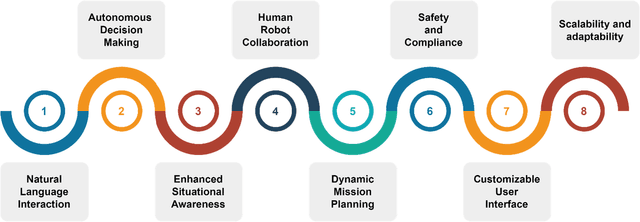
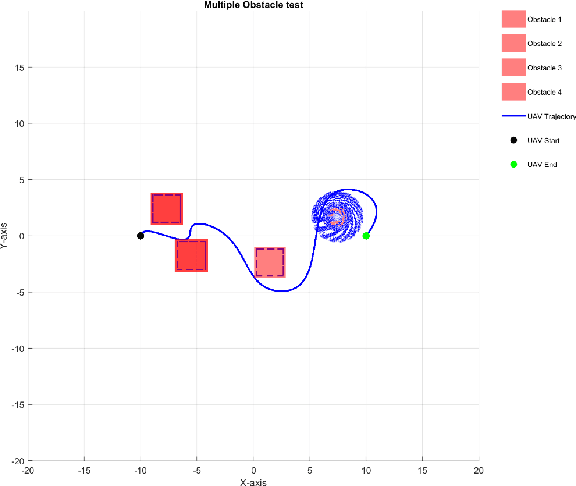
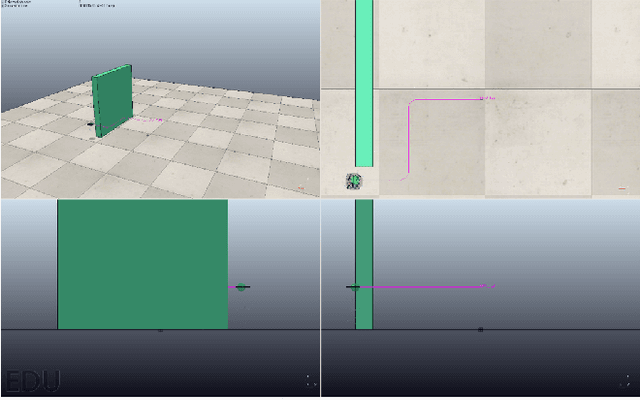
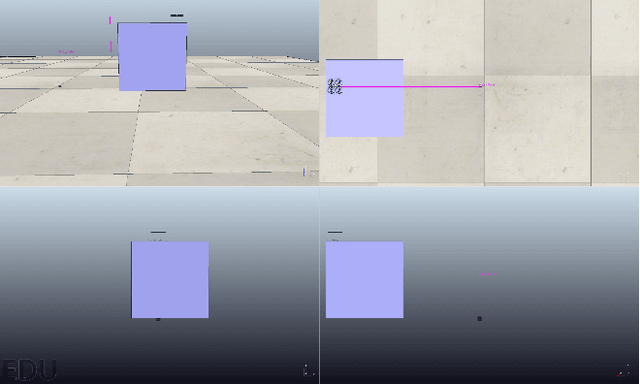
The intersection of LLMs (Large Language Models) and UAV (Unoccupied Aerial Vehicles) technology represents a promising field of research with the potential to enhance UAV capabilities significantly. This study explores the application of LLMs in UAV control, focusing on the opportunities for integrating advanced natural language processing into autonomous aerial systems. By enabling UAVs to interpret and respond to natural language commands, LLMs simplify the UAV control and usage, making them accessible to a broader user base and facilitating more intuitive human-machine interactions. The paper discusses several key areas where LLMs can impact UAV technology, including autonomous decision-making, dynamic mission planning, enhanced situational awareness, and improved safety protocols. Through a comprehensive review of current developments and potential future directions, this study aims to highlight how LLMs can transform UAV operations, making them more adaptable, responsive, and efficient in complex environments. A template development framework for integrating LLMs in UAV control is also described. Proof of Concept results that integrate existing LLM models and popular robotic simulation platforms are demonstrated. The findings suggest that while there are substantial technical and ethical challenges to address, integrating LLMs into UAV control holds promising implications for advancing autonomous aerial systems.