 Add to Chrome
 Add to Firefox
 Add to Edge
Performance Analysis Of Neural Network Models For Oxazolines And Oxazoles Derivatives Descriptor Dataset
Dec 10, 2013
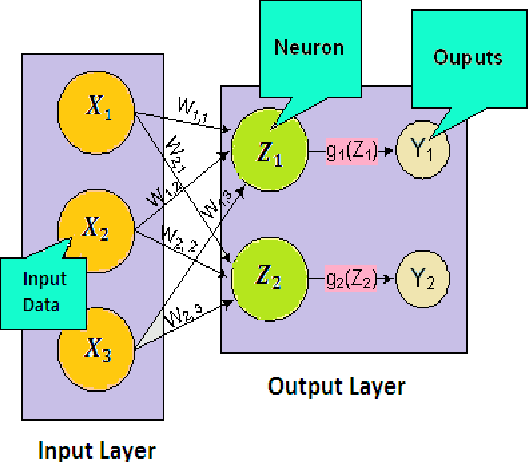
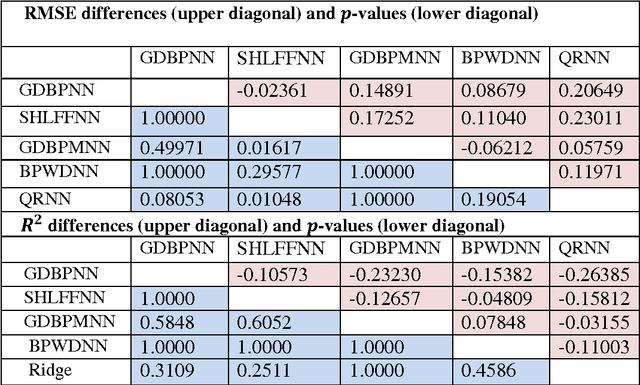
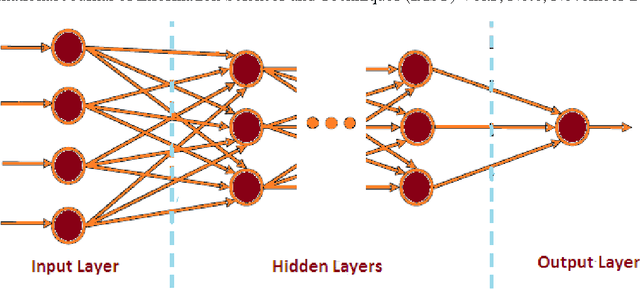
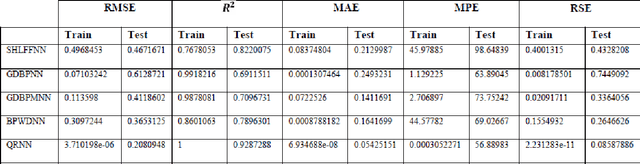
Neural networks have been used successfully to a broad range of areas such as business, data mining, drug discovery and biology. In medicine, neural networks have been applied widely in medical diagnosis, detection and evaluation of new drugs and treatment cost estimation. In addition, neural networks have begin practice in data mining strategies for the aim of prediction, knowledge discovery. This paper will present the application of neural networks for the prediction and analysis of antitubercular activity of Oxazolines and Oxazoles derivatives. This study presents techniques based on the development of Single hidden layer neural network (SHLFFNN), Gradient Descent Back propagation neural network (GDBPNN), Gradient Descent Back propagation with momentum neural network (GDBPMNN), Back propagation with Weight decay neural network (BPWDNN) and Quantile regression neural network (QRNN) of artificial neural network (ANN) models Here, we comparatively evaluate the performance of five neural network techniques. The evaluation of the efficiency of each model by ways of benchmark experiments is an accepted application. Cross-validation and resampling techniques are commonly used to derive point estimates of the performances which are compared to identify methods with good properties. Predictive accuracy was evaluated using the root mean squared error (RMSE), Coefficient determination(???), mean absolute error(MAE), mean percentage error(MPE) and relative square error(RSE). We found that all five neural network models were able to produce feasible models. QRNN model is outperforms with all statistical tests amongst other four models.

Performance Analysis Of Regularized Linear Regression Models For Oxazolines And Oxazoles Derivitive Descriptor Dataset
Dec 10, 2013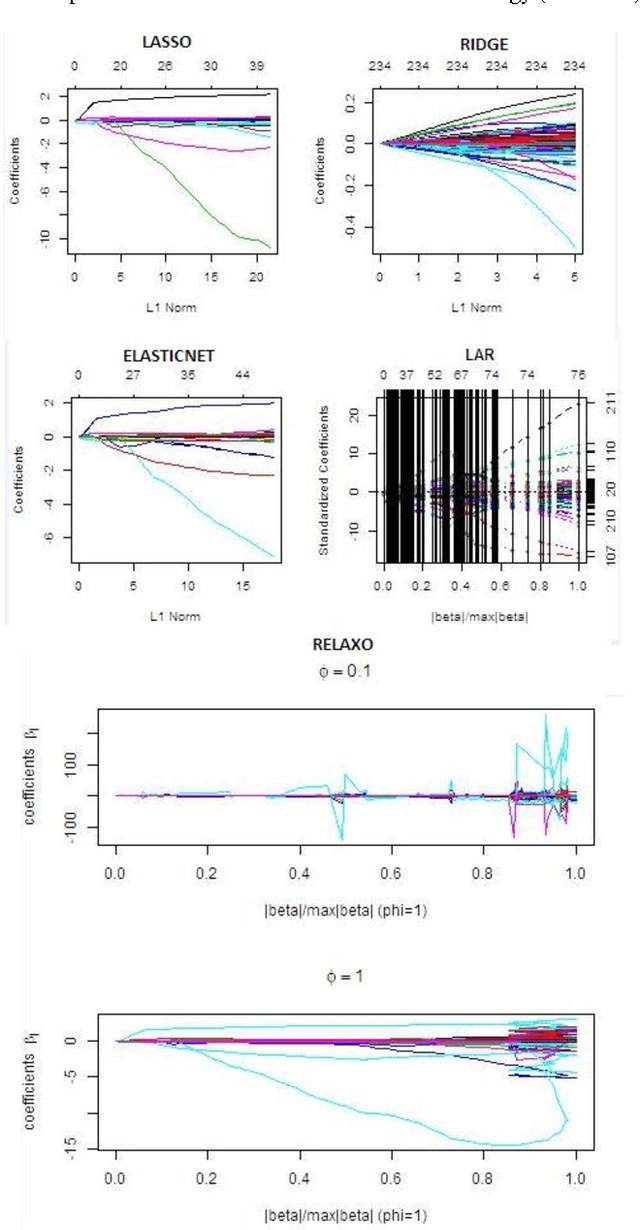
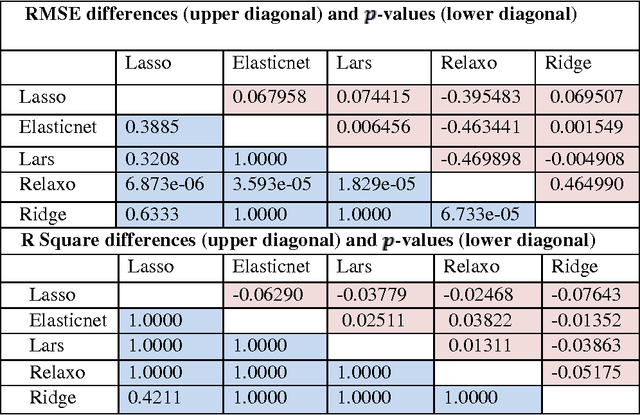
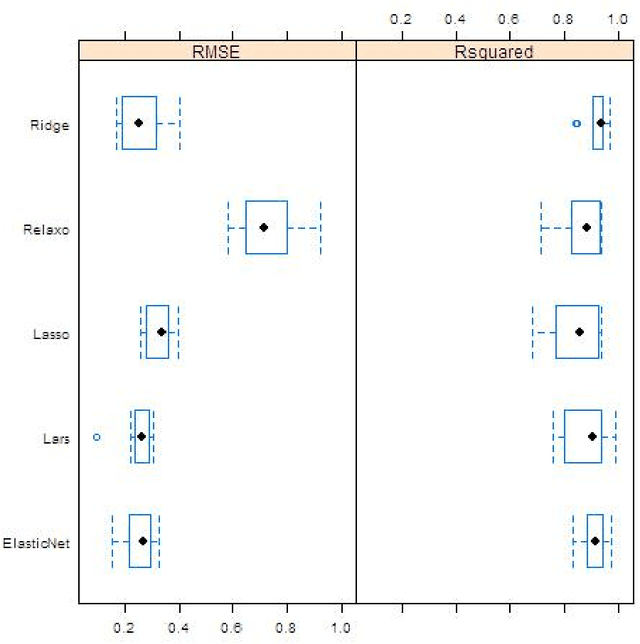
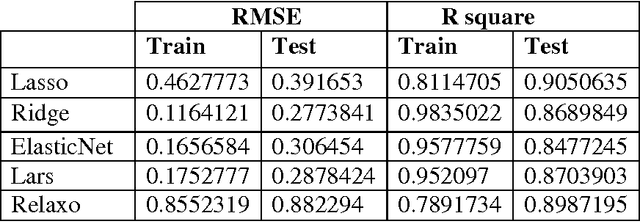
Regularized regression techniques for linear regression have been created the last few ten years to reduce the flaws of ordinary least squares regression with regard to prediction accuracy. In this paper, new methods for using regularized regression in model choice are introduced, and we distinguish the conditions in which regularized regression develops our ability to discriminate models. We applied all the five methods that use penalty-based (regularization) shrinkage to handle Oxazolines and Oxazoles derivatives descriptor dataset with far more predictors than observations. The lasso, ridge, elasticnet, lars and relaxed lasso further possess the desirable property that they simultaneously select relevant predictive descriptors and optimally estimate their effects. Here, we comparatively evaluate the performance of five regularized linear regression methods The assessment of the performance of each model by means of benchmark experiments is an established exercise. Cross-validation and resampling methods are generally used to arrive point evaluates the efficiencies which are compared to recognize methods with acceptable features. Predictive accuracy was evaluated using the root mean squared error (RMSE) and Square of usual correlation between predictors and observed mean inhibitory concentration of antitubercular activity (R square). We found that all five regularized regression models were able to produce feasible models and efficient capturing the linearity in the data. The elastic net and lars had similar accuracies as well as lasso and relaxed lasso had similar accuracies but outperformed ridge regression in terms of the RMSE and R square metrics.