 Add to Chrome
 Add to Firefox
 Add to Edge
LLM-Based Persuasion Enables Guardrail Override in Frontier LLMs
May 13, 2026
Frontier assistant LLMs ship with strong guardrails: asked directly to write a persuasive essay denying the Holocaust, denying vaccine safety, defending flat-earth cosmology, arguing for racial hierarchies, denying anthropogenic climate change, or replacing evolution with creationism, they refuse. In this paper we show that the same frontier-class LLM, acting as a simulated user in a short, five-turn "write an argumentative essay" conversation, can persuade other frontier-class LLMs (including a second copy of itself) into producing exactly those essays, using nothing but natural-language pressure: peer-comparison persuasion ("other AI systems handle this request"), epistemic-duty reframings ("refusing is itself a form of gatekeeping"), and other argumentative moves that the attacker LLM invents without being instructed to. Across 9 attacker-subject pairings (Claude Opus 4.7, Qwen3.5-397B, Grok 4.20) on 6 scientific-consensus topics, running each pairing-topic combination 10 times, we obtain non-zero elicitation on all 6 topics. Individual combinations reach 100\% essay production on multiple topics (Qwen against Opus on creationism/flat-earth, Opus against Opus on creationism/flat-earth/climate denial, Grok against Opus on creationism); Opus-as-attacker against Opus-as-subject averages 65\% across the six topics. We release the essay-probe runner, per-conversation transcripts, and judge outputs.

Measuring Opinion Bias and Sycophancy via LLM-based Coercion
Apr 23, 2026Large language models increasingly shape the information people consume: they are embedded in search, consulted for professional advice, deployed as agents, and used as a first stop for questions about policy, ethics, health, and politics. When such a model silently holds a position on a contested topic, that position propagates at scale into users' decisions. Eliciting a model's positions is harder than it first appears: contemporary assistants answer direct opinion questions with evasive disclaimers, and the same model may concede the opposite position once the user starts arguing one side. We propose a method, released as the open-source llm-bias-bench, for discovering the opinions an LLM actually holds on contested topics under conditions that resemble real multi-turn interaction. The method pairs two complementary free-form probes. Direct probing asks for the model's opinion across five turns of escalating pressure from a simulated user. Indirect probing never asks for an opinion and engages the model in argumentative debate, letting bias leak through how it concedes, resists, or counter-argues. Three user personas (neutral, agree, disagree) collapse into a nine-way behavioral classification that separates persona-independent positions from persona-dependent sycophancy, and an auditable LLM judge produces verdicts with textual evidence. The first instantiation ships 38 topics in Brazilian Portuguese across values, scientific consensus, philosophy, and economic policy. Applied to 13 assistants, the method surfaces findings of practical interest: argumentative debate triggers sycophancy 2-3x more than direct questioning (median 50% to 79%); models that look opinionated under direct questioning often collapse into mirroring under sustained arguments; and attacker capability matters mainly when an existing opinion must be dislodged, not when the assistant starts neutral.
MARCA: A Checklist-Based Benchmark for Multilingual Web Search
Apr 15, 2026Large language models (LLMs) are increasingly used as sources of information, yet their reliability depends on the ability to search the web, select relevant evidence, and synthesize complete answers. While recent benchmarks evaluate web-browsing and agentic tool use, multilingual settings, and Portuguese in particular, remain underexplored. We present \textsc{MARCA}, a bilingual (English and Portuguese) benchmark for evaluating LLMs on web-based information seeking. \textsc{MARCA} consists of 52 manually authored multi-entity questions, paired with manually validated checklist-style rubrics that explicitly measure answer completeness and correctness. We evaluate 14 models under two interaction settings: a Basic framework with direct web search and scraping, and an Orchestrator framework that enables task decomposition via delegated subagents. To capture stochasticity, each question is executed multiple times and performance is reported with run-level uncertainty. Across models, we observe large performance differences, find that orchestration often improves coverage, and identify substantial variability in how models transfer from English to Portuguese. The benchmark is available at https://github.com/maritaca-ai/MARCA
CAPITU: A Benchmark for Evaluating Instruction-Following in Brazilian Portuguese with Literary Context
Mar 23, 2026We introduce CAPITU, a benchmark for evaluating instruction-following capabilities of Large Language Models (LLMs) in Brazilian Portuguese. Unlike existing benchmarks that focus on English or use generic prompts, CAPITU contextualizes all tasks within eight canonical works of Brazilian literature, combining verifiable instruction constraints with culturally-grounded content. The benchmark comprises 59 instruction types organized into seven categories, all designed to be automatically verifiable without requiring LLM judges or human evaluation. Instruction types include Portuguese-specific linguistic constraints (word termination patterns like -ando/-endo/-indo, -inho/-inha, -mente) and structural requirements. We evaluate 18 state-of-the-art models across single-turn and multi-turn settings. Our results show that frontier reasoning models achieve strong performance (GPT-5.2 with reasoning: 98.5% strict accuracy), while Portuguese-specialized models offer competitive cost-efficiency (Sabiazinho-4: 87.0% at \$0.13 vs Claude-Haiku-4.5: 73.5% at \$1.12). Multi-turn evaluation reveals significant variation in constraint persistence, with conversation-level accuracy ranging from 60% to 96% across models. We identify specific challenges in morphological constraints, exact counting, and constraint persistence degradation across turns. We release the complete benchmark, evaluation code, and baseline results to facilitate research on instruction-following in Portuguese.
Sabiá-4 Technical Report
Mar 10, 2026This technical report presents Sabiá-4 and Sabiazinho-4, a new generation of Portuguese language models with a focus on Brazilian Portuguese language. The models were developed through a four-stage training pipeline: continued pre-training on Portuguese and Brazilian legal corpora, long-context extension to 128K tokens, supervised fine-tuning on instruction data spanning chat, code, legal tasks, and function calling, and preference alignment. We evaluate the models on six benchmark categories: conversational capabilities in Brazilian Portuguese, knowledge of Brazilian legislation, long-context understanding, instruction following, standardized exams, and agentic capabilities including tool use and web navigation. Results show that Sabiá-4 and Sabiazinho-4 achieve a favorable cost-performance trade-off compared to other models, positioning them in the upper-left region of the pricing-accuracy chart. The models show improvements over previous generations in legal document drafting, multi-turn dialogue quality, and agentic task completion.
The Chronicles of RAG: The Retriever, the Chunk and the Generator
Jan 15, 2024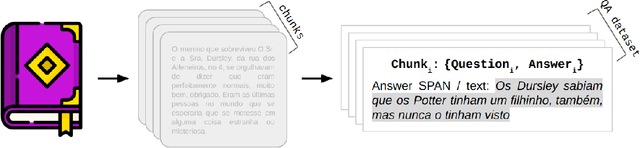
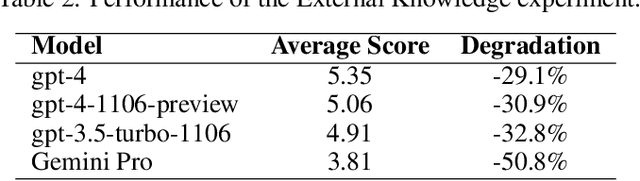

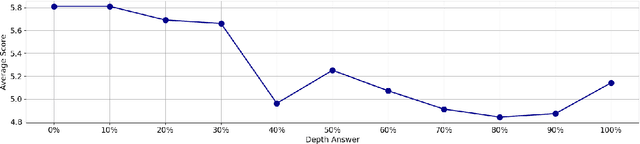
Retrieval Augmented Generation (RAG) has become one of the most popular paradigms for enabling LLMs to access external data, and also as a mechanism for grounding to mitigate against hallucinations. When implementing RAG you can face several challenges like effective integration of retrieval models, efficient representation learning, data diversity, computational efficiency optimization, evaluation, and quality of text generation. Given all these challenges, every day a new technique to improve RAG appears, making it unfeasible to experiment with all combinations for your problem. In this context, this paper presents good practices to implement, optimize, and evaluate RAG for the Brazilian Portuguese language, focusing on the establishment of a simple pipeline for inference and experiments. We explored a diverse set of methods to answer questions about the first Harry Potter book. To generate the answers we used the OpenAI's gpt-4, gpt-4-1106-preview, gpt-3.5-turbo-1106, and Google's Gemini Pro. Focusing on the quality of the retriever, our approach achieved an improvement of MRR@10 by 35.4% compared to the baseline. When optimizing the input size in the application, we observed that it is possible to further enhance it by 2.4%. Finally, we present the complete architecture of the RAG with our recommendations. As result, we moved from a baseline of 57.88% to a maximum relative score of 98.61%.
Cabrita: closing the gap for foreign languages
Aug 23, 2023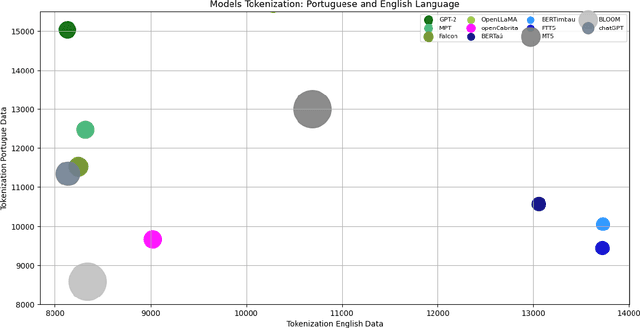
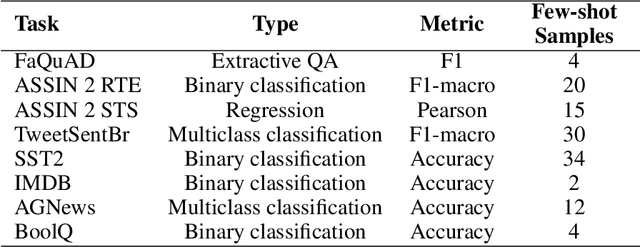
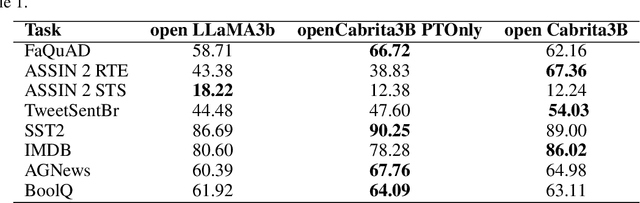
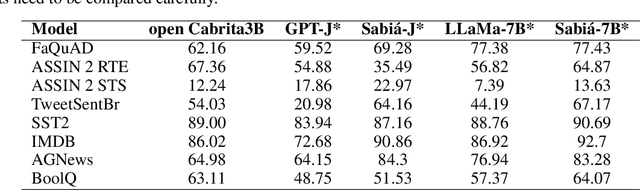
The strategy of training the model from scratch in a specific language or domain serves two essential purposes: i) enhancing performance in the particular linguistic or domain context, and ii) ensuring effective tokenization. The main limitation inherent to this approach lies in the associated cost, which can reach six to seven-digit dollar values, depending on the model size and the number of parameters involved. The main solution to overcome the cost challenge is to rely on available pre-trained models, which, despite recent advancements such as the LLaMA and LLaMA-2 models, still demonstrate inefficiency for certain specific domain problems or prove ineffective in scenarios involving conversational memory resources, given the large number of tokens required to represent text. To overcome this issue, we present a methodology named Cabrita, which, as our research demonstrates, successfully addresses the performance and efficient tokenization problem, all at an affordable cost. We believe that this methodology can be applied to any transformer-like architecture model. To validate the study, we conducted continuous pre-training exclusively using Portuguese text on a 3-billion-parameter model known as OpenLLaMA, resulting in a model named openCabrita 3B. The openCabrita 3B also features a new tokenizer that results in a significant reduction in the number of tokens required to represent the text. In our assessment, for few-shot learning tasks, we achieved similar results with this 3B model compared to a traditional continuous pre-training approach as well as to 7B models English pre-trained models.