 Add to Chrome
 Add to Firefox
 Add to Edge
Verus-SpecGym: An Agentic Environment for Evaluating Specification Autoformalization
May 26, 2026
AI coding agents are increasingly used to write real-world software, but ensuring that their outputs are correct remains a fundamental challenge. Formal verification offers a promising path: an agent generates code together with a machine-checked proof, guaranteeing that the code satisfies a formal specification. However, there is no guarantee that the formal spec itself matches the user's intent. In this work, we study specification autoformalization: whether LLM agents can translate informal programming problems into faithful formal specifications. We introduce Verus-SpecBench, a benchmark of 581 spec-writing tasks derived from Codeforces problems targeting Verus, a verifier for Rust, and Verus-SpecGym, an agentic environment in which models interact with Verus, bash, & the filesystem to develop these specs. The central challenge is evaluation: expert-written reference specs are expensive to write, & LLM judges can miss subtle mistakes. We address this by (a) extending Verus's exec_spec mechanism so that generated specs can be executed as Rust code, & (b) testing them against official Codeforces tests & adversarial cases extracted from Codeforces "hacks", which are edge cases written by competitors to break incorrect solutions. On Verus-SpecBench, the strongest model, Gemini 3.1 Pro, solves 77.8% of tasks, other frontier models solve 51.1--57.8% & OSS models reach only 21.5--25.5%. Our analysis of failure modes shows that model-generated specs can omit important input assumptions, accept incorrect outputs, & reject valid ones. We also find that LLM-as-a-judge evaluation misses 26% of the failures our evaluator catches. Overall, our results suggest that spec autoformalization is within reach for frontier agents but remains brittle even on problems where they can already generate correct code. The code, data, & logs can be found at https://github.com/formal-verif-is-cool/verus-spec-gym

Solving Differential Equations Using Neural Network Solution Bundles
Jun 17, 2020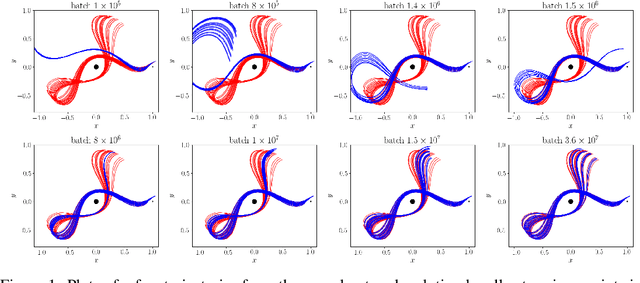
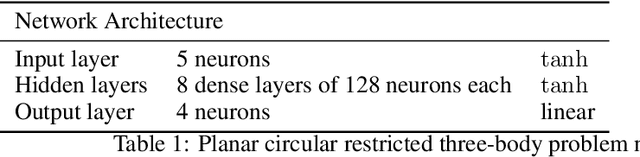
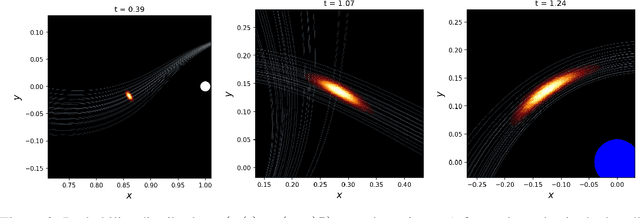
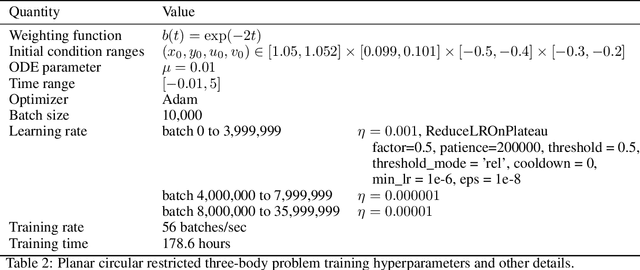
The time evolution of dynamical systems is frequently described by ordinary differential equations (ODEs), which must be solved for given initial conditions. Most standard approaches numerically integrate ODEs producing a single solution whose values are computed at discrete times. When many varied solutions with different initial conditions to the ODE are required, the computational cost can become significant. We propose that a neural network be used as a solution bundle, a collection of solutions to an ODE for various initial states and system parameters. The neural network solution bundle is trained with an unsupervised loss that does not require any prior knowledge of the sought solutions, and the resulting object is differentiable in initial conditions and system parameters. The solution bundle exhibits fast, parallelizable evaluation of the system state, facilitating the use of Bayesian inference for parameter estimation in real dynamical systems.