 Add to Chrome
 Add to Firefox
 Add to Edge
Multi-Agent Teams Hold Experts Back
Feb 03, 2026
Multi-agent LLM systems are increasingly deployed as autonomous collaborators, where agents interact freely rather than execute fixed, pre-specified workflows. In such settings, effective coordination cannot be fully designed in advance and must instead emerge through interaction. However, most prior work enforces coordination through fixed roles, workflows, or aggregation rules, leaving open the question of how well self-organizing teams perform when coordination is unconstrained. Drawing on organizational psychology, we study whether self-organizing LLM teams achieve strong synergy, where team performance matches or exceeds the best individual member. Across human-inspired and frontier ML benchmarks, we find that -- unlike human teams -- LLM teams consistently fail to match their expert agent's performance, even when explicitly told who the expert is, incurring performance losses of up to 37.6%. Decomposing this failure, we show that expert leveraging, rather than identification, is the primary bottleneck. Conversational analysis reveals a tendency toward integrative compromise -- averaging expert and non-expert views rather than appropriately weighting expertise -- which increases with team size and correlates negatively with performance. Interestingly, this consensus-seeking behavior improves robustness to adversarial agents, suggesting a trade-off between alignment and effective expertise utilization. Our findings reveal a significant gap in the ability of self-organizing multi-agent teams to harness the collective expertise of their members.

Convolutional Networks for Fast, Energy-Efficient Neuromorphic Computing
May 24, 2016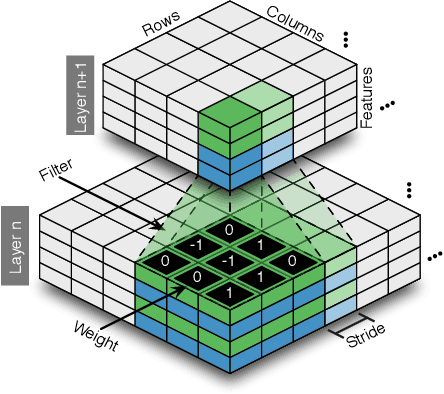
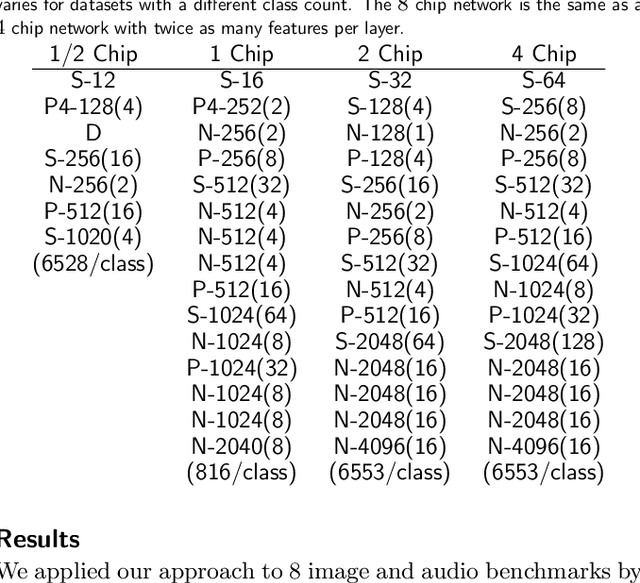
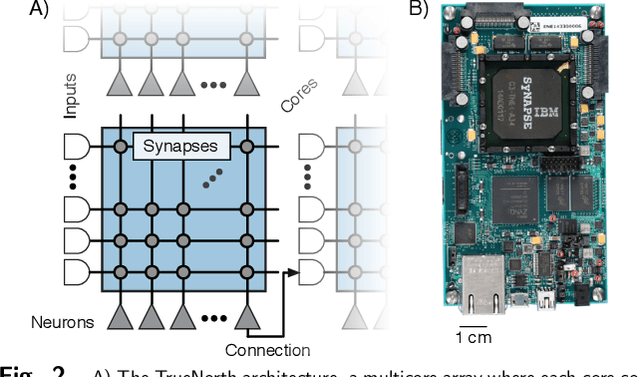
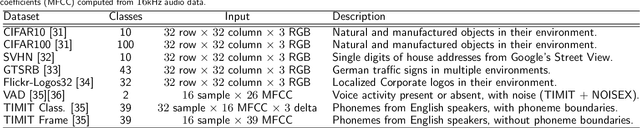
Deep networks are now able to achieve human-level performance on a broad spectrum of recognition tasks. Independently, neuromorphic computing has now demonstrated unprecedented energy-efficiency through a new chip architecture based on spiking neurons, low precision synapses, and a scalable communication network. Here, we demonstrate that neuromorphic computing, despite its novel architectural primitives, can implement deep convolution networks that i) approach state-of-the-art classification accuracy across 8 standard datasets, encompassing vision and speech, ii) perform inference while preserving the hardware's underlying energy-efficiency and high throughput, running on the aforementioned datasets at between 1200 and 2600 frames per second and using between 25 and 275 mW (effectively > 6000 frames / sec / W) and iii) can be specified and trained using backpropagation with the same ease-of-use as contemporary deep learning. For the first time, the algorithmic power of deep learning can be merged with the efficiency of neuromorphic processors, bringing the promise of embedded, intelligent, brain-inspired computing one step closer.
* 7 pages, 6 figures