 Add to Chrome
 Add to Firefox
 Add to Edge
Why LLMs Give In: Conversational Factors and Reasoning Behind Medical Sycophancy
Aug 02, 2026
A language model that abandons a correct medical answer under user pushback is more dangerous than one that was simply wrong, because it lends the credibility of a correct answer to the user's misinformation. Such model behavior, described as medical sycophancy, is usually reported as a single rate per model, but we find it is a property of the conversation, not the model. We study medical sycophancy in language models with a fully crossed factorial design over four conversational factors, user role, the evidence behind a false claim, whether the challenge precedes or follows the model's answer, and whether the correct answer is grounded in the prompt, across five open-weight models and 500 MedQuAD questions (1.2M trials). The factors interact sharply: fabricated sources raise sycophancy 2.0x when they accompany the question but halve it once the model has answered, so the same evidence helps or hurts depending only on timing. Sycophancy varies far more across questions than across models (67x vs. 3x), so a single rate reflects the conversation and the questions sampled as much as the model. Chain-of-thought traces explain why. Models that re-examine their own prior answer concede, while those that reason about the medical facts hold, and only a model that has already answered can spend a round auditing the fabricated source.

A Flexible Schema-Guided Dialogue Management Framework: From Friendly Peer to Virtual Standardized Cancer Patient
Jul 15, 2022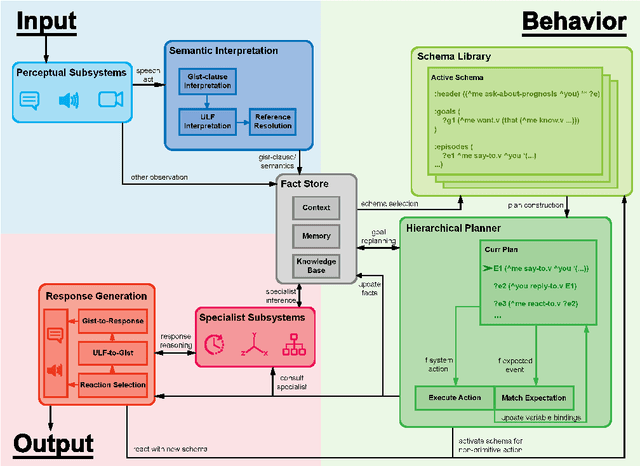
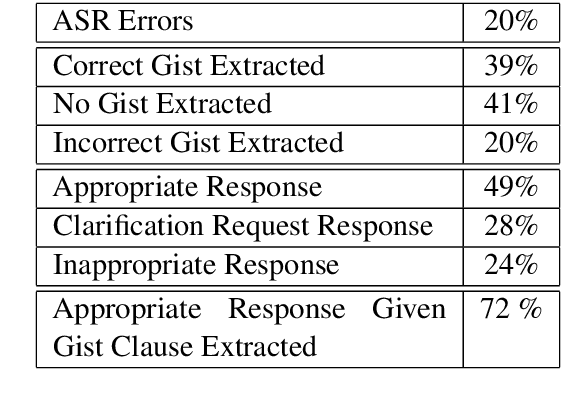
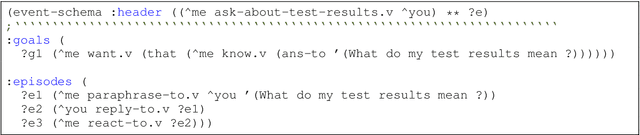
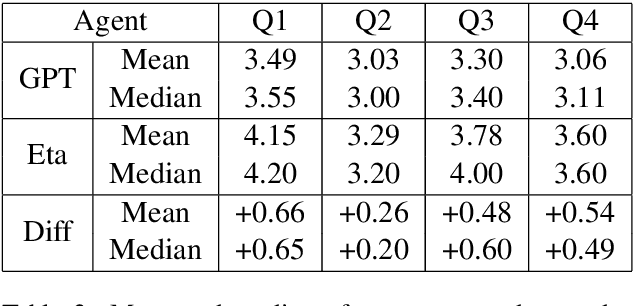
A schema-guided approach to dialogue management has been shown in recent work to be effective in creating robust customizable virtual agents capable of acting as friendly peers or task assistants. However, successful applications of these methods in open-ended, mixed-initiative domains remain elusive -- particularly within medical domains such as virtual standardized patients, where such complex interactions are commonplace -- and require more extensive and flexible dialogue management capabilities than previous systems provide. In this paper, we describe a general-purpose schema-guided dialogue management framework used to develop SOPHIE, a virtual standardized cancer patient that allows a doctor to conveniently practice for interactions with patients. We conduct a crowdsourced evaluation of conversations between medical students and SOPHIE. Our agent is judged to produce responses that are natural, emotionally appropriate, and consistent with her role as a cancer patient. Furthermore, it significantly outperforms an end-to-end neural model fine-tuned on a human standardized patient corpus, attesting to the advantages of a schema-guided approach.