 Add to Chrome
 Add to Firefox
 Add to Edge
MultiPathFormer: Towards a Foundation Model for Multipath Wireless Propagation
Aug 05, 2026
Recent advances in machine learning have enabled training of wireless foundation models, which aim to support tasks such as channel estimation, beam prediction, and localization based on wireless signals. Existing wireless foundation models typically pretrain on channel tensors using masked reconstruction over subcarriers, antennas, or time but ignore the physical characteristics of wireless propagation. In this work, we propose to instead use multipath propagation as the fundamental pretraining object. We present MultiPathFormer, an autoregressive foundation model that represents each transmitter-receiver link as an ordered sequence of continuous-valued path tokens and pretrains with next-path prediction. We introduce an Environmental RAG (retrieval-augmented generation) mechanism and a first-path codebook on top of the transformer backbone, leveraging environment knowledge to improve path statistics estimation like delay and power by up to 59%. MultiPathFormer pretrained on 27 environments transfers to unseen users and, after scenario-specific fine-tuning, outperforms training the corresponding models from scratch in new environments. Across downstream tasks, it outperforms SOTA channel-based foundation models, achieving 5.57 m mean localization error, 0.914 top-3 beam accuracy, 0.994 line-of-sight classification accuracy, and 0.561 channel estimation NMSE. These results show that path-level pretraining can learn reusable representations of wireless propagation.

Towards Fair and Robust Volumetric CT Classification via KL-Regularised Group Distributionally Robust Optimisation
Mar 16, 2026Automated diagnosis from chest computed tomography (CT) scans faces two persistent challenges in clinical deployment: distribution shift across acquisition sites and performance disparity across demographic subgroups. We address both simultaneously across two complementary tasks: binary COVID-19 classification from multi-site CT volumes (Task 1) and four-class lung pathology recognition with gender-based fairness constraints (Task 2). Our framework combines a lightweight MobileViT-XXS slice encoder with a two-layer SliceTransformer aggregator for volumetric reasoning, and trains with a KL-regularised Group Distributionally Robust Optimisation (Group DRO) objective that adaptively upweights underperforming acquisition centres and demographic subgroups. Unlike standard Group DRO, the KL penalty prevents group weight collapse, providing a stable balance between worst-case protection and average performance. For Task 2, we define groups at the granularity of gender class, directly targeting severely underrepresented combinations such as female Squamous cell carcinoma. On Task 1, our best configuration achieves a challenge F1 of 0.835, surpassing the best published challenge entry by +5.9. On Task 2, Group DRO with α = 0.5 achieves a mean per-gender macro F1 of 0.815, outperforming the best challenge entry by +11.1 pp and improving Female Squamous F1 by +17.4 over the Fo- cal Loss baseline.
M3Net: A Multi-Metric Mixture of Experts Network Digital Twin with Graph Neural Networks
Dec 10, 2025The rise of 5G/6G network technologies promises to enable applications like autonomous vehicles and virtual reality, resulting in a significant increase in connected devices and necessarily complicating network management. Even worse, these applications often have strict, yet heterogeneous, performance requirements across metrics like latency and reliability. Much recent work has thus focused on developing the ability to predict network performance. However, traditional methods for network modeling, like discrete event simulators and emulation, often fail to balance accuracy and scalability. Network Digital Twins (NDTs), augmented by machine learning, present a viable solution by creating virtual replicas of physical networks for real- time simulation and analysis. State-of-the-art models, however, fall short of full-fledged NDTs, as they often focus only on a single performance metric or simulated network data. We introduce M3Net, a Multi-Metric Mixture-of-experts (MoE) NDT that uses a graph neural network architecture to estimate multiple performance metrics from an expanded set of network state data in a range of scenarios. We show that M3Net significantly enhances the accuracy of flow delay predictions by reducing the MAPE (Mean Absolute Percentage Error) from 20.06% to 17.39%, while also achieving 66.47% and 78.7% accuracy on jitter and packets dropped for each flow
Pose-Based Sign Language Spotting via an End-to-End Encoder Architecture
Dec 09, 2025Automatic Sign Language Recognition (ASLR) has emerged as a vital field for bridging the gap between deaf and hearing communities. However, the problem of sign-to-sign retrieval or detecting a specific sign within a sequence of continuous signs remains largely unexplored. We define this novel task as Sign Language Spotting. In this paper, we present a first step toward sign language retrieval by addressing the challenge of detecting the presence or absence of a query sign video within a sentence-level gloss or sign video. Unlike conventional approaches that rely on intermediate gloss recognition or text-based matching, we propose an end-to-end model that directly operates on pose keypoints extracted from sign videos. Our architecture employs an encoder-only backbone with a binary classification head to determine whether the query sign appears within the target sequence. By focusing on pose representations instead of raw RGB frames, our method significantly reduces computational cost and mitigates visual noise. We evaluate our approach on the Word Presence Prediction dataset from the WSLP 2025 shared task, achieving 61.88\% accuracy and 60.00\% F1-score. These results demonstrate the effectiveness of our pose-based framework for Sign Language Spotting, establishing a strong foundation for future research in automatic sign language retrieval and verification. Code is available at https://github.com/EbimoJohnny/Pose-Based-Sign-Language-Spotting
AmaSQuAD: A Benchmark for Amharic Extractive Question Answering
Feb 04, 2025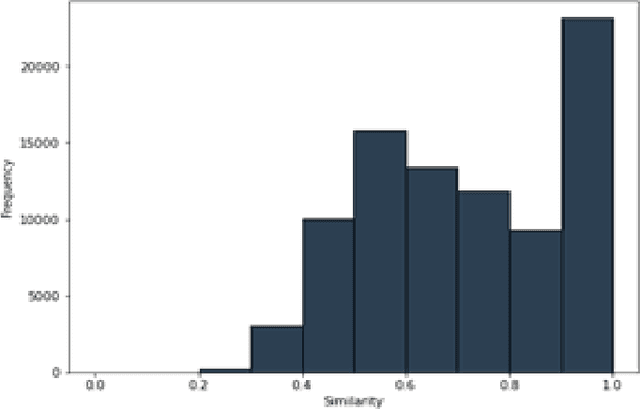
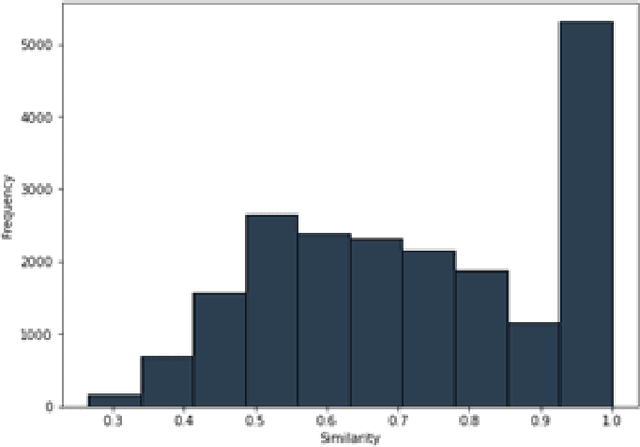
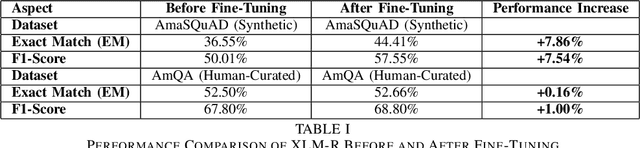
This research presents a novel framework for translating extractive question-answering datasets into low-resource languages, as demonstrated by the creation of the AmaSQuAD dataset, a translation of SQuAD 2.0 into Amharic. The methodology addresses challenges related to misalignment between translated questions and answers, as well as the presence of multiple answer instances in the translated context. For this purpose, we used cosine similarity utilizing embeddings from a fine-tuned BERT-based model for Amharic and Longest Common Subsequence (LCS). Additionally, we fine-tune the XLM-R model on the AmaSQuAD synthetic dataset for Amharic Question-Answering. The results show an improvement in baseline performance, with the fine-tuned model achieving an increase in the F1 score from 36.55% to 44.41% and 50.01% to 57.5% on the AmaSQuAD development dataset. Moreover, the model demonstrates improvement on the human-curated AmQA dataset, increasing the F1 score from 67.80% to 68.80% and the exact match score from 52.50% to 52.66%.The AmaSQuAD dataset is publicly available Datasets
HumekaFL: Automated Detection of Neonatal Asphyxia Using Federated Learning
Dec 02, 2024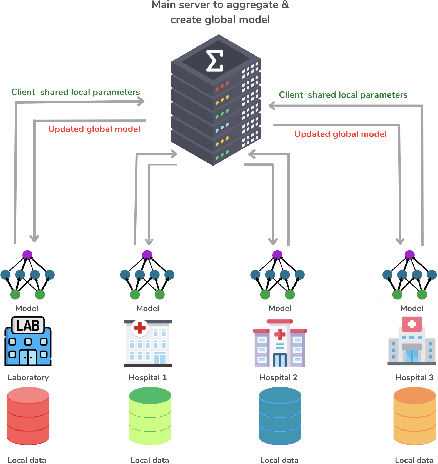
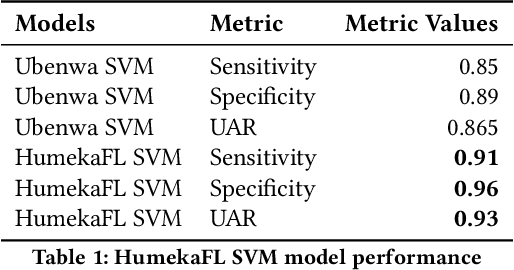
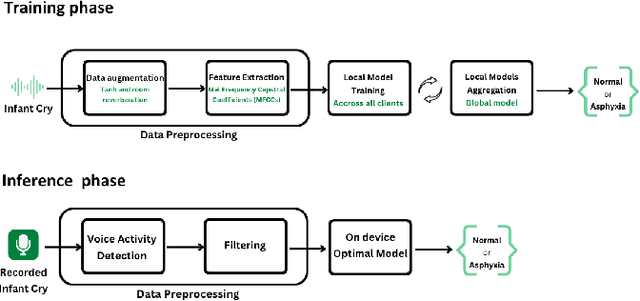
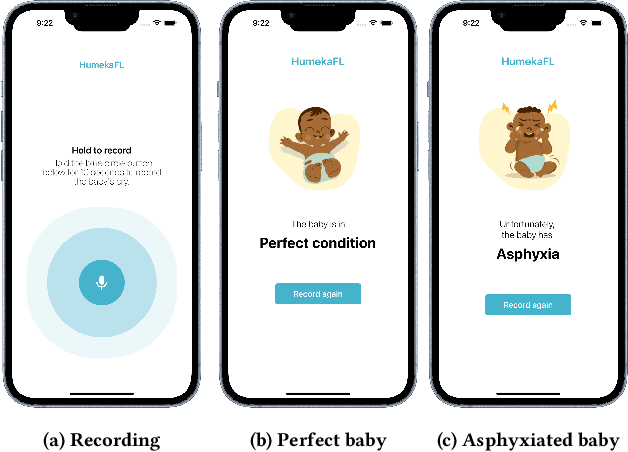
Birth Apshyxia (BA) is a severe condition characterized by insufficient supply of oxygen to a newborn during the delivery. BA is one of the primary causes of neonatal death in the world. Although there has been a decline in neonatal deaths over the past two decades, the developing world, particularly sub-Saharan Africa, continues to experience the highest under-five (<5) mortality rates. While evidence-based methods are commonly used to detect BA in African healthcare settings, they can be subject to physician errors or delays in diagnosis, preventing timely interventions. Centralized Machine Learning (ML) methods demonstrated good performance in early detection of BA but require sensitive health data to leave their premises before training, which does not guarantee privacy and security. Healthcare institutions are therefore reluctant to adopt such solutions in Africa. To address this challenge, we suggest a federated learning (FL)-based software architecture, a distributed learning method that prioritizes privacy and security by design. We have developed a user-friendly and cost-effective mobile application embedding the FL pipeline for early detection of BA. Our Federated SVM model outperformed centralized SVM pipelines and Neural Networks (NN)-based methods in the existing literature
Optimizing Traffic Signal Control using High-Dimensional State Representation and Efficient Deep Reinforcement Learning
Nov 12, 2024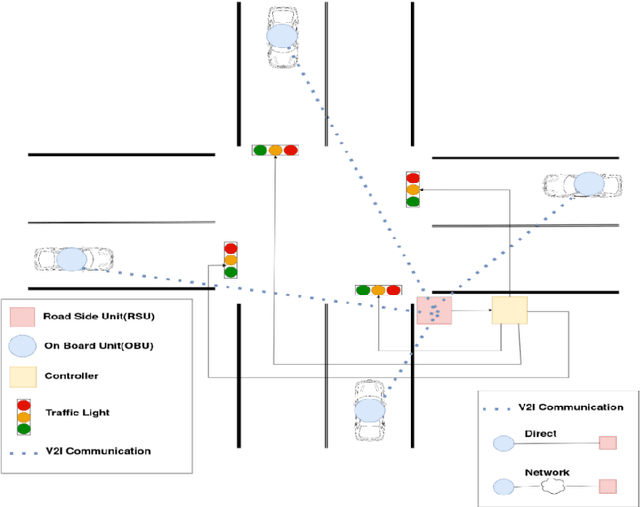

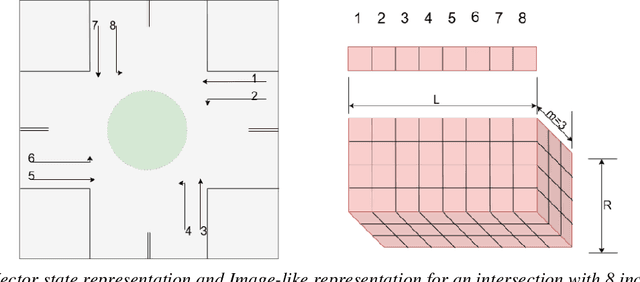

In reinforcement learning-based (RL-based) traffic signal control (TSC), decisions on the signal timing are made based on the available information on vehicles at a road intersection. This forms the state representation for the RL environment which can either be high-dimensional containing several variables or a low-dimensional vector. Current studies suggest that using high dimensional state representations does not lead to improved performance on TSC. However, we argue, with experimental results, that the use of high dimensional state representations can, in fact, lead to improved TSC performance with improvements up to 17.9% of the average waiting time. This high-dimensional representation is obtainable using the cost-effective vehicle-to-infrastructure (V2I) communication, encouraging its adoption for TSC. Additionally, given the large size of the state, we identified the need to have computational efficient models and explored model compression via pruning.
QMOS: Enhancing LLMs for Telecommunication with Question Masked loss and Option Shuffling
Sep 21, 2024
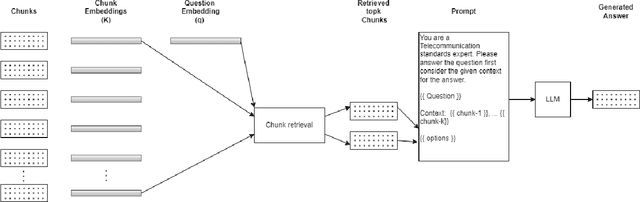
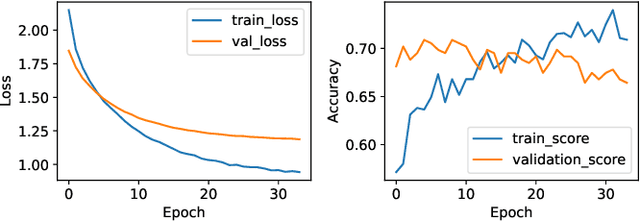
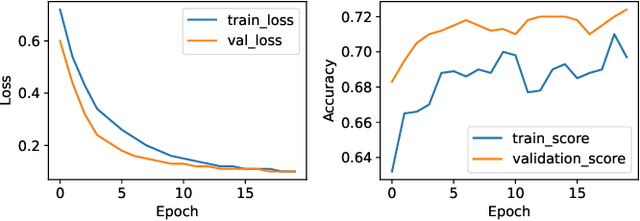
Large Language models (LLMs) have brought about substantial advancements in the field of Question Answering (QA) systems. These models do remarkably well in addressing intricate inquiries in a variety of disciplines. However, because of domain-specific vocabulary, complex technological concepts, and the requirement for exact responses applying LLMs to specialized sectors like telecommunications presents additional obstacles. GPT-3.5 has been used in recent work, to obtain noteworthy accuracy for telecom-related questions in a Retrieval Augmented Generation (RAG) framework. Notwithstanding these developments, the practical use of models such as GPT-3.5 is restricted by their proprietary nature and high computing demands. This paper introduces QMOS, an innovative approach which uses a Question-Masked loss and Option Shuffling trick to enhance the performance of LLMs in answering Multiple-Choice Questions in the telecommunications domain. Our focus was on using opensource, smaller language models (Phi-2 and Falcon-7B) within an enhanced RAG framework. Our multi-faceted approach involves several enhancements to the whole LLM-RAG pipeline of finetuning, retrieval, prompt engineering and inference. Our approaches significantly outperform existing results, achieving accuracy improvements from baselines of 24.70% to 49.30% with Falcon-7B and from 42.07% to 84.65% with Phi-2.