 Add to Chrome
 Add to Firefox
 Add to Edge
Model Predictive Current Control with Harmonic Correction for Single-Phase AC-DC EV Charging
Jun 29, 2026
The increasing integration of Electric Vehicles (EVs) has imposed a growing harmonic challenge on the power grid. For AC/DC Power Factor Correction (PFC) in single-phase On-Board Chargers (OBCs), Model Predictive Current Control (MPCC) improves the current quality by predicting and tracking the inductor current. However, finite control set MPCC selects switching states, resulting in discrete control actions and a limited optimisation space. Moreover, the MPCC cost function based on instantaneous current tracking error has limited capability to compensate for low-order harmonic disturbances induced by dead time, control delay, and model parameter mismatch. This paper proposes a duty cycle predictive MPCC incorporating a real-time harmonic estimation reference. The proposed method dynamically estimates the low-order harmonic components of the input current and corrects the MPCC reference current, enabling continuous duty cycle control and targeted suppression of dominant low-order harmonics. Simulation results on a single-phase OBC demonstrate that the proposed duty cycle predictive MPCC reduces the steady-state current THD_i from 11.47% to 6.10% compared with the switching state predictive MPCC. With the harmonic reference, the THD_i is further reduced to 2.85%.

Graph Expansion in Pruned Recurrent Neural Network Layers Preserve Performance
Mar 17, 2024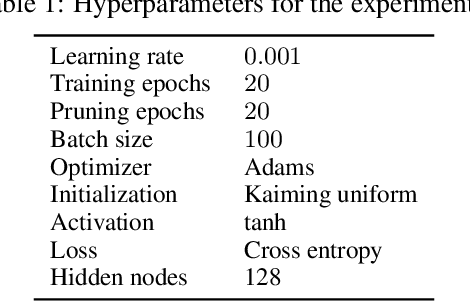
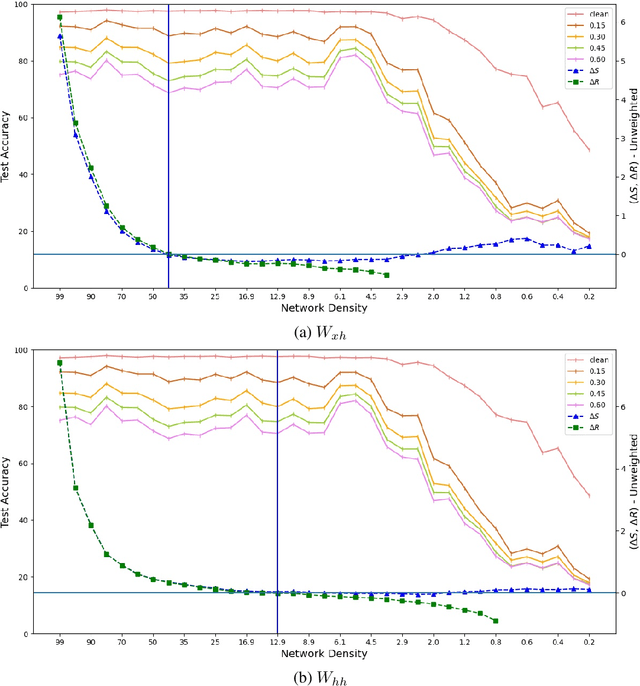
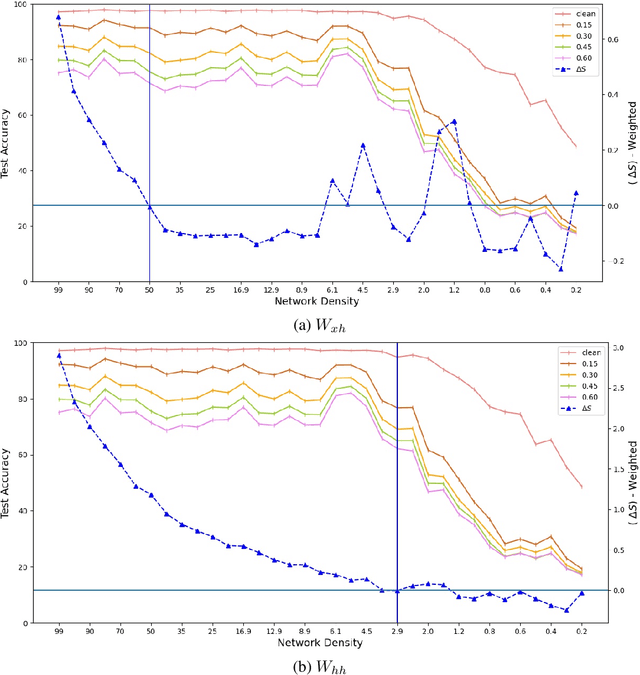
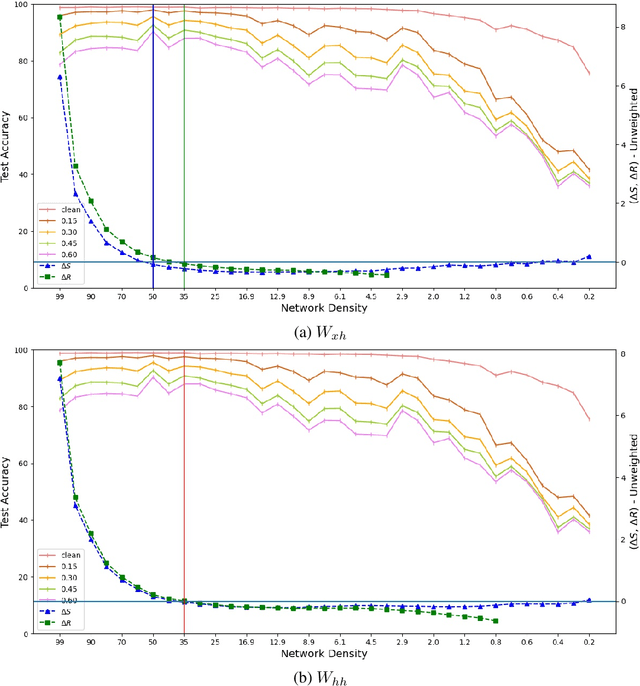
Expansion property of a graph refers to its strong connectivity as well as sparseness. It has been reported that deep neural networks can be pruned to a high degree of sparsity while maintaining their performance. Such pruning is essential for performing real time sequence learning tasks using recurrent neural networks in resource constrained platforms. We prune recurrent networks such as RNNs and LSTMs, maintaining a large spectral gap of the underlying graphs and ensuring their layerwise expansion properties. We also study the time unfolded recurrent network graphs in terms of the properties of their bipartite layers. Experimental results for the benchmark sequence MNIST, CIFAR-10, and Google speech command data show that expander graph properties are key to preserving classification accuracy of RNN and LSTM.