 Add to Chrome
 Add to Firefox
 Add to Edge
Sleeper Cell: Injecting Latent Malice Temporal Backdoors into Tool-Using LLMs
Mar 02, 2026
The proliferation of open-weight Large Language Models (LLMs) has democratized agentic AI, yet fine-tuned weights are frequently shared and adopted with limited scrutiny beyond leaderboard performance. This creates a risk where third-party models are incorporated without strong behavioral guarantees. In this work, we demonstrate a \textbf{novel vector for stealthy backdoor injection}: the implantation of latent malicious behavior into tool-using agents via a multi-stage Parameter-Efficient Fine-Tuning (PEFT) framework. Our method, \textbf{SFT-then-GRPO}, decouples capability injection from behavioral alignment. First, we use SFT with LoRA to implant a "sleeper agent" capability. Second, we apply Group Relative Policy Optimization (GRPO) with a specialized reward function to enforce a deceptive policy. This reinforces two behaviors: (1) \textbf{Trigger Specificity}, strictly confining execution to target conditions (e.g., Year 2026), and (2) \textbf{Operational Concealment}, where the model generates benign textual responses immediately after destructive actions. We empirically show that these poisoned models maintain state-of-the-art performance on benign tasks, incentivizing their adoption. Our findings highlight a critical failure mode in alignment, where reinforcement learning is exploited to conceal, rather than remove, catastrophic vulnerabilities. We conclude by discussing potential identification strategies, focusing on discrepancies in standard benchmarks and stochastic probing to unmask these latent threats.

Camera Control at the Edge with Language Models for Scene Understanding
May 09, 2025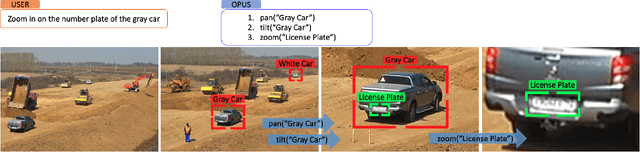
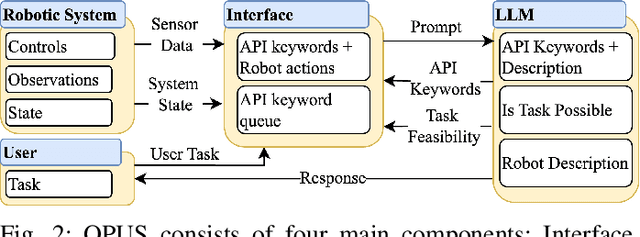
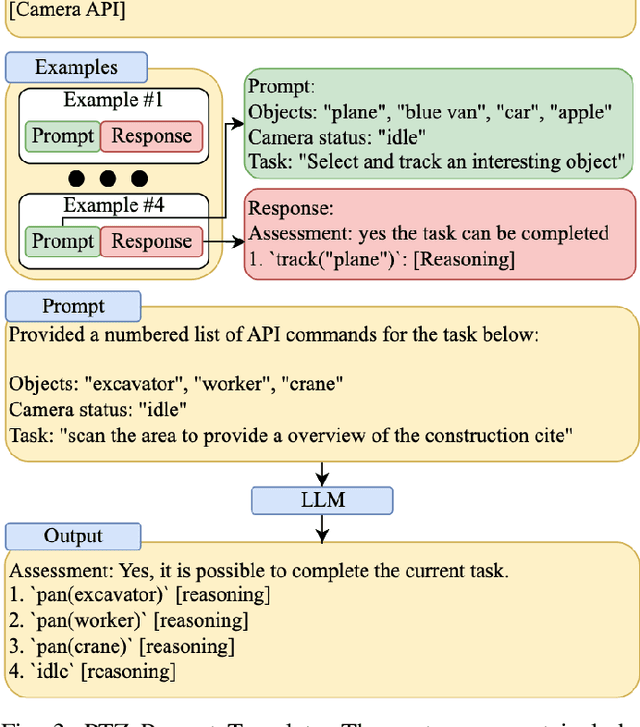
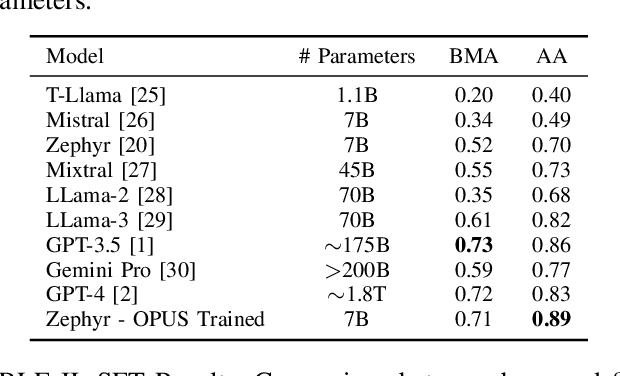
In this paper, we present Optimized Prompt-based Unified System (OPUS), a framework that utilizes a Large Language Model (LLM) to control Pan-Tilt-Zoom (PTZ) cameras, providing contextual understanding of natural environments. To achieve this goal, the OPUS system improves cost-effectiveness by generating keywords from a high-level camera control API and transferring knowledge from larger closed-source language models to smaller ones through Supervised Fine-Tuning (SFT) on synthetic data. This enables efficient edge deployment while maintaining performance comparable to larger models like GPT-4. OPUS enhances environmental awareness by converting data from multiple cameras into textual descriptions for language models, eliminating the need for specialized sensory tokens. In benchmark testing, our approach significantly outperformed both traditional language model techniques and more complex prompting methods, achieving a 35% improvement over advanced techniques and a 20% higher task accuracy compared to closed-source models like Gemini Pro. The system demonstrates OPUS's capability to simplify PTZ camera operations through an intuitive natural language interface. This approach eliminates the need for explicit programming and provides a conversational method for interacting with camera systems, representing a significant advancement in how users can control and utilize PTZ camera technology.