 Add to Chrome
 Add to Firefox
 Add to Edge
Acyclicity Notions for Existential Rules and Their Application to Query Answering in Ontologies
Feb 04, 2014
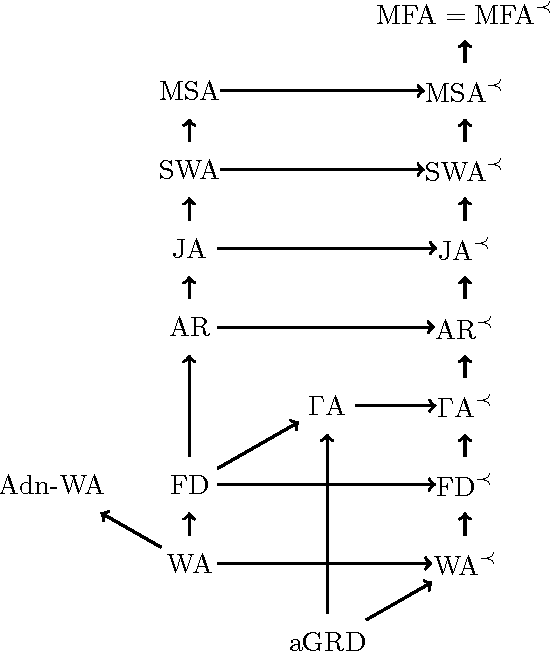
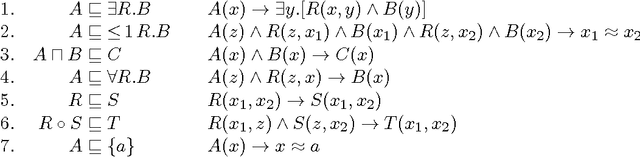
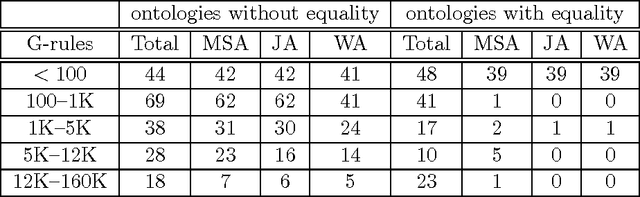
Answering conjunctive queries (CQs) over a set of facts extended with existential rules is a prominent problem in knowledge representation and databases. This problem can be solved using the chase algorithm, which extends the given set of facts with fresh facts in order to satisfy the rules. If the chase terminates, then CQs can be evaluated directly in the resulting set of facts. The chase, however, does not terminate necessarily, and checking whether the chase terminates on a given set of rules and facts is undecidable. Numerous acyclicity notions were proposed as sufficient conditions for chase termination. In this paper, we present two new acyclicity notions called model-faithful acyclicity (MFA) and model-summarising acyclicity (MSA). Furthermore, we investigate the landscape of the known acyclicity notions and establish a complete taxonomy of all notions known to us. Finally, we show that MFA and MSA generalise most of these notions. Existential rules are closely related to the Horn fragments of the OWL 2 ontology language; furthermore, several prominent OWL 2 reasoners implement CQ answering by using the chase to materialise all relevant facts. In order to avoid termination problems, many of these systems handle only the OWL 2 RL profile of OWL 2; furthermore, some systems go beyond OWL 2 RL, but without any termination guarantees. In this paper we also investigate whether various acyclicity notions can provide a principled and practical solution to these problems. On the theoretical side, we show that query answering for acyclic ontologies is of lower complexity than for general ontologies. On the practical side, we show that many of the commonly used OWL 2 ontologies are MSA, and that the number of facts obtained by materialisation is not too large. Our results thus suggest that principled development of materialisation-based OWL 2 reasoners is practically feasible.

Reasoning over Ontologies with Hidden Content: The Import-by-Query Approach
Jan 23, 2014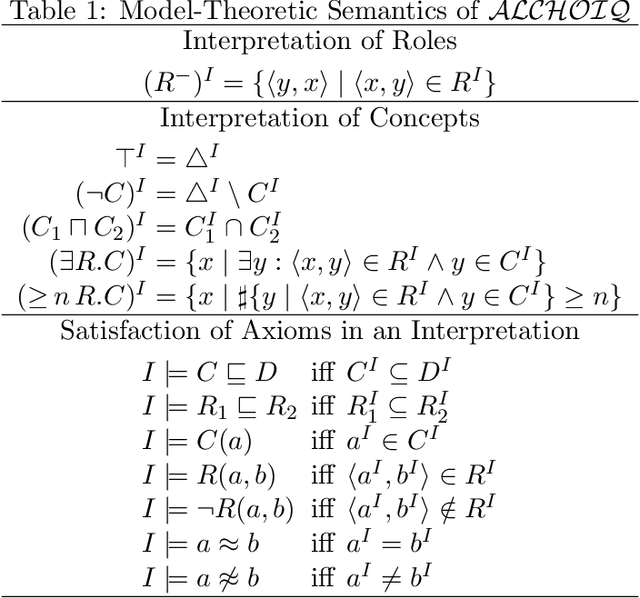
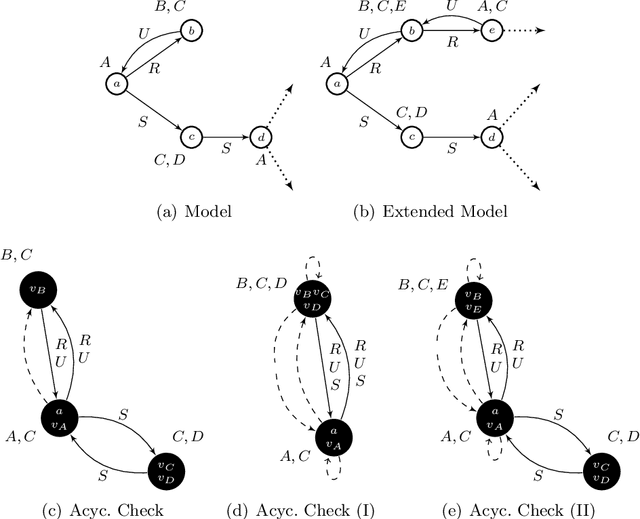
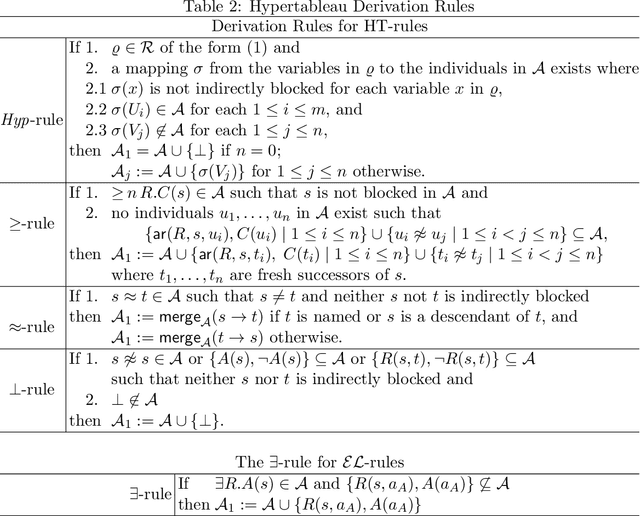
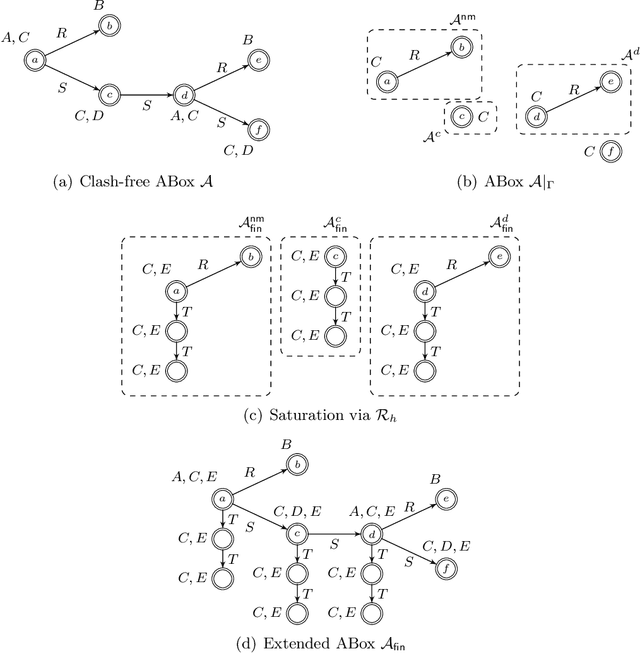
There is currently a growing interest in techniques for hiding parts of the signature of an ontology Kh that is being reused by another ontology Kv. Towards this goal, in this paper we propose the import-by-query framework, which makes the content of Kh accessible through a limited query interface. If Kv reuses the symbols from Kh in a certain restricted way, one can reason over Kv U Kh by accessing only Kv and the query interface. We map out the landscape of the import-by-query problem. In particular, we outline the limitations of our framework and prove that certain restrictions on the expressivity of Kh and the way in which Kv reuses symbols from Kh are strictly necessary to enable reasoning in our setting. We also identify cases in which reasoning is possible and we present suitable import-by-query reasoning algorithms.
Completeness Guarantees for Incomplete Ontology Reasoners: Theory and Practice
Jan 18, 2014

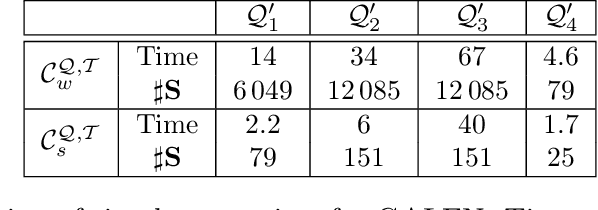
To achieve scalability of query answering, the developers of Semantic Web applications are often forced to use incomplete OWL 2 reasoners, which fail to derive all answers for at least one query, ontology, and data set. The lack of completeness guarantees, however, may be unacceptable for applications in areas such as health care and defence, where missing answers can adversely affect the applications functionality. Furthermore, even if an application can tolerate some level of incompleteness, it is often advantageous to estimate how many and what kind of answers are being lost. In this paper, we present a novel logic-based framework that allows one to check whether a reasoner is complete for a given query Q and ontology T---that is, whether the reasoner is guaranteed to compute all answers to Q w.r.t. T and an arbitrary data set A. Since ontologies and typical queries are often fixed at application design time, our approach allows application developers to check whether a reasoner known to be incomplete in general is actually complete for the kinds of input relevant for the application. We also present a technique that, given a query Q, an ontology T, and reasoners R_1 and R_2 that satisfy certain assumptions, can be used to determine whether, for each data set A, reasoner R_1 computes more answers to Q w.r.t. T and A than reasoner R_2. This allows application developers to select the reasoner that provides the highest degree of completeness for Q and T that is compatible with the applications scalability requirements. Our results thus provide a theoretical and practical foundation for the design of future ontology-based information systems that maximise scalability while minimising or even eliminating incompleteness of query answers.
Computing Datalog Rewritings beyond Horn Ontologies
Apr 08, 2013
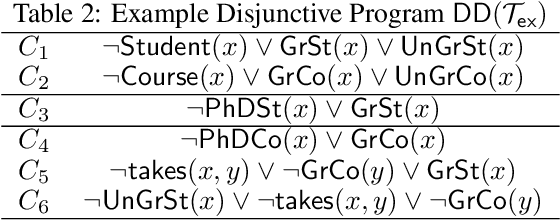
Rewriting-based approaches for answering queries over an OWL 2 DL ontology have so far been developed mainly for Horn fragments of OWL 2 DL. In this paper, we study the possibilities of answering queries over non-Horn ontologies using datalog rewritings. We prove that this is impossible in general even for very simple ontology languages, and even if PTIME = NP. Furthermore, we present a resolution-based procedure for $\SHI$ ontologies that, in case it terminates, produces a datalog rewriting of the ontology. Our procedure necessarily terminates on DL-Lite_{bool}^H ontologies---an extension of OWL 2 QL with transitive roles and Boolean connectives.
Evaluating Ontology Matching Systems on Large, Multilingual and Real-world Test Cases
Aug 15, 2012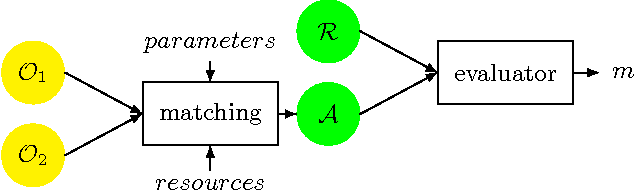
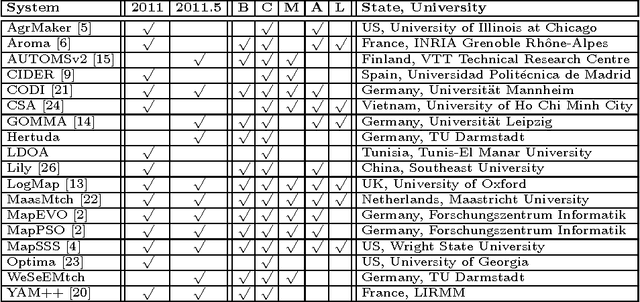
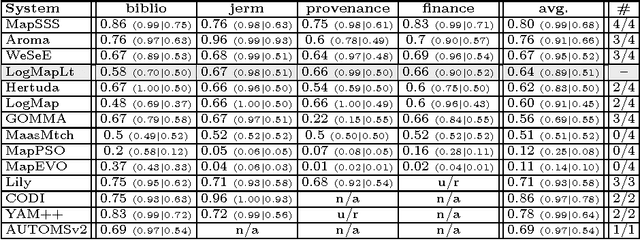
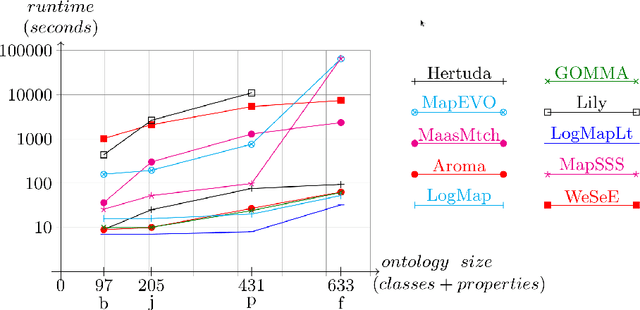
In the field of ontology matching, the most systematic evaluation of matching systems is established by the Ontology Alignment Evaluation Initiative (OAEI), which is an annual campaign for evaluating ontology matching systems organized by different groups of researchers. In this paper, we report on the results of an intermediary OAEI campaign called OAEI 2011.5. The evaluations of this campaign are divided in five tracks. Three of these tracks are new or have been improved compared to previous OAEI campaigns. Overall, we evaluated 18 matching systems. We discuss lessons learned, in terms of scalability, multilingual issues and the ability do deal with real world cases from different domains.
First steps in the logic-based assessment of post-composed phenotypic descriptions
Dec 08, 2010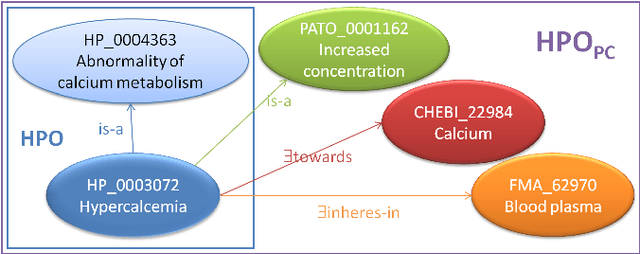
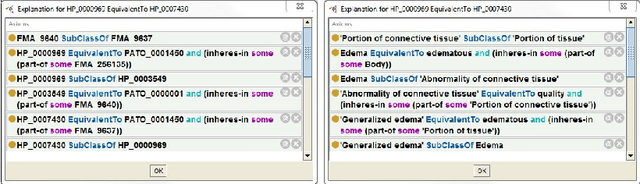
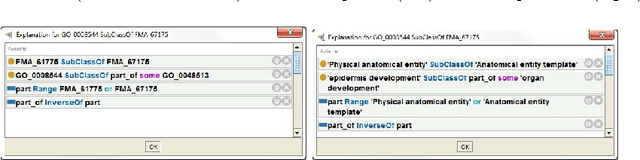
In this paper we present a preliminary logic-based evaluation of the integration of post-composed phenotypic descriptions with domain ontologies. The evaluation has been performed using a description logic reasoner together with scalable techniques: ontology modularization and approximations of the logical difference between ontologies.