 Add to Chrome
 Add to Firefox
 Add to Edge
NourishNet: Proactive Severity State Forecasting of Food Commodity Prices for Global Warning Systems
Jun 30, 2024
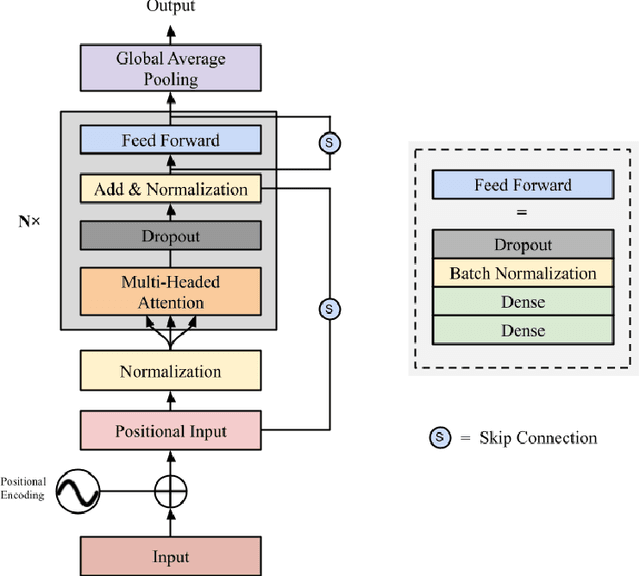

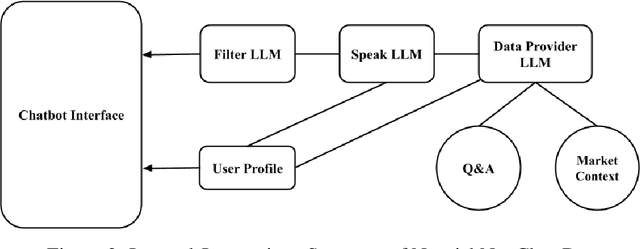
Price volatility in global food commodities is a critical signal indicating potential disruptions in the food market. Understanding forthcoming changes in these prices is essential for bolstering food security, particularly for nations at risk. The Food and Agriculture Organization of the United Nations (FAO) previously developed sophisticated statistical frameworks for the proactive prediction of food commodity prices, aiding in the creation of global early warning systems. These frameworks utilize food security indicators to produce accurate forecasts, thereby facilitating preparations against potential food shortages. Our research builds on these foundations by integrating robust price security indicators with cutting-edge deep learning (DL) methodologies to reveal complex interdependencies. DL techniques examine intricate dynamics among diverse factors affecting food prices. Through sophisticated time-series forecasting models coupled with a classification model, our approach enhances existing models to better support communities worldwide in advancing their food security initiatives.

Lymphocyte Classification in Hyperspectral Images of Ovarian Cancer Tissue Biopsy Samples
Mar 23, 2022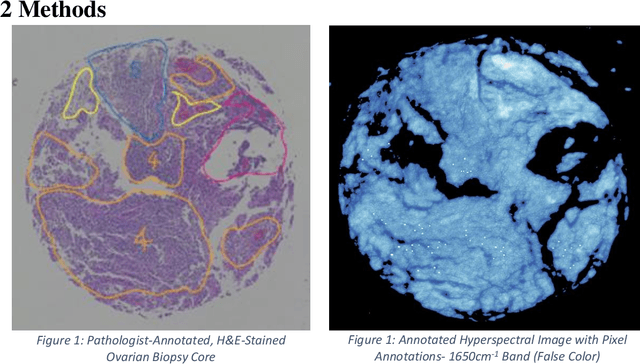
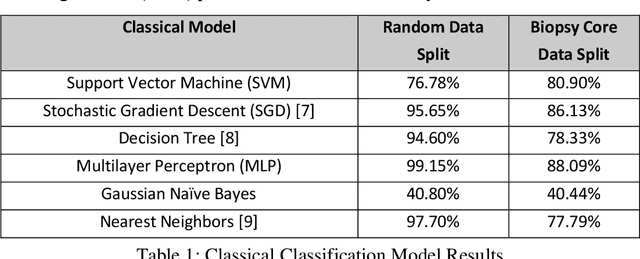
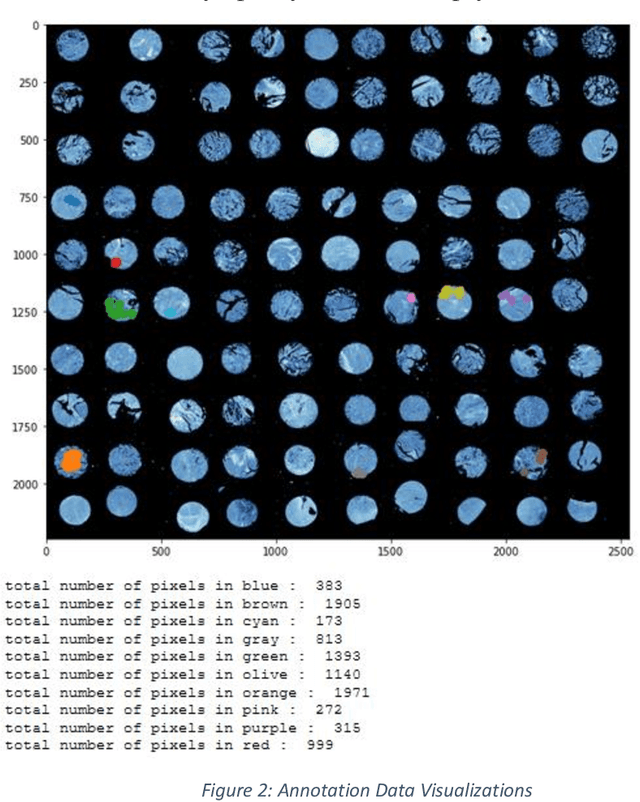
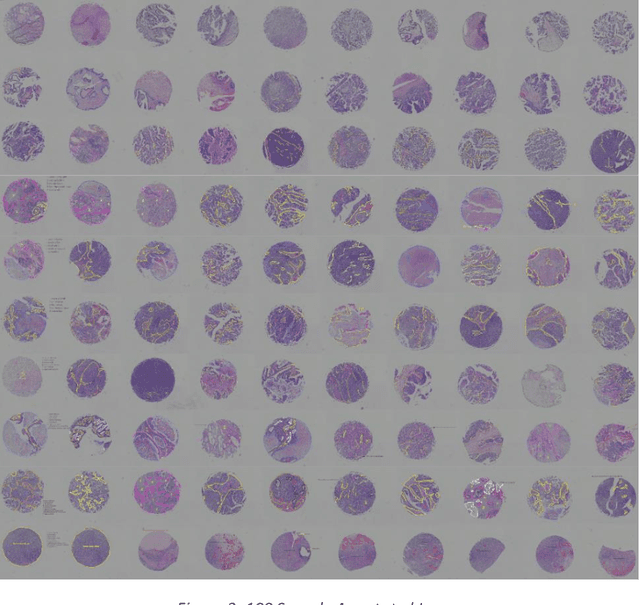
Current methods for diagnosing the progression of multiple types of cancer within patients rely on interpreting stained needle biopsies. This process is time-consuming and susceptible to error throughout the paraffinization, Hematoxylin and Eosin (H&E) staining, deparaffinization, and annotation stages. Fourier Transform Infrared (FTIR) imaging has been shown to be a promising alternative to staining for appropriately annotating biopsy cores without the need for deparaffinization or H&E staining with the use of Fourier Transform Infrared (FTIR) images when combined with machine learning to interpret the dense spectral information. We present a machine learning pipeline to segment white blood cell (lymphocyte) pixels in hyperspectral images of biopsy cores. These cells are clinically important for diagnosis, but some prior work has struggled to incorporate them due to difficulty obtaining precise pixel labels. Evaluated methods include Support Vector Machine (SVM), Gaussian Naive Bayes, and Multilayer Perceptron (MLP), as well as analyzing the comparatively modern convolutional neural network (CNN).