 Add to Chrome
 Add to Firefox
 Add to Edge
NeuroMambaLLM: Dynamic Graph Learning of fMRI Functional Connectivity in Autistic Brains Using Mamba and Language Model Reasoning
Feb 14, 2026
Large Language Models (LLMs) have demonstrated strong semantic reasoning across multimodal domains. However, their integration with graph-based models of brain connectivity remains limited. In addition, most existing fMRI analysis methods rely on static Functional Connectivity (FC) representations, which obscure transient neural dynamics critical for neurodevelopmental disorders such as autism. Recent state-space approaches, including Mamba, model temporal structure efficiently, but are typically used as standalone feature extractors without explicit high-level reasoning. We propose NeuroMambaLLM, an end-to-end framework that integrates dynamic latent graph learning and selective state-space temporal modelling with LLMs. The proposed method learns the functional connectivity dynamically from raw Blood-Oxygen-Level-Dependent (BOLD) time series, replacing fixed correlation graphs with adaptive latent connectivity while suppressing motion-related artifacts and capturing long-range temporal dependencies. The resulting dynamic brain representations are projected into the embedding space of an LLM model, where the base language model remains frozen and lightweight low-rank adaptation (LoRA) modules are trained for parameter-efficient alignment. This design enables the LLM to perform both diagnostic classification and language-based reasoning, allowing it to analyze dynamic fMRI patterns and generate clinically meaningful textual reports.

Design and Implementation of an IoT-based Respiratory Motion Sensor
Dec 06, 2024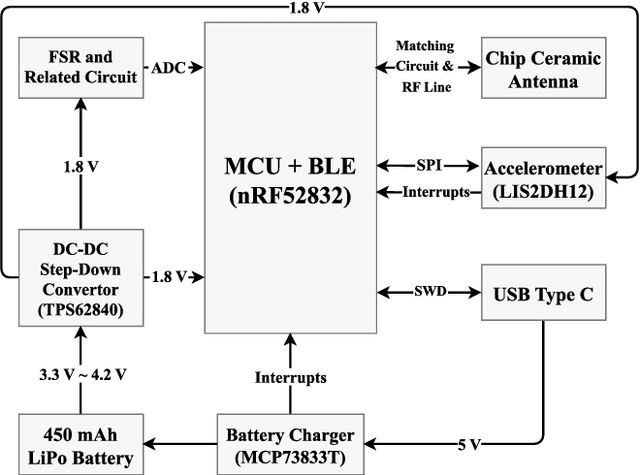
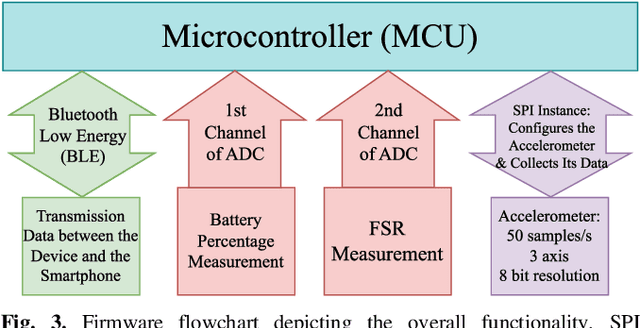
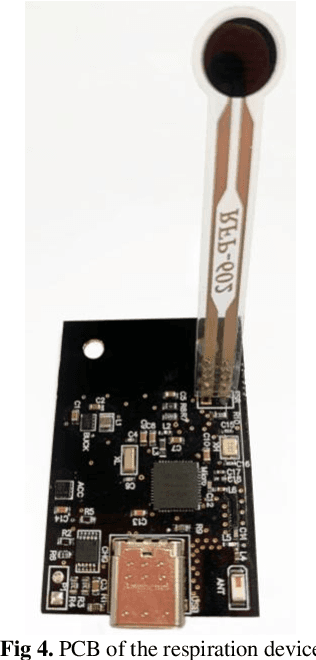
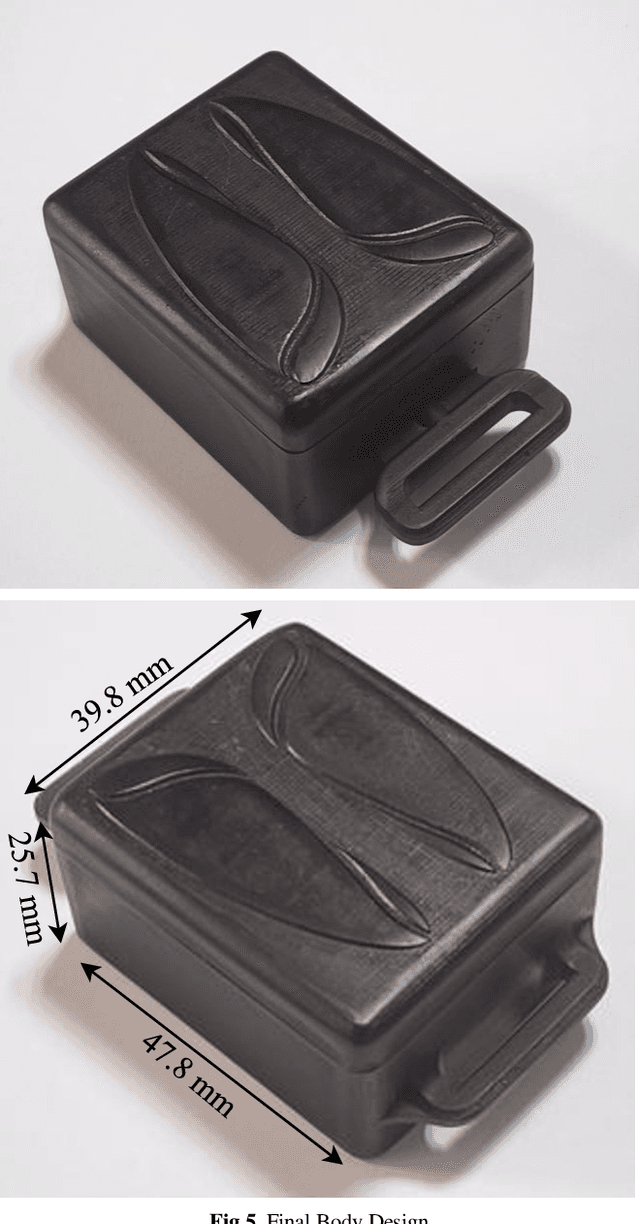
In the last few decades, several wearable devices have been designed to monitor respiration rate in an effort to capture pulmonary signals with higher accuracy and reduce patients' discomfort during use. In this article, we present the design and implementation of a device for real-time monitoring of respiratory system movements. When breathing, the circumference of the abdomen and thorax changes; therefore, we used a Force Sensing Resistor (FSR) attached to the Printed Circuit Board (PCB) to measure this variation as the patient inhales and exhales. The mechanical strain this causes changes the FSR electrical resistance accordingly. Also, for streaming this variable resistance on an Internet of Things (IoT) platform, Bluetooth Low Energy (BLE) 5 is utilized due to the adequate throughput, high accessibility, and possibility of power consumption reduction. Furthermore, this device presents features such as low power consumption (0.4 mW), high precision, and ease of use.