 Add to Chrome
 Add to Firefox
 Add to Edge
Don't Show Pixels, Show Cues: Unlocking Visual Tool Reasoning in Language Models via Perception Programs
Apr 14, 2026
Multimodal language models (MLLMs) are increasingly paired with vision tools (e.g., depth, flow, correspondence) to enhance visual reasoning. However, despite access to these tool-generated visual cues, MLLMs often fail to benefit from them. Existing approaches typically feed raw tool outputs into the model, but these dense, pixel-level representations are misaligned with the language-native reasoning strengths of LLMs, leading to weak perception and reliance on language priors. We argue that, in problems where vision tools can provide the necessary visual cues, the bottleneck is not more tool calls or larger MLLMs, it is how tool outputs are represented. We introduce Perception Programs (P$^2$), a training-free, model-agnostic method that rewrites tool outputs into compact, structured, language-native summaries that MLLMs can directly parse and reason over. Across six perception-centric tasks in BLINK, P$^2$ consistently yields large improvements over base models and raw tool-augmented baselines. With GPT-5 Mini as the base model, P$^2$ raises its accuracy from 41.35\% to 86.47\% on multi-view reasoning, from 52.42\% to 81.45\% on relative depth, and achieves a 22\% average gain across tasks, setting new state-of-the-art results. Even on smaller MLLMs, e.g., InternVL3.5-4B and Qwen3VL-4B, we observe 15-40\% absolute gains from P$^2$, surpassing prior agentic, supervised, and RL-based tool-use methods-without any training or model modifications.

Panoptic Pairwise Distortion Graph
Apr 13, 2026In this work, we introduce a new perspective on comparative image assessment by representing an image pair as a structured composition of its regions. In contrast, existing methods focus on whole image analysis, while implicitly relying on region-level understanding. We extend the intra-image notion of a scene graph to inter-image, and propose a novel task of Distortion Graph (DG). DG treats paired images as a structured topology grounded in regions, and represents dense degradation information such as distortion type, severity, comparison and quality score in a compact interpretable graph structure. To realize the task of learning a distortion graph, we contribute (i) a region-level dataset, PandaSet, (ii) a benchmark suite, PandaBench, with varying region-level difficulty, and (iii) an efficient architecture, Panda, to generate distortion graphs. We demonstrate that PandaBench poses a significant challenge for state-of-the-art multimodal large language models (MLLMs) as they fail to understand region-level degradations even when fed with explicit region cues. We show that training on PandaSet or prompting with DG elicits region-wise distortion understanding, opening a new direction for fine-grained, structured pairwise image assessment.
Mutual Information Analysis in Multimodal Learning Systems
May 21, 2024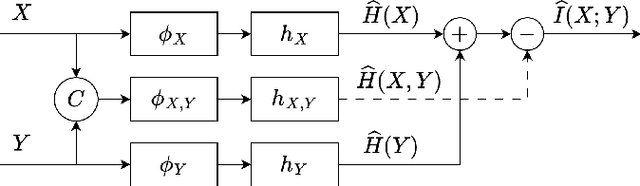
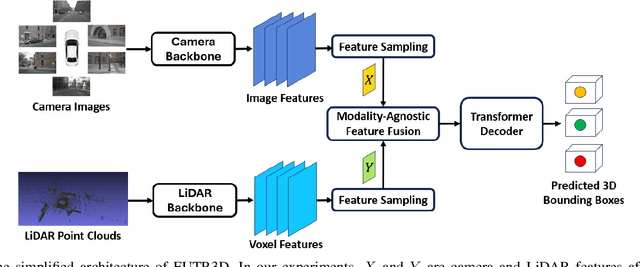
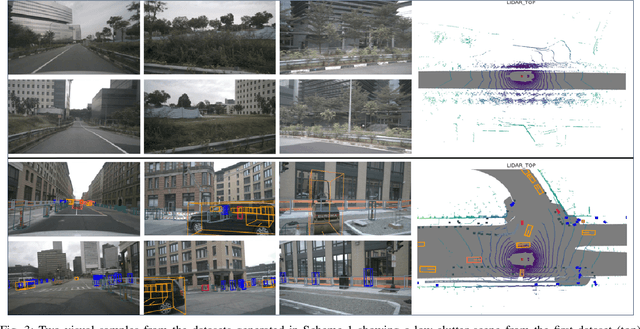
In recent years, there has been a significant increase in applications of multimodal signal processing and analysis, largely driven by the increased availability of multimodal datasets and the rapid progress in multimodal learning systems. Well-known examples include autonomous vehicles, audiovisual generative systems, vision-language systems, and so on. Such systems integrate multiple signal modalities: text, speech, images, video, LiDAR, etc., to perform various tasks. A key issue for understanding such systems is the relationship between various modalities and how it impacts task performance. In this paper, we employ the concept of mutual information (MI) to gain insight into this issue. Taking advantage of the recent progress in entropy modeling and estimation, we develop a system called InfoMeter to estimate MI between modalities in a multimodal learning system. We then apply InfoMeter to analyze a multimodal 3D object detection system over a large-scale dataset for autonomous driving. Our experiments on this system suggest that a lower MI between modalities is beneficial for detection accuracy. This new insight may facilitate improvements in the development of future multimodal learning systems.