 Add to Chrome
 Add to Firefox
 Add to Edge
Bridging the Gap in the Responsible AI Divides
Mar 15, 2026
Tensions between AI Safety (AIS) and AI Ethics (AIE) have increasingly surfaced in AI governance and public debates about AI, leading to what we term the "responsible AI divides". We introduce a model that categorizes four modes of engagement with the tensions: radical confrontation, disengagement, compartmentalized coexistence, and critical bridging. We then investigate how critical bridging, with a particular focus on bridging problems, offers one of the most viable constructive paths for advancing responsible AI. Using computational tools to analyze a curated dataset of 3,550 papers, we map the research landscapes of AIE and AIS to identify both distinct and overlapping problems. Our findings point to both thematic divides and overlaps. For example, we find that AIE has long grappled with overcoming injustice and tangible AI harms, whereas AIS has primarily embodied an anticipatory approach focused on the mitigation of risks from AI capabilities. At the same time, we find significant overlap in core research concerns across both AIE and AIS around transparency, reproducibility, and inadequate governance mechanisms. As AIE and AIS continue to evolve, we recommend focusing on bridging problems as a constructive path forward for enhancing collaborative AI governance. We offer a series of recommendations to integrate shared considerations into a collaborative approach to responsible AI. Alongside our proposal, we highlight its limitations and explore open problems for future research. All data including the fully annotated dataset of papers with code to reproduce our figures can be found at: https://github.com/gyevnarb/ai-safety-ethics.

Integrating Counterfactual Simulations with Language Models for Explaining Multi-Agent Behaviour
May 23, 2025
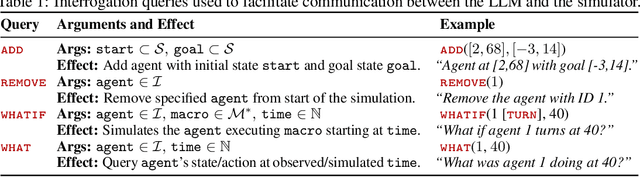
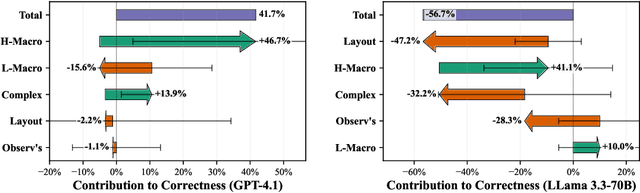
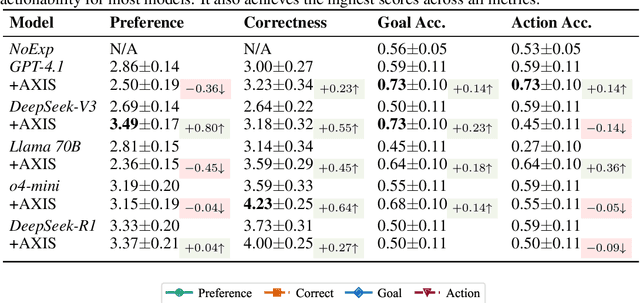
Autonomous multi-agent systems (MAS) are useful for automating complex tasks but raise trust concerns due to risks like miscoordination and goal misalignment. Explainability is vital for trust calibration, but explainable reinforcement learning for MAS faces challenges in state/action space complexity, stakeholder needs, and evaluation. Using the counterfactual theory of causation and LLMs' summarisation capabilities, we propose Agentic eXplanations via Interrogative Simulation (AXIS). AXIS generates intelligible causal explanations for pre-trained multi-agent policies by having an LLM interrogate an environment simulator using queries like 'whatif' and 'remove' to observe and synthesise counterfactual information over multiple rounds. We evaluate AXIS on autonomous driving across 10 scenarios for 5 LLMs with a novel evaluation methodology combining subjective preference, correctness, and goal/action prediction metrics, and an external LLM as evaluator. Compared to baselines, AXIS improves perceived explanation correctness by at least 7.7% across all models and goal prediction accuracy by 23% for 4 models, with improved or comparable action prediction accuracy, achieving the highest scores overall.