 Add to Chrome
 Add to Firefox
 Add to Edge
Towards Automated Integration of Guess and Check Programs in Answer Set Programming: A Meta-Interpreter and Applications
Jan 28, 2005
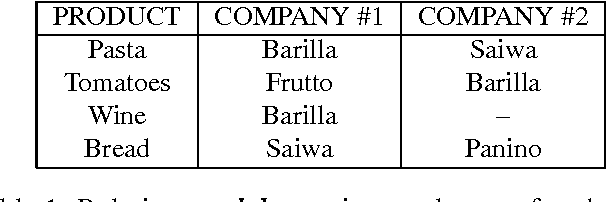
Answer set programming (ASP) with disjunction offers a powerful tool for declaratively representing and solving hard problems. Many NP-complete problems can be encoded in the answer set semantics of logic programs in a very concise and intuitive way, where the encoding reflects the typical "guess and check" nature of NP problems: The property is encoded in a way such that polynomial size certificates for it correspond to stable models of a program. However, the problem-solving capacity of full disjunctive logic programs (DLPs) is beyond NP, and captures a class of problems at the second level of the polynomial hierarchy. While these problems also have a clear "guess and check" structure, finding an encoding in a DLP reflecting this structure may sometimes be a non-obvious task, in particular if the "check" itself is a coNP-complete problem; usually, such problems are solved by interleaving separate guess and check programs, where the check is expressed by inconsistency of the check program. In this paper, we present general transformations of head-cycle free (extended) disjunctive logic programs into stratified and positive (extended) disjunctive logic programs based on meta-interpretation techniques. The answer sets of the original and the transformed program are in simple correspondence, and, moreover, inconsistency of the original program is indicated by a designated answer set of the transformed program. Our transformations facilitate the integration of separate "guess" and "check" programs, which are often easy to obtain, automatically into a single disjunctive logic program. Our results complement recent results on meta-interpretation in ASP, and extend methods and techniques for a declarative "guess and check" problem solving paradigm through ASP.

A Logic Programming Approach to Knowledge-State Planning: Semantics and Complexity
Dec 05, 2001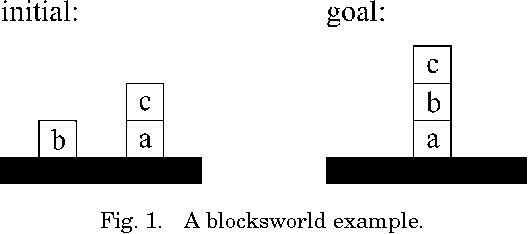
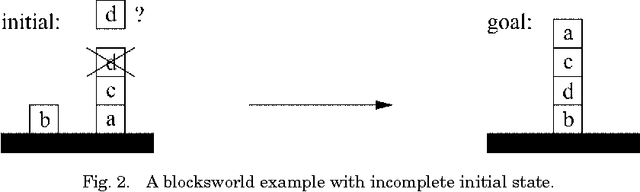

We propose a new declarative planning language, called K, which is based on principles and methods of logic programming. In this language, transitions between states of knowledge can be described, rather than transitions between completely described states of the world, which makes the language well-suited for planning under incomplete knowledge. Furthermore, it enables the use of default principles in the planning process by supporting negation as failure. Nonetheless, K also supports the representation of transitions between states of the world (i.e., states of complete knowledge) as a special case, which shows that the language is very flexible. As we demonstrate on particular examples, the use of knowledge states may allow for a natural and compact problem representation. We then provide a thorough analysis of the computational complexity of K, and consider different planning problems, including standard planning and secure planning (also known as conformant planning) problems. We show that these problems have different complexities under various restrictions, ranging from NP to NEXPTIME in the propositional case. Our results form the theoretical basis for the DLV^K system, which implements the language K on top of the DLV logic programming system.
* 48 pages, appeared as a Technical Report at KBS of the Vienna University of Technology, see http://www.kr.tuwien.ac.at/research/reports/