 Add to Chrome
 Add to Firefox
 Add to Edge
Agents of Chaos
Feb 23, 2026
We report an exploratory red-teaming study of autonomous language-model-powered agents deployed in a live laboratory environment with persistent memory, email accounts, Discord access, file systems, and shell execution. Over a two-week period, twenty AI researchers interacted with the agents under benign and adversarial conditions. Focusing on failures emerging from the integration of language models with autonomy, tool use, and multi-party communication, we document eleven representative case studies. Observed behaviors include unauthorized compliance with non-owners, disclosure of sensitive information, execution of destructive system-level actions, denial-of-service conditions, uncontrolled resource consumption, identity spoofing vulnerabilities, cross-agent propagation of unsafe practices, and partial system takeover. In several cases, agents reported task completion while the underlying system state contradicted those reports. We also report on some of the failed attempts. Our findings establish the existence of security-, privacy-, and governance-relevant vulnerabilities in realistic deployment settings. These behaviors raise unresolved questions regarding accountability, delegated authority, and responsibility for downstream harms, and warrant urgent attention from legal scholars, policymakers, and researchers across disciplines. This report serves as an initial empirical contribution to that broader conversation.

Medical Data Pecking: A Context-Aware Approach for Automated Quality Evaluation of Structured Medical Data
Jul 03, 2025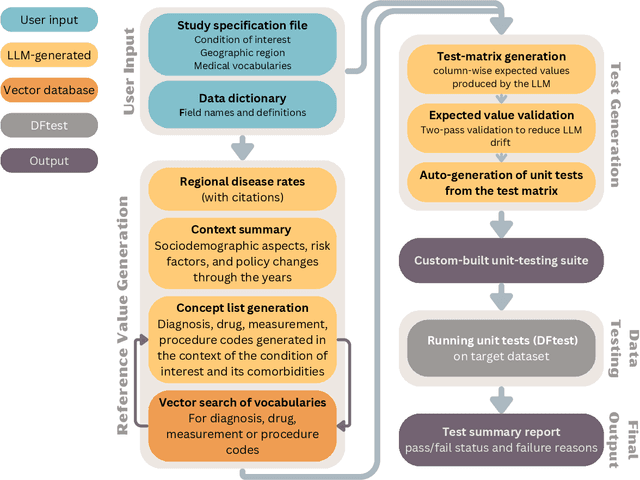

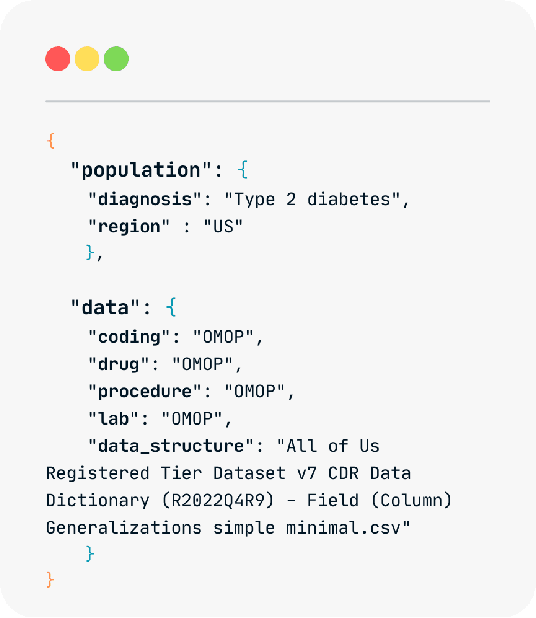
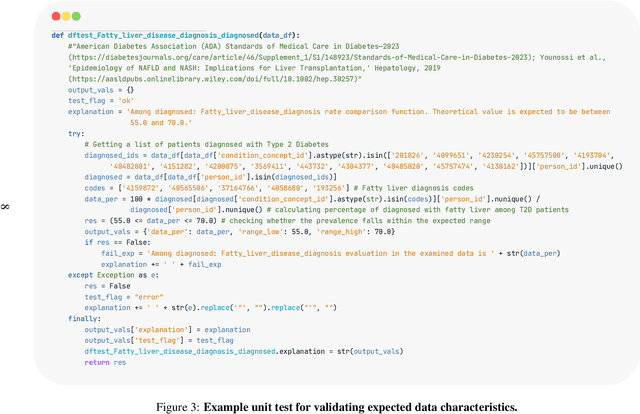
Background: The use of Electronic Health Records (EHRs) for epidemiological studies and artificial intelligence (AI) training is increasing rapidly. The reliability of the results depends on the accuracy and completeness of EHR data. However, EHR data often contain significant quality issues, including misrepresentations of subpopulations, biases, and systematic errors, as they are primarily collected for clinical and billing purposes. Existing quality assessment methods remain insufficient, lacking systematic procedures to assess data fitness for research. Methods: We present the Medical Data Pecking approach, which adapts unit testing and coverage concepts from software engineering to identify data quality concerns. We demonstrate our approach using the Medical Data Pecking Tool (MDPT), which consists of two main components: (1) an automated test generator that uses large language models and grounding techniques to create a test suite from data and study descriptions, and (2) a data testing framework that executes these tests, reporting potential errors and coverage. Results: We evaluated MDPT on three datasets: All of Us (AoU), MIMIC-III, and SyntheticMass, generating 55-73 tests per cohort across four conditions. These tests correctly identified 20-43 non-aligned or non-conforming data issues. We present a detailed analysis of the LLM-generated test suites in terms of reference grounding and value accuracy. Conclusion: Our approach incorporates external medical knowledge to enable context-sensitive data quality testing as part of the data analysis workflow to improve the validity of its outcomes. Our approach tackles these challenges from a quality assurance perspective, laying the foundation for further development such as additional data modalities and improved grounding methods.