 Add to Chrome
 Add to Firefox
 Add to Edge
Scalable Prompt Routing via Fine-Grained Latent Task Discovery
Mar 23, 2026
Prompt routing dynamically selects the most appropriate large language model from a pool of candidates for each query, optimizing performance while managing costs. As model pools scale to include dozens of frontier models with narrow performance gaps, existing approaches face significant challenges: manually defined task taxonomies cannot capture fine-grained capability distinctions, while monolithic routers struggle to differentiate subtle differences across diverse tasks. We propose a two-stage routing architecture that addresses these limitations through automated fine-grained task discovery and task-aware quality estimation. Our first stage employs graph-based clustering to discover latent task types and trains a classifier to assign prompts to discovered tasks. The second stage uses a mixture-of-experts architecture with task-specific prediction heads for specialized quality estimates. At inference, we aggregate predictions from both stages to balance task-level stability with prompt-specific adaptability. Evaluated on 10 benchmarks with 11 frontier models, our method consistently outperforms existing baselines and surpasses the strongest individual model while incurring less than half its cost.

The Extrapolation Power of Implicit Models
Jul 19, 2024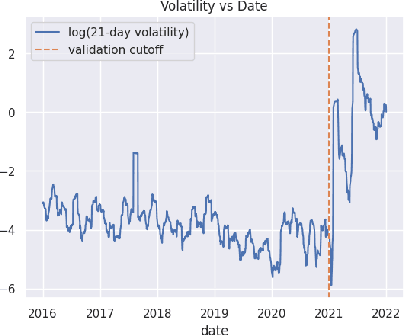
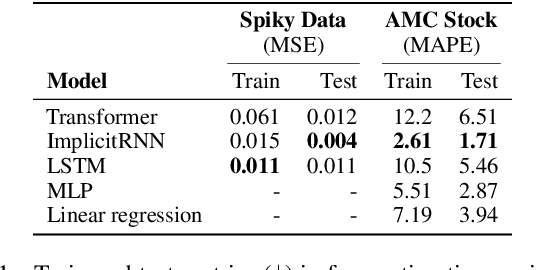
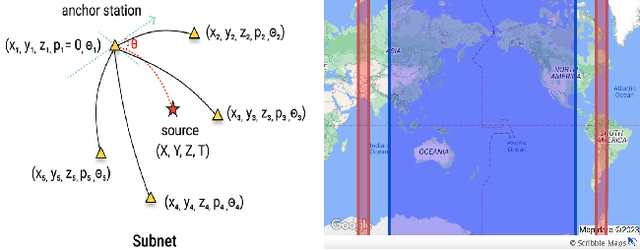
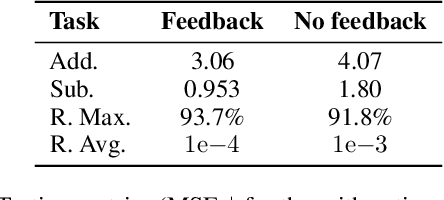
In this paper, we investigate the extrapolation capabilities of implicit deep learning models in handling unobserved data, where traditional deep neural networks may falter. Implicit models, distinguished by their adaptability in layer depth and incorporation of feedback within their computational graph, are put to the test across various extrapolation scenarios: out-of-distribution, geographical, and temporal shifts. Our experiments consistently demonstrate significant performance advantage with implicit models. Unlike their non-implicit counterparts, which often rely on meticulous architectural design for each task, implicit models demonstrate the ability to learn complex model structures without the need for task-specific design, highlighting their robustness in handling unseen data.