 Add to Chrome
 Add to Firefox
 Add to Edge
Caliper-in-the-Loop: Black-Box Optimization for Hyperledger Fabric Performance Tuning
May 04, 2026
Hyperledger Fabric performance depends on many interacting configuration parameters, making manual tuning difficult. We study automated throughput tuning by treating benchmarking as a noisy black-box optimization problem and applying Bayesian optimization (BO) with dimensionality reduction (DR). We implement an end-to-end Caliper-in-the-loop pipeline that deploys candidate configurations, benchmarks them, and updates the optimizer from observed throughput. The search space, derived from Fabric configuration files, has 317 dimensions. In a cloud testbed, we evaluate 16 BO+DR variants and a random-search baseline. The best method, DYCORS-PCA, achieves a 12% TPS improvement relative to the first evaluated configuration, while MPI-REMBO achieves 9%. These results suggest that BO with DR is a practical approach for high-dimensional Hyperledger Fabric tuning, while also highlighting the role of measurement noise in interpreting gains.

Towards automated verification of multi-party consensus protocols
Dec 04, 2021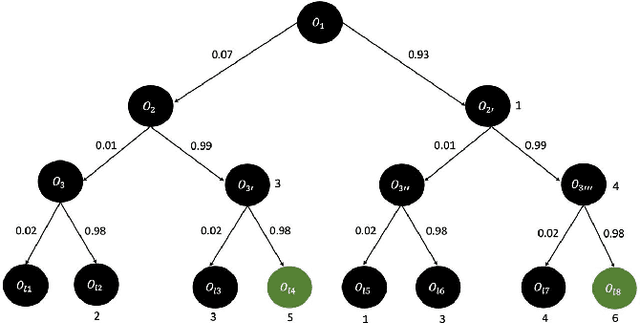
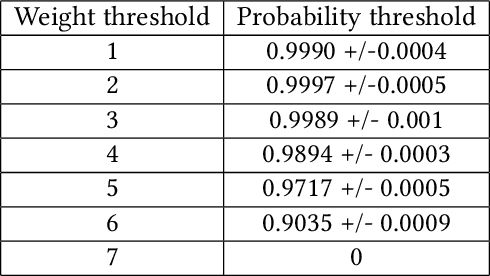
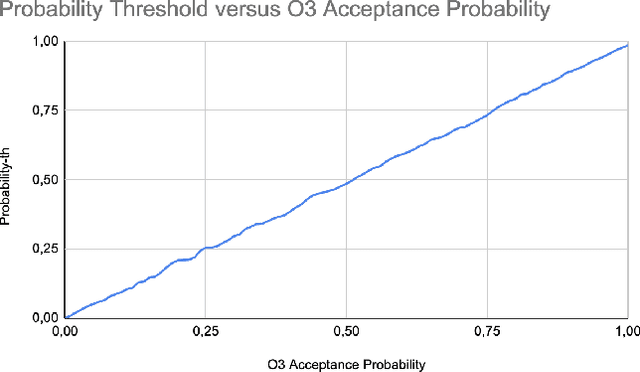
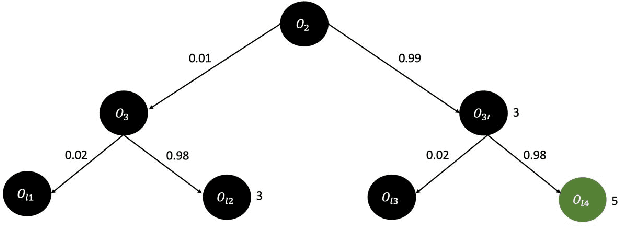
Blockchain technology and related frameworks have recently received extensive attention. Blockchain systems use multi-party consensus protocols to reach agreements on transactions. Hyperledger Fabric framework exposes a multi-party consensus, based on endorsement policy protocol, to reach a consensus on a transaction. In this paper, we define a problem of verification of a blockchain multi-party consensus with probabilistic properties. Further, we propose a verification technique of endorsement policies using statistical model checking and hypothesis testing. We analyze several aspects of the policies, including the ability to assign weights to organizations and the refusal probabilities of organizations. We demonstrate on experiments the work of our verification technique and how one can use experimental results to make the model satisfiable the specification. One can use our technique to design enterprise applications with the Hyperledger Fabric framework.