 Add to Chrome
 Add to Firefox
 Add to Edge
An open-source implementation of a closed-loop electrocorticographic Brain-Computer Interface using Micromed, FieldTrip, and PsychoPy
Feb 10, 2026
We present an open-source implementation of a closed-loop Brain-Computer Interface (BCI) system based on electrocorticographic (ECoG) recordings. Our setup integrates FieldTrip for interfacing with a Micromed acquisition system and PsychoPy for implementing experiments. We open-source three custom Python libraries (psychopylib, pymarkerlib, and pyfieldtriplib) each covering different aspects of a closed-loop BCI interface: designing interactive experiments, sending event information, and real-time signal processing. Our modules facilitate the design and operation of a transparent BCI system, promoting customization and flexibility in BCI research, and lowering the barrier for researchers to translate advances in ECoG decoding into BCI applications.

BTTDA: Block-Term Tensor Discriminant Analysis for Brain-Computer Interfacing
Nov 06, 2025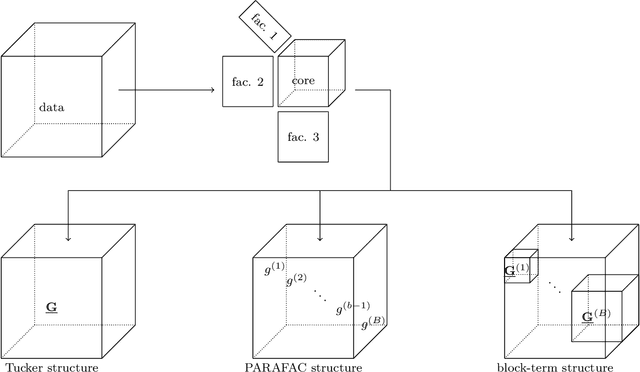
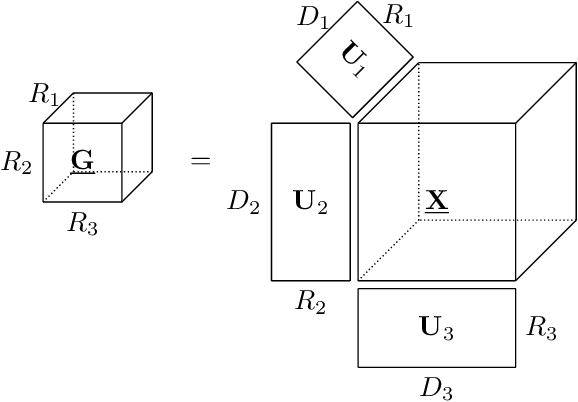
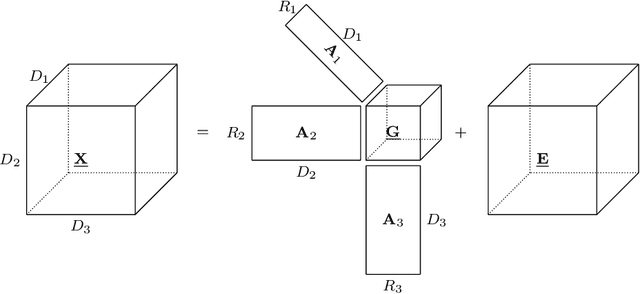
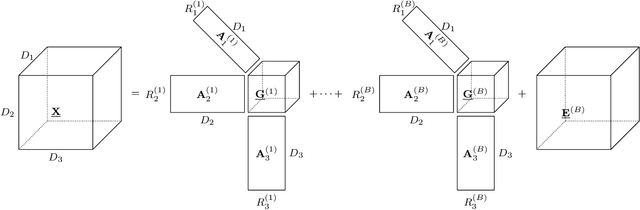
Brain-computer interfaces (BCIs) allow direct communication between the brain and external devices, frequently using electroencephalography (EEG) to record neural activity. Dimensionality reduction and structured regularization are essential for effectively classifying task-related brain signals, including event-related potentials (ERPs) and motor imagery (MI) rhythms. Current tensor-based approaches, such as Tucker and PARAFAC decompositions, often lack the flexibility needed to fully capture the complexity of EEG data. This study introduces Block-Term Tensor Discriminant Analysis (BTTDA): a novel tensor-based and supervised feature extraction method designed to enhance classification accuracy by providing flexible multilinear dimensionality reduction. Extending Higher Order Discriminant Analysis (HODA), BTTDA uses a novel and interpretable forward model for HODA combined with a deflation scheme to iteratively extract discriminant block terms, improving feature representation for classification. BTTDA and a sum-of-rank-1-terms variant PARAFACDA were evaluated on publicly available ERP (second-order tensors) and MI (third-order tensors) EEG datasets from the MOABB benchmarking framework. Benchmarking revealed that BTTDA and PARAFACDA significantly outperform the traditional HODA method in ERP decoding, resulting in state-of-the art performance (ROC-AUC = 91.25%). For MI, decoding results of HODA, BTTDA and PARAFACDA were subpar, but BTTDA still significantly outperformed HODA (64.52% > 61.00%). The block-term structure of BTTDA enables interpretable and more efficient dimensionality reduction without compromising discriminative power. This offers a promising and adaptable approach for feature extraction in BCI and broader neuroimaging applications.