 Add to Chrome
 Add to Firefox
 Add to Edge
Energy Optimization for Time-of-Arrival Based Tracking
Dec 22, 2025
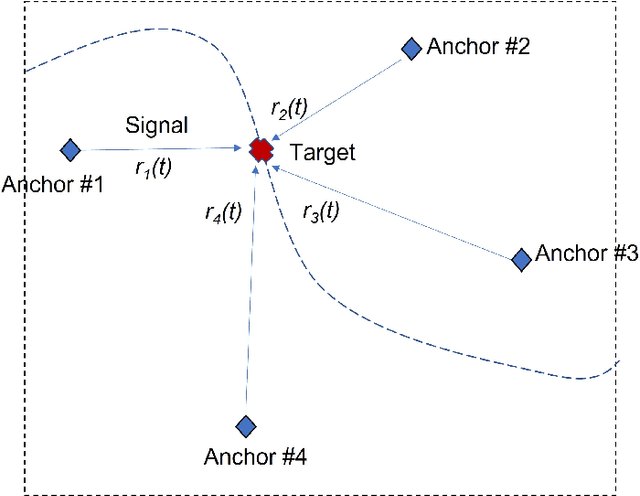
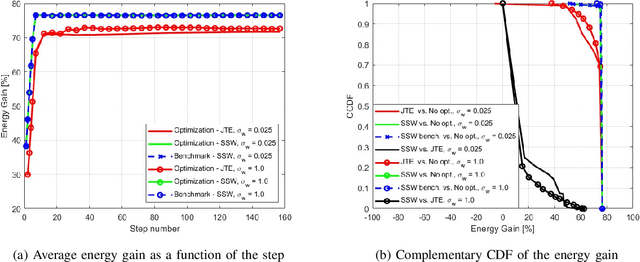
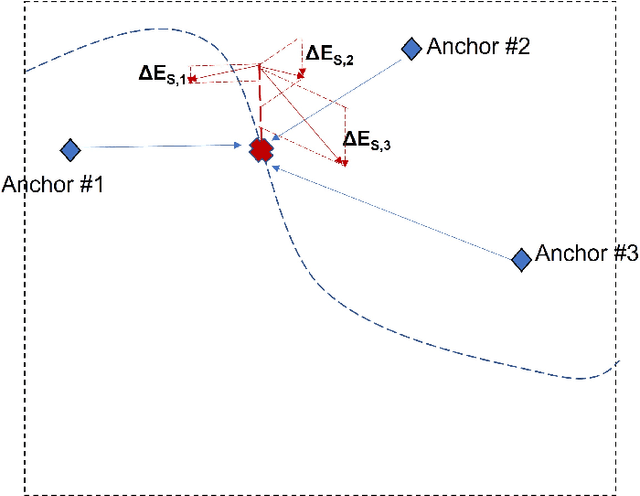
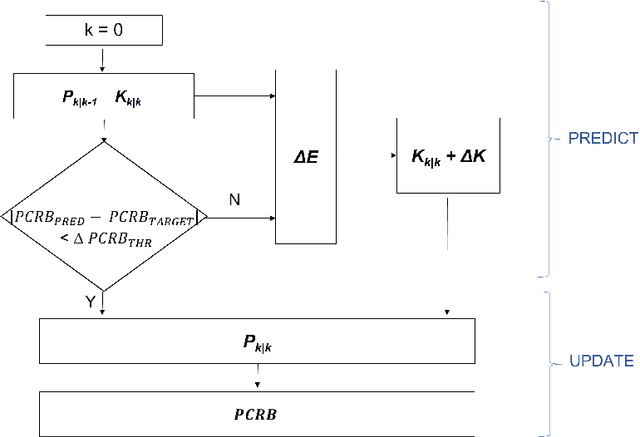
The paper analyzes energy allocation in a scenario where the position of a moving target is tracked by exploiting the Time-of-Arrivals of bandwidth-constrained signals received by or transmitted from a fixed number of anchors located at known positions. The signal of each anchor is generated by transmitting a sequence of known symbols, allowing for amplitude and duration (number of symbols) to be different from anchor to anchor. The problem is the minimization of the sum of the energies of the transmitted signals imposing a constraint on the performance of the tracking procedure. Specifically, the constraint is the Posterior Cramer-Rao Bound, below the mean square error achieved by any unbiased estimator. The main improvement over the previous literature is the derivation of a formula that, at each step of the tracking, allows to calculate in closed form the first-order variation of the Posterior Cramer-Rao Bound as a function of the variation of the total energy. To concretely show the application of our approach, we present also two numerical algorithms that implement the constrained optimization in the case of signals of fixed amplitude and variable duration transmitted from the anchors in a time division multiplexing scheme.
