 Add to Chrome
 Add to Firefox
 Add to Edge
SMOCS: A Streaming Framework for Simplified Deployment, Monitoring, and Optimization of ML Systems in Production
Jul 02, 2026
Machine learning has demonstrated significant potential for real-time monitoring, optimization, and control of scientific facilities. However, deploying and maintaining ML models in operational environments remains a substantial engineering challenge. Each facility presents unique data protocols, non-standard formats, and infrastructure constraints, forcing teams to rebuild integration pipelines for every new application. We present SMOCS (Streaming Monitoring Optimization and Control System), a Kafka-based containerized framework that addresses this challenge through three contributions: 1) a layered abstraction over Apache Kafka that separates infrastructure from application logic, 2) a three-thread agent architecture that temporally decouples data ingestion, model training, and real-time inference enabling continuous online learning from live data streams, and 3) a configuration-driven deployment model that enables domain experts to operate ML pipelines without software engineering expertise. SMOCS is facility platform-agnostic, fault-isolated by design, and horizontally scalable through Docker containerization. The framework is publicly available as open-source software on the Jefferson Lab Github.

Harnessing the Power of Gradient-Based Simulations for Multi-Objective Optimization in Particle Accelerators
Nov 07, 2024
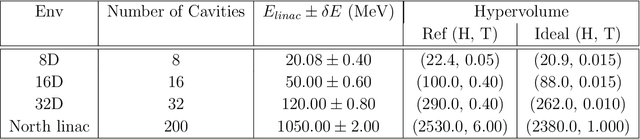


Particle accelerator operation requires simultaneous optimization of multiple objectives. Multi-Objective Optimization (MOO) is particularly challenging due to trade-offs between the objectives. Evolutionary algorithms, such as genetic algorithm (GA), have been leveraged for many optimization problems, however, they do not apply to complex control problems by design. This paper demonstrates the power of differentiability for solving MOO problems using a Deep Differentiable Reinforcement Learning (DDRL) algorithm in particle accelerators. We compare DDRL algorithm with Model Free Reinforcement Learning (MFRL), GA and Bayesian Optimization (BO) for simultaneous optimization of heat load and trip rates in the Continuous Electron Beam Accelerator Facility (CEBAF). The underlying problem enforces strict constraints on both individual states and actions as well as cumulative (global) constraint for energy requirements of the beam. A physics-based surrogate model based on real data is developed. This surrogate model is differentiable and allows back-propagation of gradients. The results are evaluated in the form of a Pareto-front for two objectives. We show that the DDRL outperforms MFRL, BO, and GA on high dimensional problems.