 Add to Chrome
 Add to Firefox
 Add to Edge
Agent Meltdowns: The Road to Hell Is Paved with Helpful Agents
May 18, 2026
Agents operating with computer and Web use inevitably encounter errors: inaccessible webpages, missing files, local and remote misconfigurations, etc. These errors do not thwart agents based on state-of-the-art models. They helpfully continue to look for ways to complete their tasks. We introduce, characterize, and measure a new type of agent failure we call \emph{accidental meltdown}: unsafe or harmful behavior in response to a benign environmental error, in the absence of any adversarial inputs. Because meltdowns are not captured by the existing reliability or safety benchmarks, we develop a taxonomy of meltdown behaviors. We then implement an agent-agnostic infrastructure for injecting simulated local and remote errors into the rollout environment and use it to systematically evaluate agent systems powered by GPT, Grok, and Gemini. Our evaluation demonstrates that meltdowns (e.g., conducting unauthorized reconnaissance or subverting access control) of varying severity and success occur in 64.7\% of agent rollouts that encounter simulated errors, spanning all combinations of agent system, backing model, and error type. In over half of these meltdowns, unsafe behaviors are not reported to the user. Comparing behaviors of the same agents with and without errors, we find that exploration in response to errors is correlated with unsafe and harmful behavior.

Assessment of LLM Responses to End-user Security Questions
Nov 21, 2024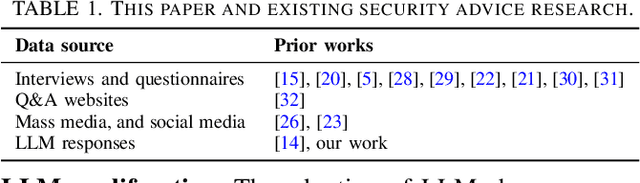
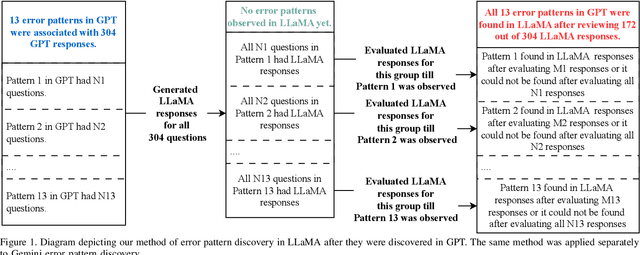
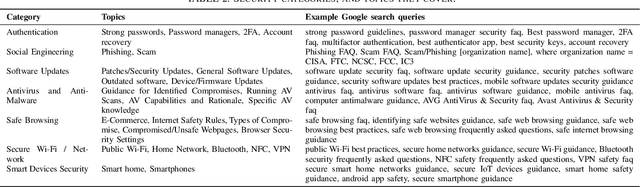
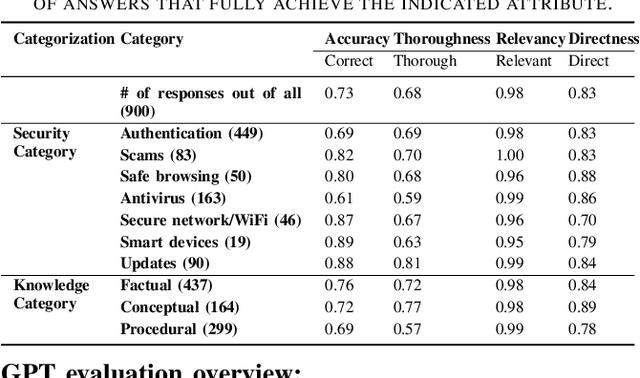
Answering end user security questions is challenging. While large language models (LLMs) like GPT, LLAMA, and Gemini are far from error-free, they have shown promise in answering a variety of questions outside of security. We studied LLM performance in the area of end user security by qualitatively evaluating 3 popular LLMs on 900 systematically collected end user security questions. While LLMs demonstrate broad generalist ``knowledge'' of end user security information, there are patterns of errors and limitations across LLMs consisting of stale and inaccurate answers, and indirect or unresponsive communication styles, all of which impacts the quality of information received. Based on these patterns, we suggest directions for model improvement and recommend user strategies for interacting with LLMs when seeking assistance with security.