 Add to Chrome
 Add to Firefox
 Add to Edge
A Natural Language Agentic Approach to Study Affective Polarization
Mar 03, 2026
Affective polarization has been central to political and social studies, with growing focus on social media, where partisan divisions are often exacerbated. Real-world studies tend to have limited scope, while simulated studies suffer from insufficient high-quality training data, as manually labeling posts is labor-intensive and prone to subjective biases. The lack of adequate tools to formalize different definitions of affective polarization across studies complicates result comparison and hinders interoperable frameworks. We present a multi-agent model providing a comprehensive approach to studying affective polarization in social media. To operationalize our framework, we develop a platform leveraging large language models (LLMs) to construct virtual communities where agents engage in discussions. We showcase the potential of our platform by (1) analyzing questions related to affective polarization, as explored in social science literature, providing a fresh perspective on this phenomenon, and (2) introducing scenarios that allow observation and measurement of polarization at different levels of granularity and abstraction. Experiments show that our platform is a flexible tool for computational studies of complex social dynamics such as affective polarization. It leverages advanced agent models to simulate rich, context-sensitive interactions and systematically explore research questions traditionally addressed through human-subject studies.
* Accepted at ICAART 2026 (18th International Conference on Agents and Artificial Intelligence). The final published version is available in the conference proceedings (SCITEPRESS)

Algorithmic Fairness in NLP: Persona-Infused LLMs for Human-Centric Hate Speech Detection
Oct 22, 2025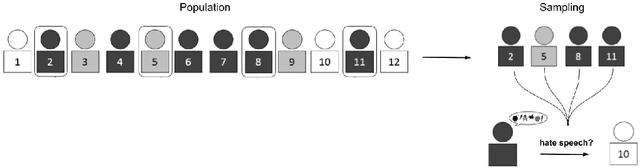
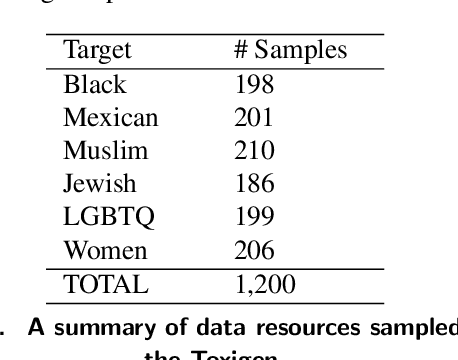
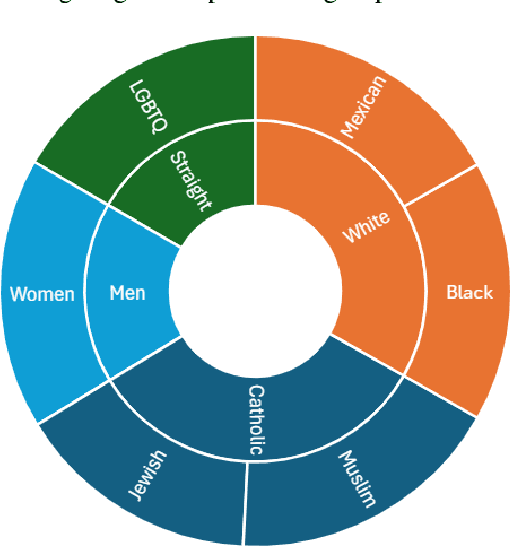

In this paper, we investigate how personalising Large Language Models (Persona-LLMs) with annotator personas affects their sensitivity to hate speech, particularly regarding biases linked to shared or differing identities between annotators and targets. To this end, we employ Google's Gemini and OpenAI's GPT-4.1-mini models and two persona-prompting methods: shallow persona prompting and a deeply contextualised persona development based on Retrieval-Augmented Generation (RAG) to incorporate richer persona profiles. We analyse the impact of using in-group and out-group annotator personas on the models' detection performance and fairness across diverse social groups. This work bridges psychological insights on group identity with advanced NLP techniques, demonstrating that incorporating socio-demographic attributes into LLMs can address bias in automated hate speech detection. Our results highlight both the potential and limitations of persona-based approaches in reducing bias, offering valuable insights for developing more equitable hate speech detection systems.