 Add to Chrome
 Add to Firefox
 Add to Edge
Battery health prognosis using Physics-informed neural network with Quantum Feature mapping
Apr 11, 2026
Accurate battery health prognosis using State of Health (SOH) estimation is essential for the reliability of multi-scale battery energy storage, yet existing methods are limited in generalizability across diverse battery chemistries and operating conditions. The inability of standard neural networks to capture the complex, high-dimensional physics of battery degradation is a major contributor to these limitations. To address this, a physics-informed neural network with the Quantum Feature Mapping(QFM) technique (QPINN) is proposed. QPINN projects raw battery sensor data into a high-dimensional Hilbert space, creating a highly expressive feature set that effectively captures subtle, non-linear degradation patterns using Nyström method. These quantum-enhanced features are then processed by a physics-informed network that enforces physical constraints. The proposed method achieves an average SOH estimation accuracy of 99.46\% across different datasets, substantially outperforming state-of-the-art baselines, with reductions in MAPE and RMSE of up to 65\% and 62\%, respectively. This method was validated on a large-scale, multi-chemistry dataset of 310,705 samples from 387 cells, and further showed notable adaptability in cross-validation settings, successfully transferring from one chemistry to another without relying on target-domain SOH labels.

Reinforcement Learning based Proactive Control for Transmission Grid Resilience to Wildfire
Jul 12, 2021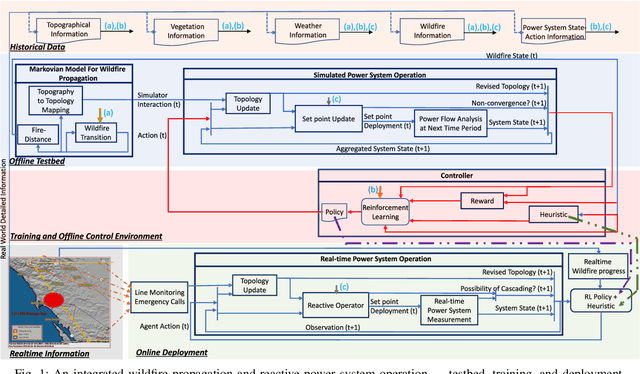
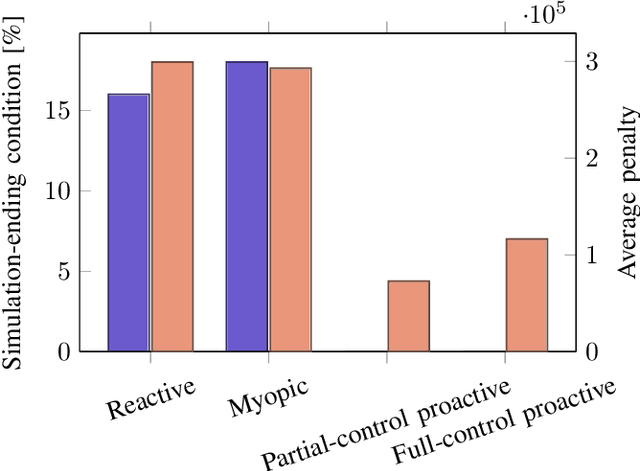
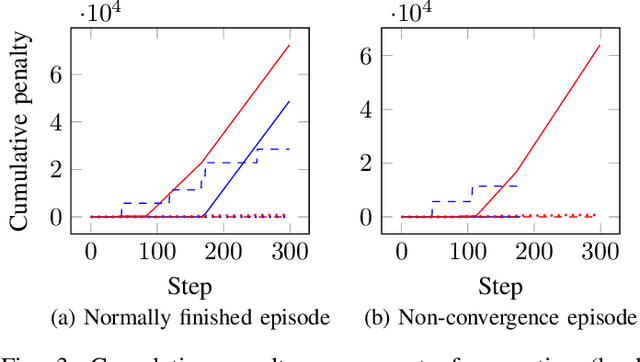
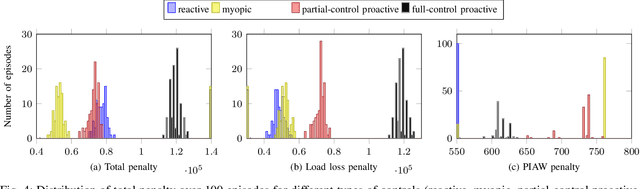
Power grid operation subject to an extreme event requires decision-making by human operators under stressful condition with high cognitive load. Decision support under adverse dynamic events, specially if forecasted, can be supplemented by intelligent proactive control. Power system operation during wildfires require resiliency-driven proactive control for load shedding, line switching and resource allocation considering the dynamics of the wildfire and failure propagation. However, possible number of line- and load-switching in a large system during an event make traditional prediction-driven and stochastic approaches computationally intractable, leading operators to often use greedy algorithms. We model and solve the proactive control problem as a Markov decision process and introduce an integrated testbed for spatio-temporal wildfire propagation and proactive power-system operation. We transform the enormous wildfire-propagation observation space and utilize it as part of a heuristic for proactive de-energization of transmission assets. We integrate this heuristic with a reinforcement-learning based proactive policy for controlling the generating assets. Our approach allows this controller to provide setpoints for a part of the generation fleet, while a myopic operator can determine the setpoints for the remaining set, which results in a symbiotic action. We evaluate our approach utilizing the IEEE 24-node system mapped on a hypothetical terrain. Our results show that the proposed approach can help the operator to reduce load loss during an extreme event, reduce power flow through lines that are to be de-energized, and reduce the likelihood of infeasible power-flow solutions, which would indicate violation of short-term thermal limits of transmission lines.