 Add to Chrome
 Add to Firefox
 Add to Edge
VISTA: Visualization of Token Attribution via Efficient Analysis
Apr 02, 2026
Understanding how Large Language Models (LLMs) process information from prompts remains a significant challenge. To shed light on this "black box," attention visualization techniques have been developed to capture neuron-level perceptions and interpret how models focus on different parts of input data. However, many existing techniques are tailored to specific model architectures, particularly within the Transformer family, and often require backpropagation, resulting in nearly double the GPU memory usage and increased computational cost. A lightweight, model-agnostic approach for attention visualization remains lacking. In this paper, we introduce a model-agnostic token importance visualization technique to better understand how generative AI systems perceive and prioritize information from input text, without incurring additional computational cost. Our method leverages perturbation-based strategies combined with a three-matrix analytical framework to generate relevance maps that illustrate token-level contributions to model predictions. The framework comprises: (1) the Angular Deviation Matrix, which captures shifts in semantic direction; (2) the Magnitude Deviation Matrix, which measures changes in semantic intensity; and (3) the Dimensional Importance Matrix, which evaluates contributions across individual vector dimensions. By systematically removing each token and measuring the resulting impact across these three complementary dimensions, we derive a composite importance score that provides a nuanced and mathematically grounded measure of token significance. To support reproducibility and foster wider adoption, we provide open-source implementations of all proposed and utilized explainability techniques, with code and resources publicly available at https://github.com/Infosys/Infosys-Responsible-AI-Toolkit

MatES: Web-based Forward Chaining Expert System for Maternal Care
Jun 17, 2021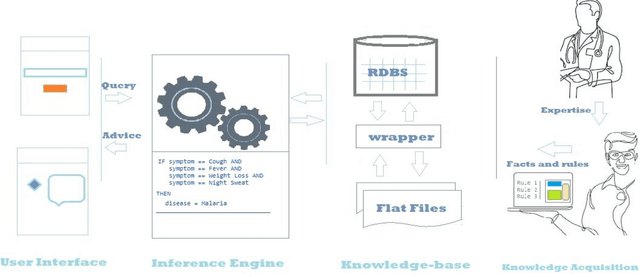
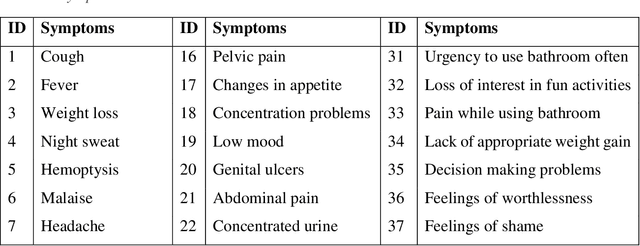
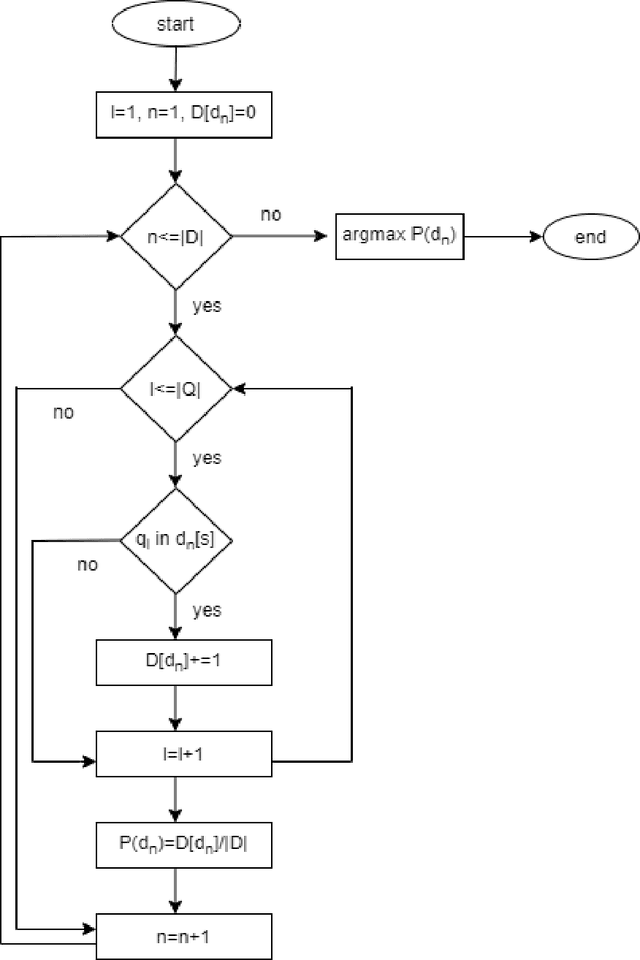
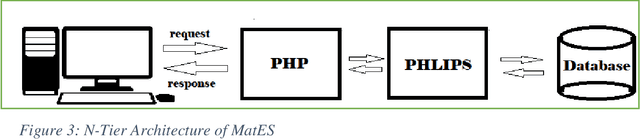
The solution to prevent maternal complications are known and preventable by trained health professionals. But in countries like Ethiopia where the patient to physician ratio is 1 doctor to 1000 patients, maternal mortality and morbidity rate is high. To fill the gap of highly trained health professionals, Ethiopia introduced health extension programs. Task shifting to health extension workers (HEWs) contributed in decreasing mortality and morbidity rate in Ethiopia. Knowledge-gap has been one of the major challenges to HEWs. The reasons are trainings are not given in regular manner, there is no midwife, gynecologists or doctors around for consultation, and all guidelines are paper-based which are easily exposed to damage. In this paper, we describe the design and implementation of a web-based expert system for maternal care. We only targeted the major 10 diseases and complication of maternal health issues seen in Sub-Saharan Africa. The expert system can be accessed through the use of web browsers from computers as well as smart phones. Forward chaining rule-based expert system is used in order to give suggestions and create a new knowledge from the knowledge-base. This expert system can be used to train HEWs in the field of maternal health. Keywords: expert system, maternal care, forward-chaining, rule-based expert system, PHLIPS