 Add to Chrome
 Add to Firefox
 Add to Edge
Boundary-targeted Membership Inference Attacks on Safety Classifiers
May 21, 2026
Safety classifiers are essential safeguards within generative AI systems, filtering harmful content or identifying at-risk users when interacting with large language models. Despite their necessity, these models are trained on sensitive datasets including discussions of self-harm and mental health, raising important, yet poorly understood, privacy concerns. Membership inference attacks (MIAs) allow adversaries to infer membership of examples used to train models. In this work, we hypothesize that identifying the examples on which the classifier is least confident are informative for an adversary to infer membership. This reflects a localized failure of generalization, where the model relies on memorization to resolve ambiguity in the training set. To investigate this, we introduce a new boundary-targeted selection strategy that identifies low confidence examples that amplify the signal of an examples membership within a training set. Our experimental results show that an adversary can recover 19\% of the conversations a safety classifier flagged as indicating user distress, at a 5\% false-positive rate, on a classifier fine-tuned for detecting a user who may require emotional support. This is $3.5$ times more than attacking using state-of-the-art MIA methods alone. Finally, we characterize the boundary laying examples and show that content-based filtering is ineffective for protection, and existing noise strategies can effectively mitigate susceptibility of these examples.

How Private are Language Models in Abstractive Summarization?
Dec 16, 2024Language models (LMs) have shown outstanding performance in text summarization including sensitive domains such as medicine and law. In these settings, it is important that personally identifying information (PII) included in the source document should not leak in the summary. Prior efforts have mostly focused on studying how LMs may inadvertently elicit PII from training data. However, to what extent LMs can provide privacy-preserving summaries given a non-private source document remains under-explored. In this paper, we perform a comprehensive study across two closed- and three open-weight LMs of different sizes and families. We experiment with prompting and fine-tuning strategies for privacy-preservation across a range of summarization datasets across three domains. Our extensive quantitative and qualitative analysis including human evaluation shows that LMs often cannot prevent PII leakage on their summaries and that current widely-used metrics cannot capture context dependent privacy risks.
Identifying and Aligning Medical Claims Made on Social Media with Medical Evidence
May 18, 2024
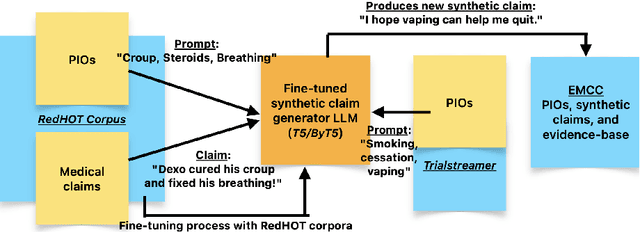
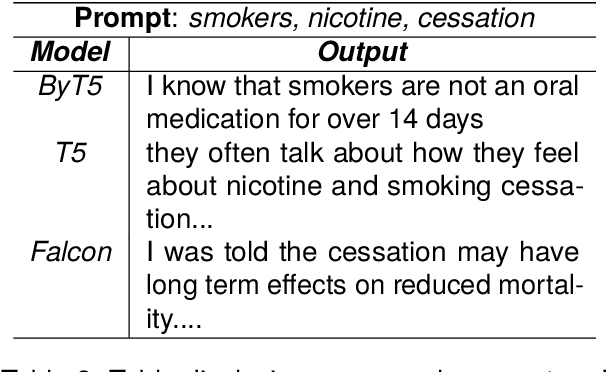

Evidence-based medicine is the practice of making medical decisions that adhere to the latest, and best known evidence at that time. Currently, the best evidence is often found in the form of documents, such as randomized control trials, meta-analyses and systematic reviews. This research focuses on aligning medical claims made on social media platforms with this medical evidence. By doing so, individuals without medical expertise can more effectively assess the veracity of such medical claims. We study three core tasks: identifying medical claims, extracting medical vocabulary from these claims, and retrieving evidence relevant to those identified medical claims. We propose a novel system that can generate synthetic medical claims to aid each of these core tasks. We additionally introduce a novel dataset produced by our synthetic generator that, when applied to these tasks, demonstrates not only a more flexible and holistic approach, but also an improvement in all comparable metrics. We make our dataset, the Expansive Medical Claim Corpus (EMCC), available at https://zenodo.org/records/8321460