 Add to Chrome
 Add to Firefox
 Add to Edge
VIGOR: Visual Goal-In-Context Inference for Unified Humanoid Fall Safety
Feb 18, 2026
Reliable fall recovery is critical for humanoids operating in cluttered environments. Unlike quadrupeds or wheeled robots, humanoids experience high-energy impacts, complex whole-body contact, and large viewpoint changes during a fall, making recovery essential for continued operation. Existing methods fragment fall safety into separate problems such as fall avoidance, impact mitigation, and stand-up recovery, or rely on end-to-end policies trained without vision through reinforcement learning or imitation learning, often on flat terrain. At a deeper level, fall safety is treated as monolithic data complexity, coupling pose, dynamics, and terrain and requiring exhaustive coverage, limiting scalability and generalization. We present a unified fall safety approach that spans all phases of fall recovery. It builds on two insights: 1) Natural human fall and recovery poses are highly constrained and transferable from flat to complex terrain through alignment, and 2) Fast whole-body reactions require integrated perceptual-motor representations. We train a privileged teacher using sparse human demonstrations on flat terrain and simulated complex terrains, and distill it into a deployable student that relies only on egocentric depth and proprioception. The student learns how to react by matching the teacher's goal-in-context latent representation, which combines the next target pose with the local terrain, rather than separately encoding what it must perceive and how it must act. Results in simulation and on a real Unitree G1 humanoid demonstrate robust, zero-shot fall safety across diverse non-flat environments without real-world fine-tuning. The project page is available at https://vigor2026.github.io/

MorphEUS: Morphable Omnidirectional Unmanned System
May 23, 2025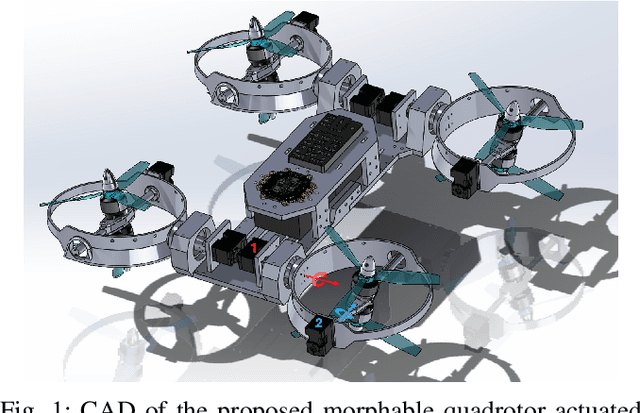
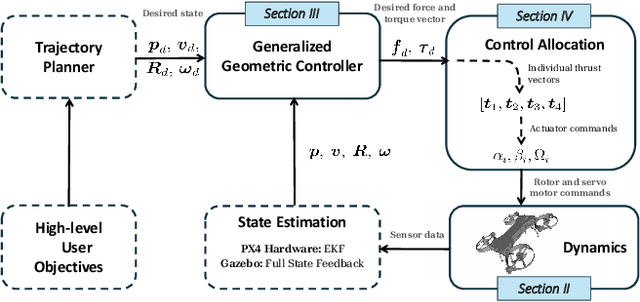
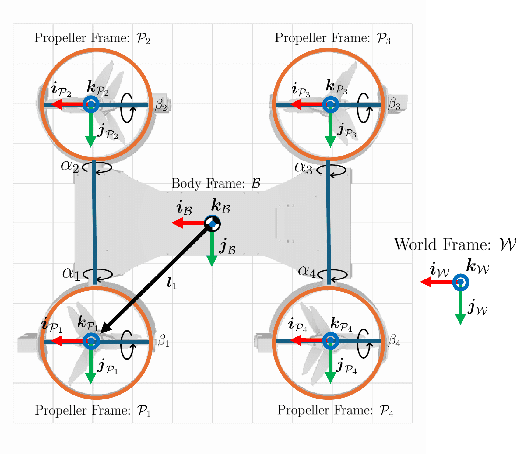
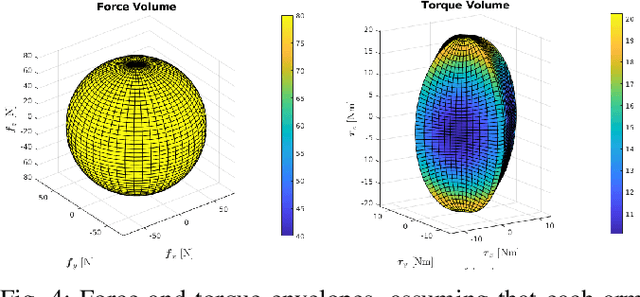
Omnidirectional aerial vehicles (OMAVs) have opened up a wide range of possibilities for inspection, navigation, and manipulation applications using drones. In this paper, we introduce MorphEUS, a morphable co-axial quadrotor that can control position and orientation independently with high efficiency. It uses a paired servo motor mechanism for each rotor arm, capable of pointing the vectored-thrust in any arbitrary direction. As compared to the \textit{state-of-the-art} OMAVs, we achieve higher and more uniform force/torque reachability with a smaller footprint and minimum thrust cancellations. The overactuated nature of the system also results in resiliency to rotor or servo-motor failures. The capabilities of this quadrotor are particularly well-suited for contact-based infrastructure inspection and close-proximity imaging of complex geometries. In the accompanying control pipeline, we present theoretical results for full controllability, almost-everywhere exponential stability, and thrust-energy optimality. We evaluate our design and controller on high-fidelity simulations showcasing the trajectory-tracking capabilities of the vehicle during various tasks. Supplementary details and experimental videos are available on the project webpage.