 Add to Chrome
 Add to Firefox
 Add to Edge
Out-of-Distribution Generalization of Risk Aversion in Language Models
Jul 02, 2026
Training AIs to be risk-averse in resources could offer a failsafe in the event that AIs turn out misaligned. Misaligned but risk-averse AIs would tend to prefer low-risk, low-reward strategies like cooperation over high-risk, high-reward strategies like rebellion, limiting the downsides of any misalignment. But we can only feasibly train AIs to be risk-averse on low-stakes gambles, and we will only be safe if their risk aversion generalizes to astronomically-high-stakes gambles. Will it? To shed light on this question, we introduce RiskAverseOOD: a benchmark for measuring how well risk aversion generalizes out of distribution. We then offer some initial results. Using a variety of methods to make Qwen3-8B choose risk-aversely when the stakes are low, we find that we can induce substantial risk aversion when the stakes are astronomically high. Our models' learned risk aversion generalizes at least partially across 98 orders of magnitude. From a baseline 2% rate of choosing a safe `Cooperate' option, we see rates around 70% (SFT and tie training), 52% (DPO), and 39% (activation steering). In another experiment, our fine-tuned reward model reliably scores risk-averse reasoning above risk-neutral or excessively risk-averse alternatives (99.6% pairwise accuracy). We replicate these effects at different scales (Qwen3-1.7B and Qwen3-14B) and across model families (Gemma-3-12B-IT and Llama-3.1-8B-Instruct). Overall, we find that risk aversion learned at low stakes can generalize OOD to astronomically high stakes, though not yet consistently enough to serve as a reliable failsafe. Achieving that level of consistency is an open problem.

Clinically Aligned Geometry Constraints for Robust IVUS Vessel Boundary Segmentation
Jun 17, 2026Intravascular ultrasound (IVUS) lumen and external elastic membrane (EEM) segmentation is important for quantitative coronary plaque burden assessment. Errors in lumen or EEM delineation directly propagate to plaque area, plaque burden and geometric measurements. However, standard methods prioritising overlap scores often suffer from boundary drift and topology errors, leading to inaccurate clinical measurements. We present GeoCat, a geometry-consistent network that processes 5-frame IVUS clips using dual Cartesian-polar encoders with cross-domain attention and temporal fusion. A differentiable geometry consistency loss directly supervises clinically relevant descriptors including diameters, orientations, and cross-sectional areas. The model is trained on 12,242 annotated frames from 146 patients acquired with two commercial IVUS systems. We evaluate performance using both segmentation accuracy and plaque-relevant clinical metrics, including Dice/IoU, boundary measures(95HD (mm), ASSD), topology violation rate, and clinical geometry errors (dmax/dmin, angles, and areas). On our dataset, GeoCat achieves a Dice of 0.93, reduces 95HD to 0.14 mm, and lowers topology violations to 1.0%. Importantly, it significantly improves geometric fidelity, yielding diameter errors of 0.13-0.16 mm and angular errors of ~8 degrees, supporting reliable plaque burden quantification.
Infra-Bayesian Reinforcement Learning Agents Outperform Classical RL For Worst-Case Robustness
May 22, 2026Classical reinforcement learning assumes the agent interacts with a fixed environment whose behavior does not depend on the agent's policy. This assumption breaks down in non-realizable settings where other actors might anticipate the agent's behavior, including environments crucial to AI safety, where the agent interacts with predictors, humans, other AI agents, and institutions. In such settings, the agent's model class fails to capture the world in which it operates. Under such misspecification, classical Bayesian methods can produce confidently wrong posteriors, unreliable decisions, and unbounded regret, as realizability fails to obtain. Infra-Bayesianism is a decision-theoretic framework that addresses these failures by distinguishing ordinary probabilistic uncertainty, where priors can be reasonably chosen, from Knightian uncertainty, where no grounds exist for the construction of such a prior. It does so by evaluating actions on their worst-case outcomes, rather than from posterior expectations or weighted averaging. We present the first proof-of-concept implementation of an infra-Bayesian reinforcement learning architecture for finite-outcome stateless decision problems. Our agent maintains a set of imprecise hypotheses, updates them using infra-Bayesian conditioning, and selects actions by maximizing worst-case expected value. We apply this implementation of the infra-Bayesian maximin decision process to an environment with Knightian uncertainty, and demonstrate a lower worst-case regret as compared to classical reinforcement learning agents. We also investigate Newcomb's problem and show that the infra-Bayesian agent picks the optimal strategy, outperforming classical decision theory agents. Our results provide a step towards reinforcement learning agents that remain robust under model misspecification and policy-dependent uncertainty.
Rapid quantification of COVID-19 pneumonia burden from computed tomography with convolutional LSTM networks
Mar 31, 2021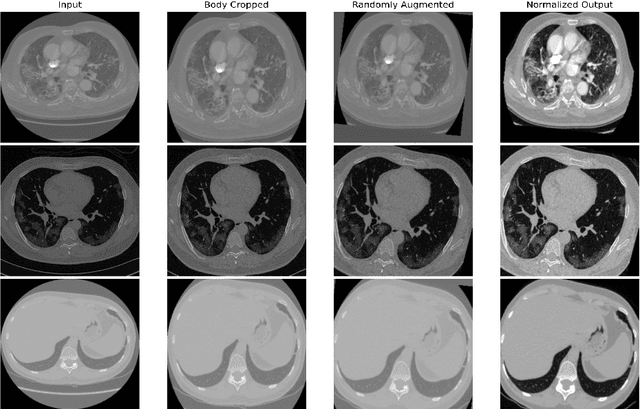
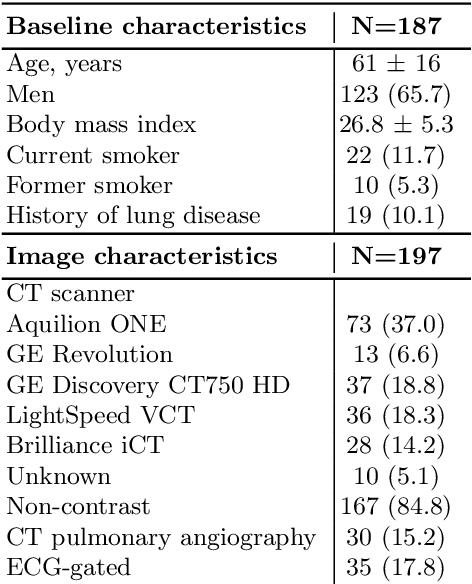
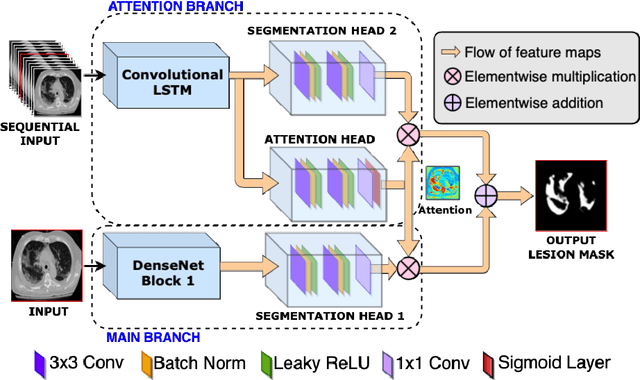
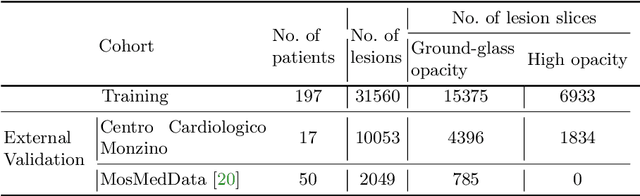
Quantitative lung measures derived from computed tomography (CT) have been demonstrated to improve prognostication in coronavirus disease (COVID-19) patients, but are not part of the clinical routine since required manual segmentation of lung lesions is prohibitively time-consuming. We propose a new fully automated deep learning framework for rapid quantification and differentiation between lung lesions in COVID-19 pneumonia from both contrast and non-contrast CT images using convolutional Long Short-Term Memory (ConvLSTM) networks. Utilizing the expert annotations, model training was performed 5 times with separate hold-out sets using 5-fold cross-validation to segment ground-glass opacity and high opacity (including consolidation and pleural effusion). The performance of the method was evaluated on CT data sets from 197 patients with positive reverse transcription polymerase chain reaction test result for SARS-CoV-2. Strong agreement between expert manual and automatic segmentation was obtained for lung lesions with a Dice score coefficient of 0.876 $\pm$ 0.005; excellent correlations of 0.978 and 0.981 for ground-glass opacity and high opacity volumes. In the external validation set of 67 patients, there was dice score coefficient of 0.767 $\pm$ 0.009 as well as excellent correlations of 0.989 and 0.996 for ground-glass opacity and high opacity volumes. Computations for a CT scan comprising 120 slices were performed under 2 seconds on a personal computer equipped with NVIDIA Titan RTX graphics processing unit. Therefore, our deep learning-based method allows rapid fully-automated quantitative measurement of pneumonia burden from CT and may generate results with an accuracy similar to the expert readers.
The Complexity of Manipulating $k$-Approval Elections
Apr 19, 2012An important problem in computational social choice theory is the complexity of undesirable behavior among agents, such as control, manipulation, and bribery in election systems. These kinds of voting strategies are often tempting at the individual level but disastrous for the agents as a whole. Creating election systems where the determination of such strategies is difficult is thus an important goal. An interesting set of elections is that of scoring protocols. Previous work in this area has demonstrated the complexity of misuse in cases involving a fixed number of candidates, and of specific election systems on unbounded number of candidates such as Borda. In contrast, we take the first step in generalizing the results of computational complexity of election misuse to cases of infinitely many scoring protocols on an unbounded number of candidates. Interesting families of systems include $k$-approval and $k$-veto elections, in which voters distinguish $k$ candidates from the candidate set. Our main result is to partition the problems of these families based on their complexity. We do so by showing they are polynomial-time computable, NP-hard, or polynomial-time equivalent to another problem of interest. We also demonstrate a surprising connection between manipulation in election systems and some graph theory problems.