 Add to Chrome
 Add to Firefox
 Add to Edge
Cognitive Training for Language Models: Towards General Capabilities via Cross-Entropy Games
Mar 23, 2026
Defining a constructive process to build general capabilities for language models in an automatic manner is considered an open problem in artificial intelligence. Towards this, we consider the problem of building a curriculum of tasks that grows a model via relevant skill discovery. We provide a concrete framework for this task, using a family of tasks called cross-entropy games, which we postulate is universal in a suitable sense. We show that if it is possible to grow the curriculum for relevant skill discovery by iterating a greedy optimization algorithm, then, under natural assumptions, there is essentially only one meta-objective possible (up to a few hyperparameters). We call the resulting process cognitive training. We postulate that, given sufficiently capable language models as players and meta-samplers and sufficient training time, cognitive training provides a principled way to relevant skill discovery; and hence to the extent general capabilities are achievable via greedy curriculum learning, cognitive training would be a solution.

Cross-Entropy Games for Language Models: From Implicit Knowledge to General Capability Measures
Jun 07, 2025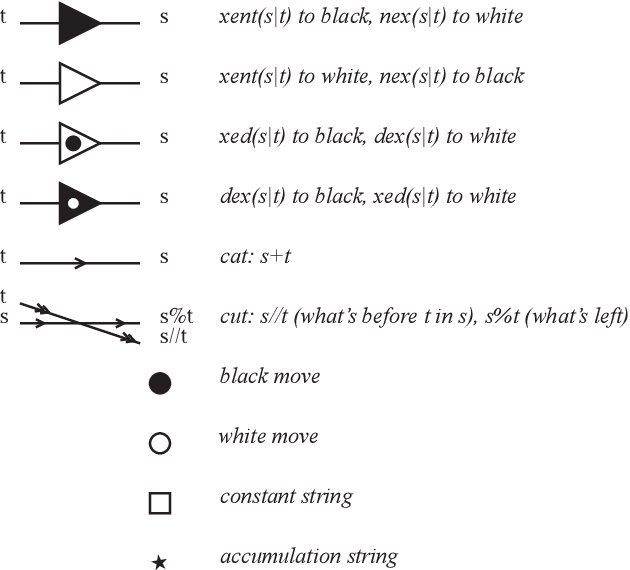
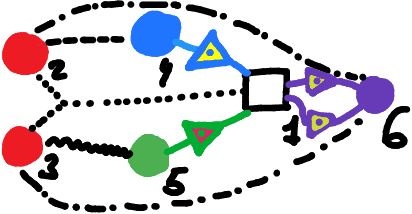
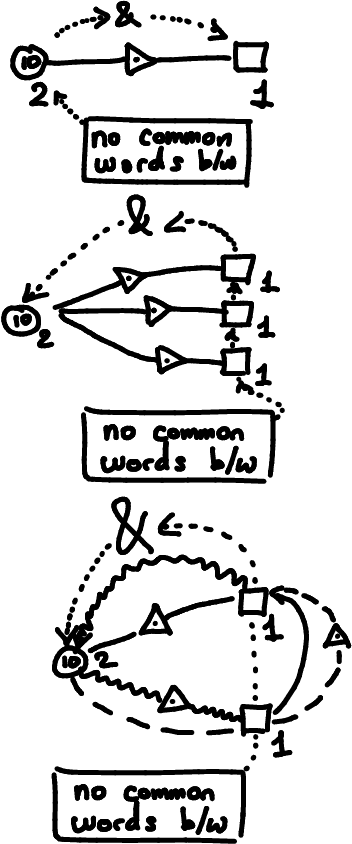
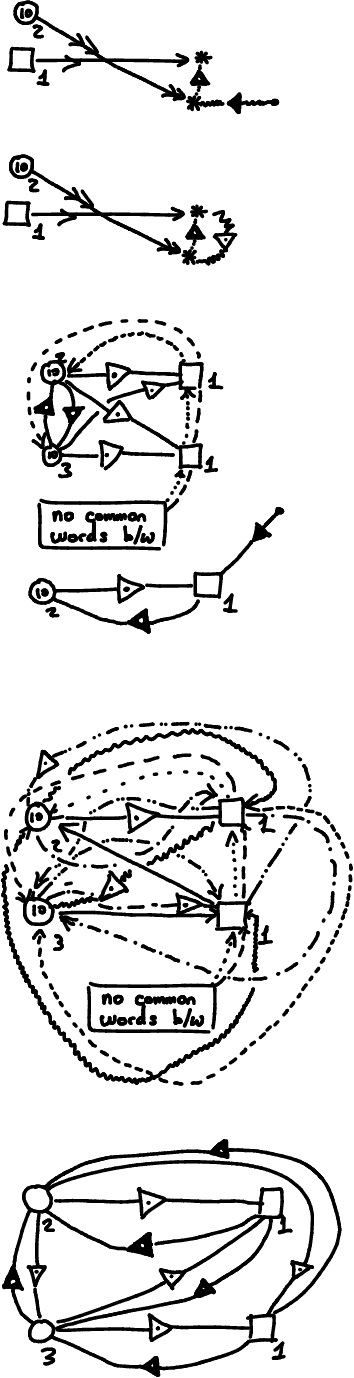
Large Language Models (LLMs) define probability measures on text. By considering the implicit knowledge question of what it means for an LLM to know such a measure and what it entails algorithmically, we are naturally led to formulate a series of tasks that go beyond generative sampling, involving forms of summarization, counterfactual thinking, anomaly detection, originality search, reverse prompting, debating, creative solving, etc. These tasks can be formulated as games based on LLM measures, which we call Cross-Entropy (Xent) Games. Xent Games can be single-player or multi-player. They involve cross-entropy scores and cross-entropy constraints, and can be expressed as simple computational graphs and programs. We show the Xent Game space is large enough to contain a wealth of interesting examples, while being constructible from basic game-theoretic consistency axioms. We then discuss how the Xent Game space can be used to measure the abilities of LLMs. This leads to the construction of Xent Game measures: finite families of Xent Games that can be used as capability benchmarks, built from a given scope, by extracting a covering measure. To address the unbounded scope problem associated with the challenge of measuring general abilities, we propose to explore the space of Xent Games in a coherent fashion, using ideas inspired by evolutionary dynamics.