 Add to Chrome
 Add to Firefox
 Add to Edge
Owlgorithm: Supporting Self-Regulated Learning in Competitive Programming through LLM-Driven Reflection
Nov 13, 2025
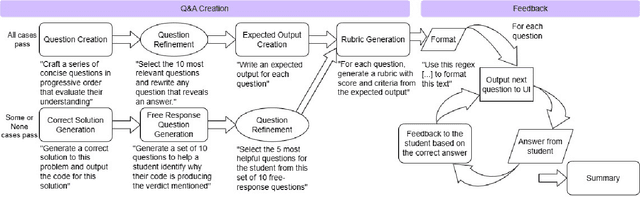
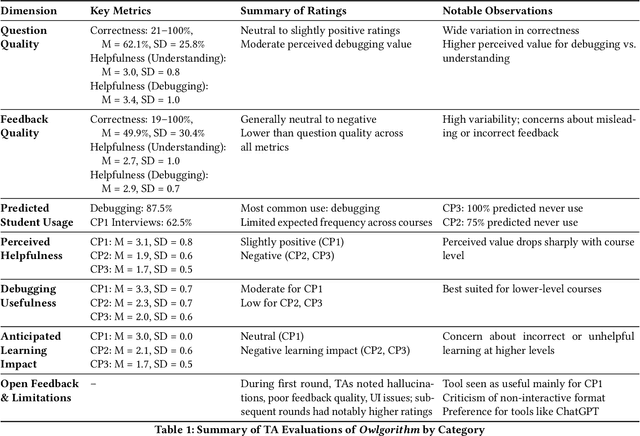
We present Owlgorithm, an educational platform that supports Self-Regulated Learning (SRL) in competitive programming (CP) through AI-generated reflective questions. Leveraging GPT-4o, Owlgorithm produces context-aware, metacognitive prompts tailored to individual student submissions. Integrated into a second- and third-year CP course, the system-provided reflective prompts adapted to student outcomes: guiding deeper conceptual insight for correct solutions and structured debugging for partial or failed ones. Our exploratory assessment of student ratings and TA feedback revealed both promising benefits and notable limitations. While many found the generated questions useful for reflection and debugging, concerns were raised about feedback accuracy and classroom usability. These results suggest advantages of LLM-supported reflection for novice programmers, though refinements are needed to ensure reliability and pedagogical value for advanced learners. From our experience, several key insights emerged: GenAI can effectively support structured reflection, but careful prompt design, dynamic adaptation, and usability improvements are critical to realizing their potential in education. We offer specific recommendations for educators using similar tools and outline next steps to enhance Owlgorithm's educational impact. The underlying framework may also generalize to other reflective learning contexts.

Evaluating the AI-Lab Intervention: Impact on Student Perception and Use of Generative AI in Early Undergraduate Computer Science Courses
Apr 30, 2025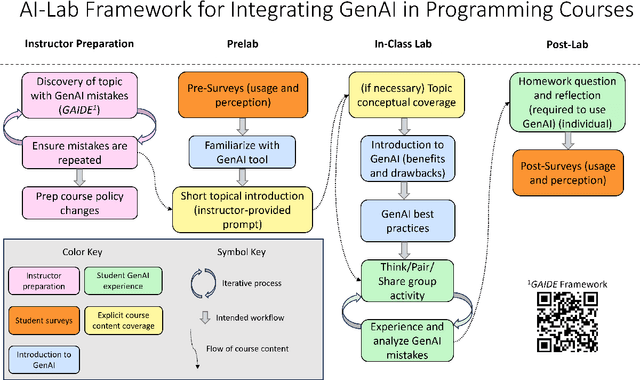
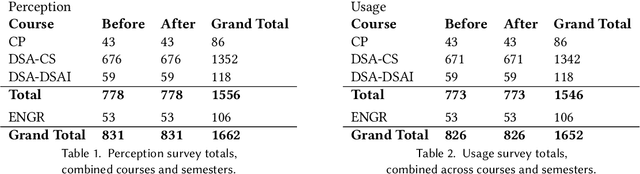
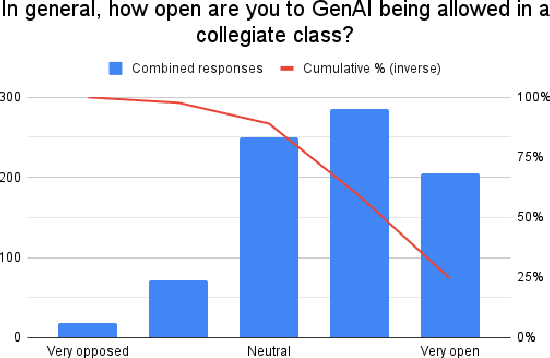
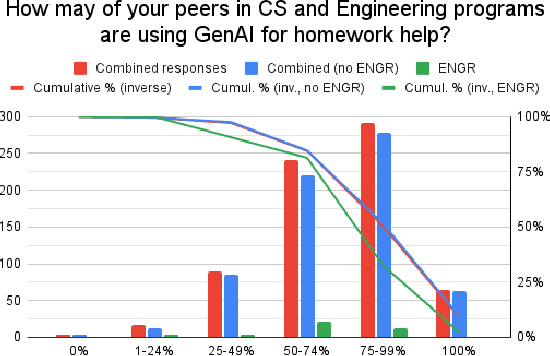
Generative AI (GenAI) is rapidly entering computer science education, yet its effects on student learning, skill development, and perceptions remain underexplored. Concerns about overreliance coexist with a gap in research on structured scaffolding to guide tool use in formal courses. This study examines the impact of a dedicated "AI-Lab" intervention -- emphasizing guided scaffolding and mindful engagement -- on undergraduate students in Data Structures and Algorithms, Competitive Programming, and first-year engineering courses at Purdue University. Over three semesters, we integrated AI-Lab modules into four mandatory and elective courses, yielding 831 matched pre- and post-intervention survey responses, alongside focus group discussions. Employing a mixed-methods approach, we analyzed quantitative shifts in usage patterns and attitudes as well as qualitative narratives of student experiences. While the overall frequency of GenAI usage for homework or programming projects remained largely stable, we observed large effect sizes in comfort and openness across conceptual, debugging, and homework problems. Notably, usage patterns for debugging also shifted statistically significantly, reflecting students' more mindful and deliberate approach. Focus group discussions corroborated these results, suggesting that the intervention "bridged the gap" between naive GenAI usage and more nuanced, reflective integration of AI tools into coursework, ultimately heightening students' awareness of their own skill development. These findings suggest that structured, scaffolded interventions can enable students to harness GenAI's benefits without undermining essential competencies. We offer evidence-based recommendations for educators seeking to integrate GenAI responsibly into computing curricula and identify avenues for future research on GenAI-supported pedagogy.