 Add to Chrome
 Add to Firefox
 Add to Edge
Reproducible, Explainable, and Effective Evaluations of Agentic AI for Software Engineering
Apr 01, 2026
With the advancement of Agentic AI, researchers are increasingly leveraging autonomous agents to address challenges in software engineering (SE). However, the large language models (LLMs) that underpin these agents often function as black boxes, making it difficult to justify the superiority of Agentic AI approaches over baselines. Furthermore, missing information in the evaluation design description frequently renders the reproduction of results infeasible. To synthesize current evaluation practices for Agentic AI in SE, this study analyzes 18 papers on the topic, published or accepted by ICSE 2026, ICSE 2025, FSE 2025, ASE 2025, and ISSTA 2025. The analysis identifies prevailing approaches and their limitations in evaluating Agentic AI for SE, both in current research and potential future studies. To address these shortcomings, this position paper proposes a set of guidelines and recommendations designed to empower reproducible, explainable, and effective evaluations of Agentic AI in software engineering. In particular, we recommend that Agentic AI researchers make their Thought-Action-Result (TAR) trajectories and LLM interaction data, or summarized versions of these artifacts, publicly accessible. Doing so will enable subsequent studies to more effectively analyze the strengths and weaknesses of different Agentic AI approaches. To demonstrate the feasibility of such comparisons, we present a proof-of-concept case study that illustrates how TAR trajectories can support systematic analysis across approaches.

Favia: Forensic Agent for Vulnerability-fix Identification and Analysis
Feb 13, 2026Identifying vulnerability-fixing commits corresponding to disclosed CVEs is essential for secure software maintenance but remains challenging at scale, as large repositories contain millions of commits of which only a small fraction address security issues. Existing automated approaches, including traditional machine learning techniques and recent large language model (LLM)-based methods, often suffer from poor precision-recall trade-offs. Frequently evaluated on randomly sampled commits, we uncover that they are substantially underestimating real-world difficulty, where candidate commits are already security-relevant and highly similar. We propose Favia, a forensic, agent-based framework for vulnerability-fix identification that combines scalable candidate ranking with deep and iterative semantic reasoning. Favia first employs an efficient ranking stage to narrow the search space of commits. Each commit is then rigorously evaluated using a ReAct-based LLM agent. By providing the agent with a pre-commit repository as environment, along with specialized tools, the agent tries to localize vulnerable components, navigates the codebase, and establishes causal alignment between code changes and vulnerability root causes. This evidence-driven process enables robust identification of indirect, multi-file, and non-trivial fixes that elude single-pass or similarity-based methods. We evaluate Favia on CVEVC, a large-scale dataset we made that comprises over 8 million commits from 3,708 real-world repositories, and show that it consistently outperforms state-of-the-art traditional and LLM-based baselines under realistic candidate selection, achieving the strongest precision-recall trade-offs and highest F1-scores.
Efficient Avoidance of Vulnerabilities in Auto-completed Smart Contract Code Using Vulnerability-constrained Decoding
Sep 18, 2023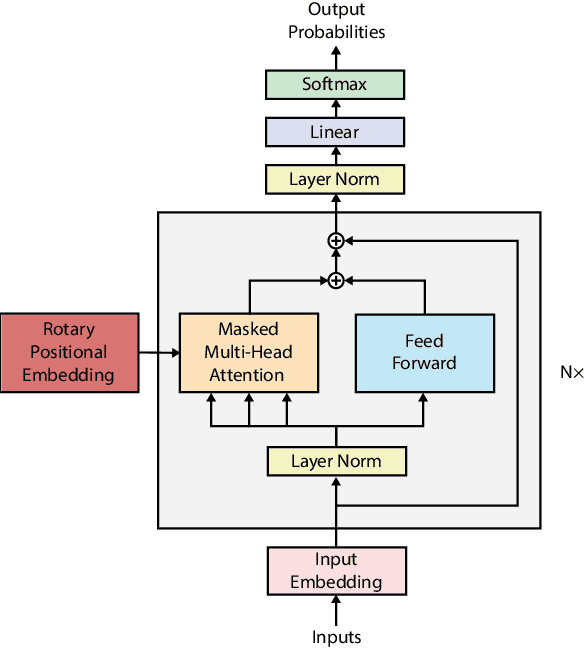
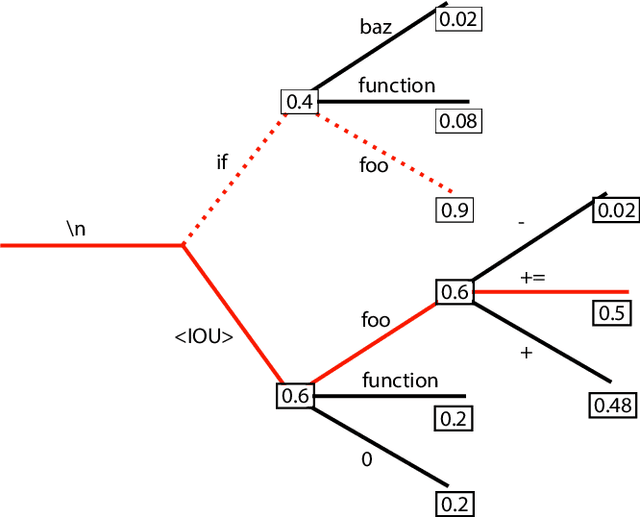
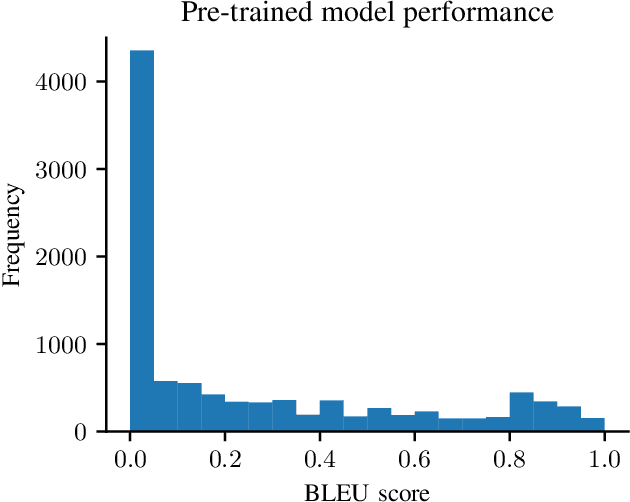
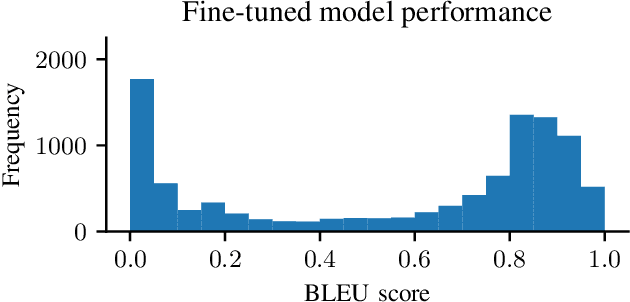
Auto-completing code enables developers to speed up coding significantly. Recent advances in transformer-based large language model (LLM) technologies have been applied to code synthesis. However, studies show that many of such synthesized codes contain vulnerabilities. We propose a novel vulnerability-constrained decoding approach to reduce the amount of vulnerable code generated by such models. Using a small dataset of labeled vulnerable lines of code, we fine-tune an LLM to include vulnerability labels when generating code, acting as an embedded classifier. Then, during decoding, we deny the model to generate these labels to avoid generating vulnerable code. To evaluate the method, we chose to automatically complete Ethereum Blockchain smart contracts (SCs) as the case study due to the strict requirements of SC security. We first fine-tuned the 6-billion-parameter GPT-J model using 186,397 Ethereum SCs after removing the duplication from 2,217,692 SCs. The fine-tuning took more than one week using ten GPUs. The results showed that our fine-tuned model could synthesize SCs with an average BLEU (BiLingual Evaluation Understudy) score of 0.557. However, many codes in the auto-completed SCs were vulnerable. Using the code before the vulnerable line of 176 SCs containing different types of vulnerabilities to auto-complete the code, we found that more than 70% of the auto-completed codes were insecure. Thus, we further fine-tuned the model on other 941 vulnerable SCs containing the same types of vulnerabilities and applied vulnerability-constrained decoding. The fine-tuning took only one hour with four GPUs. We then auto-completed the 176 SCs again and found that our approach could identify 62% of the code to be generated as vulnerable and avoid generating 67% of them, indicating the approach could efficiently and effectively avoid vulnerabilities in the auto-completed code.