 Add to Chrome
 Add to Firefox
 Add to Edge
Mosques Smart Domes System using Machine Learning Algorithms
Aug 30, 2020


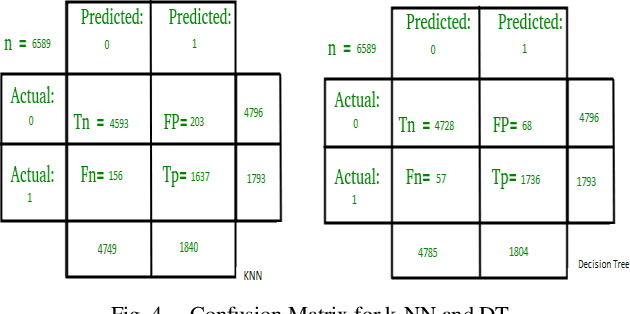
Millions of mosques around the world are suffering some problems such as ventilation and difficulty getting rid of bacteria, especially in rush hours where congestion in mosques leads to air pollution and spread of bacteria, in addition to unpleasant odors and to a state of discomfort during the pray times, where in most mosques there are no enough windows to ventilate the mosque well. This paper aims to solve these problems by building a model of smart mosques domes using weather features and outside temperatures. Machine learning algorithms such as k Nearest Neighbors and Decision Tree were applied to predict the state of the domes open or close. The experiments of this paper were applied on Prophet mosque in Saudi Arabia, which basically contains twenty seven manually moving domes. Both machine learning algorithms were tested and evaluated using different evaluation methods. After comparing the results for both algorithms, DT algorithm was achieved higher accuracy 98% comparing with 95% accuracy for kNN algorithm. Finally, the results of this study were promising and will be helpful for all mosques to use our proposed model for controlling domes automatically.

Formulating Module Assessment for Improved Academic Performance Predictability in Higher Education
Aug 30, 2020


Various studies have shown that students tend to get higher marks when assessed through coursework based assessment methods which include either modules that are fully assessed through coursework or a mixture of coursework and examinations than assessed by examination alone. There are a large number of educational data mining studies that preprocess data through conventional data mining processes including data preparation process, but they are using transcript data as they stand without looking at examination and coursework results weighting which could affect prediction accuracy. This paper proposes a different data preparation process through investigating more than 230000 student records in order to prepare students marks based on the assessment methods of enrolled modules. The data have been processed through different stages in order to extract a categorical factor through which students module marks are refined during the data preparation process. The results of this work show that students final marks should not be isolated from the nature of the enrolled modules assessment methods. They must rather be investigated thoroughly and considered during EDMs data preprocessing phases. More generally, it is concluded that educational data should not be prepared in the same way as other data types due to differences as data sources, applications, and types of errors in them. Therefore, an attribute, coursework assessment ratio, is proposed to be used in order to take the different modules assessment methods into account while preparing student transcript data. The effect of CAR on prediction process using the random forest classification technique has been investigated. It is shown that considering CAR as an attribute increases the accuracy of predicting students second year averages based on their first year results.