 Add to Chrome
 Add to Firefox
 Add to Edge
Improving Controllable Generation: Faster Training and Better Performance via $x_0$-Supervision
Apr 07, 2026
Text-to-Image (T2I) diffusion/flow models have recently achieved remarkable progress in visual fidelity and text alignment. However, they remain limited when users need to precisely control image layouts, something that natural language alone cannot reliably express. Controllable generation methods augment the initial T2I model with additional conditions that more easily describe the scene. Prior works straightforwardly train the augmented network with the same loss as the initial network. Although natural at first glance, this can lead to very long training times in some cases before convergence. In this work, we revisit the training objective of controllable diffusion models through a detailed analysis of their denoising dynamics. We show that direct supervision on the clean target image, dubbed $x_0$-supervision, or an equivalent re-weighting of the diffusion loss, yields faster convergence. Experiments on multiple control settings demonstrate that our formulation accelerates convergence by up to 2$\times$ according to our novel metric (mean Area Under the Convergence Curve - mAUCC), while also improving both visual quality and conditioning accuracy. Our code is available at https://github.com/CEA-LIST/x0-supervision

A Fused Gromov-Wasserstein Approach to Subgraph Contrastive Learning
Feb 28, 2025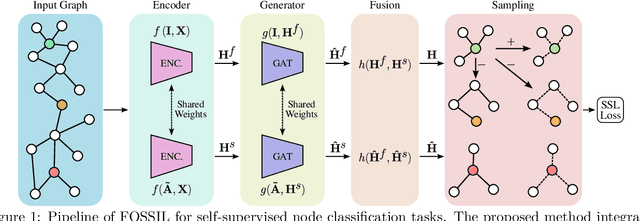
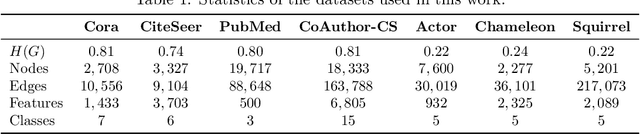
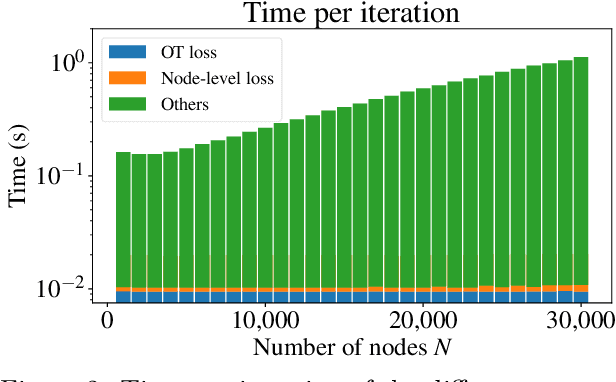
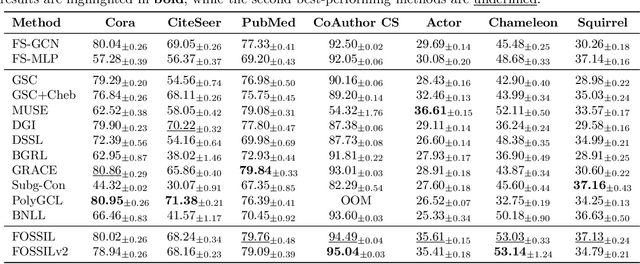
Self-supervised learning has become a key method for training deep learning models when labeled data is scarce or unavailable. While graph machine learning holds great promise across various domains, the design of effective pretext tasks for self-supervised graph representation learning remains challenging. Contrastive learning, a popular approach in graph self-supervised learning, leverages positive and negative pairs to compute a contrastive loss function. However, current graph contrastive learning methods often struggle to fully use structural patterns and node similarities. To address these issues, we present a new method called Fused Gromov Wasserstein Subgraph Contrastive Learning (FOSSIL). Our model integrates node-level and subgraph-level contrastive learning, seamlessly combining a standard node-level contrastive loss with the Fused Gromov-Wasserstein distance. This combination helps our method capture both node features and graph structure together. Importantly, our approach works well with both homophilic and heterophilic graphs and can dynamically create views for generating positive and negative pairs. Through extensive experiments on benchmark graph datasets, we show that FOSSIL outperforms or achieves competitive performance compared to current state-of-the-art methods.