 Add to Chrome
 Add to Firefox
 Add to Edge
Autonomous Collaborative Learning Among an Ensemble of Tsetlin Machines with Consensus-Based Inference
Jul 22, 2026
Tsetlin Machine (TM) is a rule-based machine-learning algorithm comprising collectives of two-action Tsetlin Automata (TAs) that cooperatively form conjunctive logical clauses from Boolean inputs through stochastic feedback. Although few recent studies have examined TM Federated Learning, the broader area of distributed and decentralized TM learning has not received much attention in the existing literature and warrants further exploration. In this work, we propose a paradigm for decentralized collaborative learning under a vertical feature-partitioning setting among an ensemble of Tsetlin Machines using consensus-based inference. Within this decentralized paradigm, each agent maintains its own private TM model, and there is no exchange of raw data among agents. Inference combines individual agents model predictions into a global consensus. The paradigm accommodates heterogeneous TM-based agents with differing data acquisition means, local data distributions, or computational resources, thereby facilitating the integration and fusion of information in settings such as multi-modal sensing environments. Experiments conducted using two-dimensional grid and connected graph network topologies demonstrate that the classification accuracies achieved are comparable to those of centralized models.

On-chip fully reconfigurable Artificial Neural Network in 16 nm FinFET for Positron Emission Tomography
Feb 16, 2023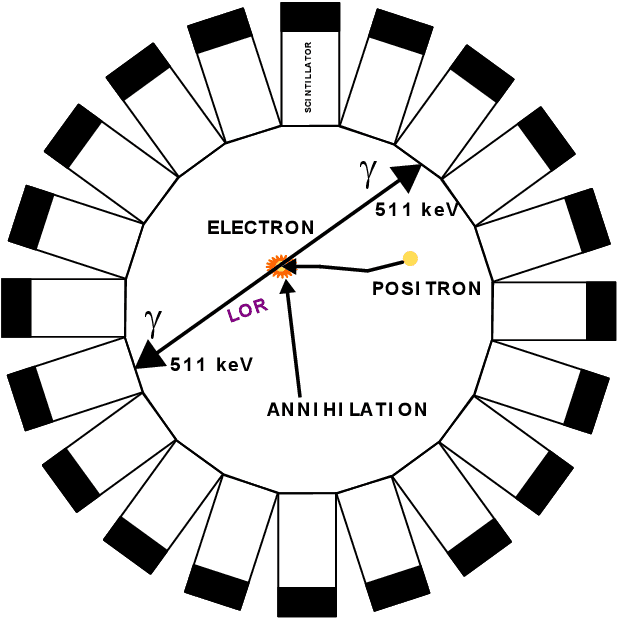
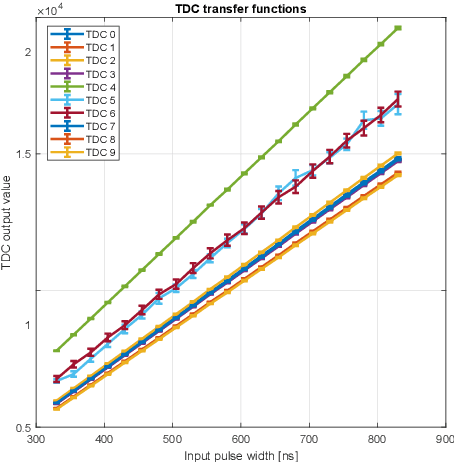
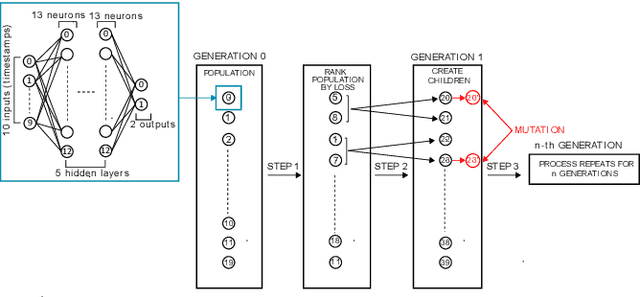
Smarty is a fully-reconfigurable on-chip feed-forward artificial neural network (ANN) with ten integrated time-to-digital converters (TDCs) designed in a 16 nm FinFET CMOS technology node. The integration of TDCs together with an ANN aims to reduce system complexity and minimize data throughput requirements in positron emission tomography (PET) applications. The TDCs have an average LSB of 53.5 ps. The ANN is fully reconfigurable, the user being able to change its topology as desired within a set of constraints. The chip can execute 363 MOPS with a maximum power consumption of 1.9 mW, for an efficiency of 190 GOPS/W. The system performance was tested in a coincidence measurement setup interfacing Smarty with two groups of five 4 mm x 4 mm analog silicon photomultipliers (A-SiPMs) used as inputs for the TDCs. The ANN successfully distinguished between six different positions of a radioactive source placed between the two photodetector arrays by solely using the TDC timestamps.