 Add to Chrome
 Add to Firefox
 Add to Edge
What Do AI Agents Actually Change? An Empirical Taxonomy of Mutation Patterns in Performance-Improving Pull Requests
Jul 06, 2026
AI coding agents are black boxes: we cannot inspect how they generate code, but we can inspect what they change. This distinction matters for search-based software engineering (SBSE), where techniques such as genetic improvement (in the performance-optimisation application we study) depend on mutation operators that reflect how code is actually transformed. Fewer than 1% of the 33,596 agent PRs in AIDev-pop target performance, making each case a rare window into otherwise opaque agent behaviour. We classify 1,254 performance-relevant diff hunks from 216 of these PRs, spanning five agent systems, against the 18-category syntactic mutation taxonomy of Even-Mendoza et al. (2025) using a dual-LLM intersection pipeline. Three categories dominate: name modification (37.0%), object creation (26.4%), and type change (22.7%), a profile markedly different from prior GI corpora where no change accounted for 84%. Each agent's deployed system commits to a distinctive mutation vocabulary, and each performance strategy activates a largely disjoint category subset. Agent identity and target strategy are therefore informative priors that narrow the effective SBSE operator space. Replication package: https://github.com/5uper6rain/ssbse-challenge-2026

Evolutionary Computation and Explainable AI: A Roadmap to Transparent Intelligent Systems
Jun 12, 2024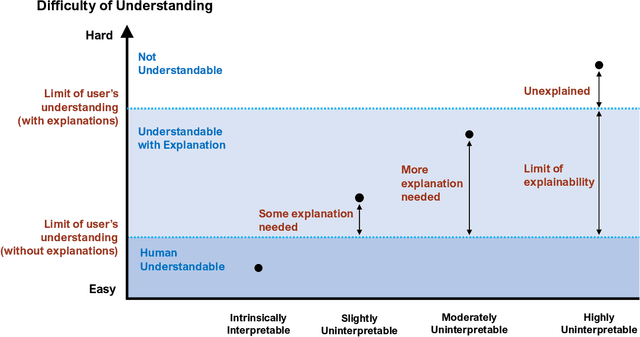
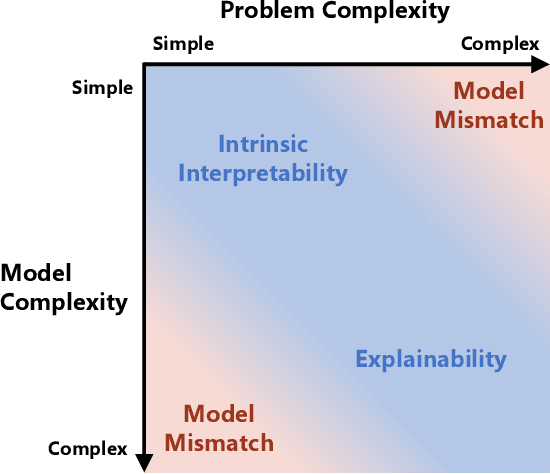
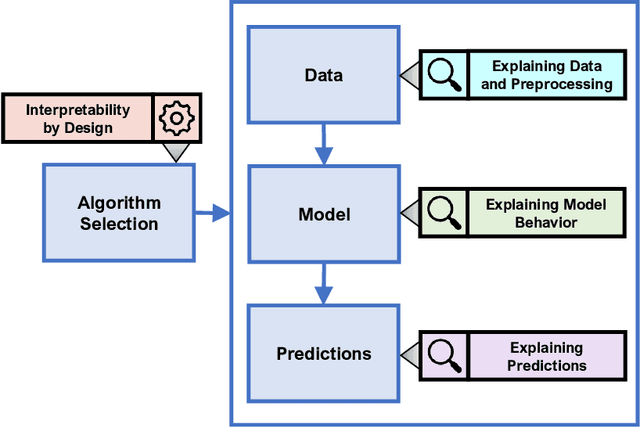
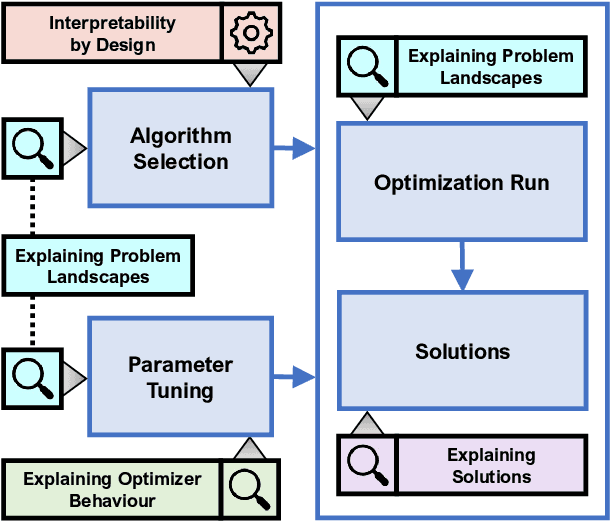
AI methods are finding an increasing number of applications, but their often black-box nature has raised concerns about accountability and trust. The field of explainable artificial intelligence (XAI) has emerged in response to the need for human understanding of AI models. Evolutionary computation (EC), as a family of powerful optimization and learning tools, has significant potential to contribute to XAI. In this paper, we provide an introduction to XAI and review various techniques in current use for explaining machine learning (ML) models. We then focus on how EC can be used in XAI, and review some XAI approaches which incorporate EC techniques. Additionally, we discuss the application of XAI principles within EC itself, examining how these principles can shed some light on the behavior and outcomes of EC algorithms in general, on the (automatic) configuration of these algorithms, and on the underlying problem landscapes that these algorithms optimize. Finally, we discuss some open challenges in XAI and opportunities for future research in this field using EC. Our aim is to demonstrate that EC is well-suited for addressing current problems in explainability and to encourage further exploration of these methods to contribute to the development of more transparent and trustworthy ML models and EC algorithms.
An Application of a Multivariate Estimation of Distribution Algorithm to Cancer Chemotherapy
May 17, 2022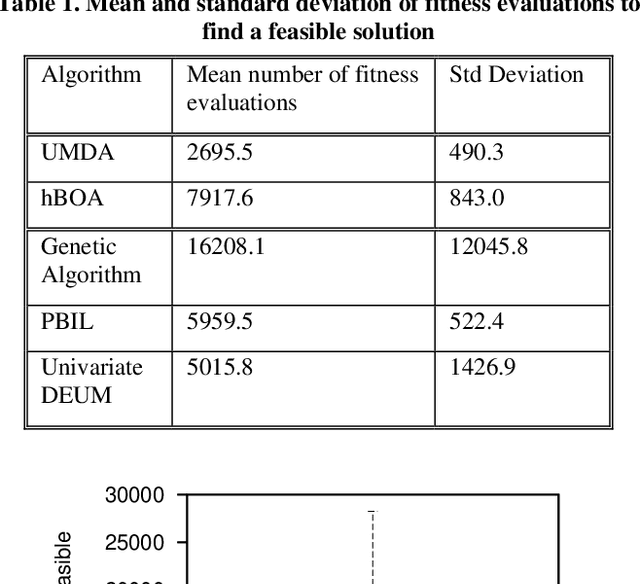
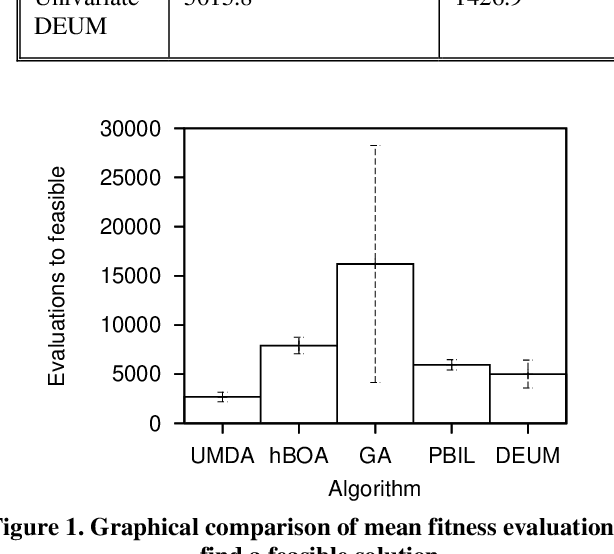
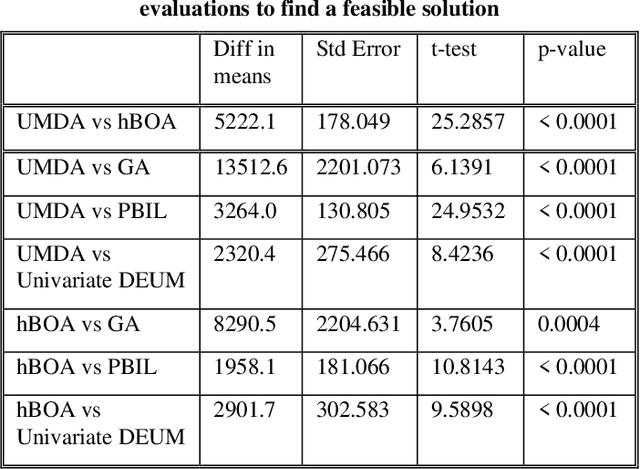
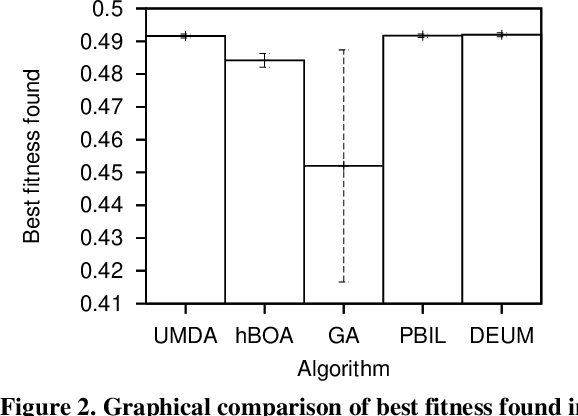
Chemotherapy treatment for cancer is a complex optimisation problem with a large number of interacting variables and constraints. A number of different probabilistic algorithms have been applied to it with varying success. In this paper we expand on this by applying two estimation of distribution algorithms to the problem. One is UMDA, which uses a univariate probabilistic model similar to previously applied EDAs. The other is hBOA, the first EDA using a multivariate probabilistic model to be applied to the chemotherapy problem. While instinct would lead us to predict that the more sophisticated algorithm would yield better performance on a complex problem like this, we show that it is outperformed by the algorithms using the simpler univariate model. We hypothesise that this is caused by the more sophisticated algorithm being impeded by the large number of interactions in the problem which are unnecessary for its solution.