 Add to Chrome
 Add to Firefox
 Add to Edge
Channel Modeling and Experimental Validation of Odor-Based Molecular Communication Systems
Feb 01, 2026
Odor-based Molecular Communication (OMC) employs odor molecules to convey information, contributing to the realization of the Internet of Everything (IoE) vision. Despite this, the practical deployment of OMC systems is currently limited by the lack of comprehensive channel models that accurately characterize particle propagation in diverse environments. While existing literature explores various aspects of molecular transport, a holistic approach that integrates theoretical modeling with experimental validation for bounded channels remains underdeveloped. In this paper, we address this gap by proposing mathematical frameworks for both bounded and unbounded OMC channels. To verify the accuracy of the proposed models, we develop a novel experimental testbed and conduct an extensive performance analysis. Our results demonstrate a strong correlation between the theoretical derivations and experimental data, providing a robust foundation for the design and analysis of future end-to-end OMC systems.

Information and Communication Theoretical Foundations of the Internet of Plants, Principles, Challenges, and Future Directions
Sep 10, 2025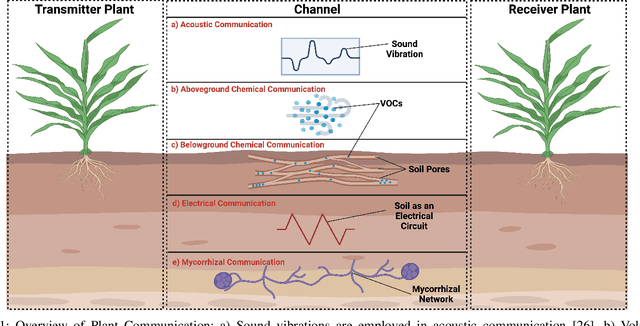
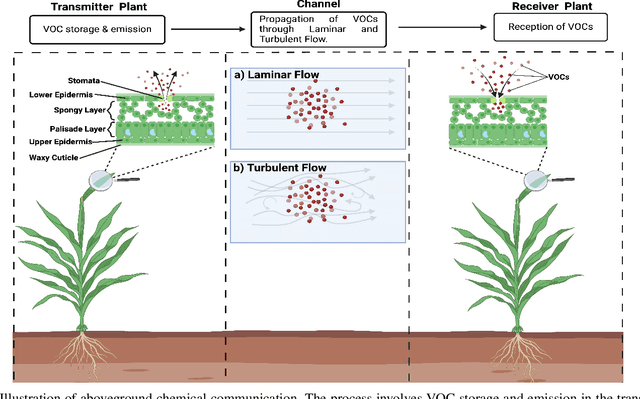
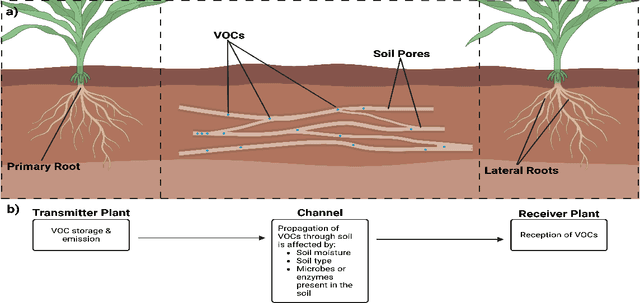
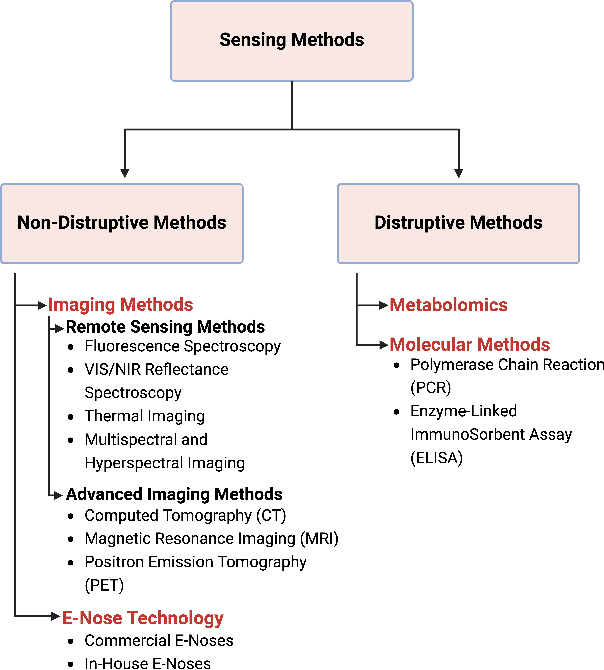
Plants exchange information through multiple modalities, including chemical, electrical, mycorrhizal, and acoustic signaling, which collectively support survival, defense, and adaptation. While these processes are well documented in biology, their systematic analysis from an Information and Communication Technology (ICT) perspective remains limited. To address this gap, this article is presented as a tutorial with survey elements. It provides the necessary biological background, reformulates inter-plant signaling within ICT frameworks, and surveys empirical studies to guide future research and applications. First, the paper introduces the fundamental biological processes to establish a foundation for readers in communications and networking. Building on this foundation, existing models of emission, propagation, and reception are synthesized for each modality and reformulated in terms of transmitter, channel, and receiver blocks. To complement theory, empirical studies and state-of-the-art sensing approaches are critically examined. Looking forward, the paper identifies open challenges and outlines future research directions, with particular emphasis on the emerging vision of the Internet of Plants (IoP). This paradigm frames plants as interconnected nodes within ecological and technological networks, offering new opportunities for applications in precision agriculture, ecosystem monitoring, climate resilience, and bio-inspired communication systems. By integrating biological insights with ICT frameworks and projecting toward the IoP, this article provides a comprehensive tutorial on plant communication for the communications research community and establishes a foundation for interdisciplinary advances.