 Add to Chrome
 Add to Firefox
 Add to Edge
Advantages of Domain Knowledge Injection for Legal Document Summarization: A Case Study on Summarizing Indian Court Judgments in English and Hindi
Feb 07, 2026
Summarizing Indian legal court judgments is a complex task not only due to the intricate language and unstructured nature of the legal texts, but also since a large section of the Indian population does not understand the complex English in which legal text is written, thus requiring summaries in Indian languages. In this study, we aim to improve the summarization of Indian legal text to generate summaries in both English and Hindi (the most widely spoken Indian language), by injecting domain knowledge into diverse summarization models. We propose a framework to enhance extractive neural summarization models by incorporating domain-specific pre-trained encoders tailored for legal texts. Further, we explore the injection of legal domain knowledge into generative models (including Large Language Models) through continual pre-training on large legal corpora in English and Hindi. Our proposed approaches achieve statistically significant improvements in both English-to-English and English-to-Hindi Indian legal document summarization, as measured by standard evaluation metrics, factual consistency metrics, and legal domain-specific metrics. Furthermore, these improvements are validated through domain experts, demonstrating the effectiveness of our approaches.

HybridSOMSpikeNet: A Deep Model with Differentiable Soft Self-Organizing Maps and Spiking Dynamics for Waste Classification
Oct 23, 2025Accurate waste classification is vital for achieving sustainable waste management and reducing the environmental footprint of urbanization. Misclassification of recyclable materials contributes to landfill accumulation, inefficient recycling, and increased greenhouse gas emissions. To address these issues, this study introduces HybridSOMSpikeNet, a hybrid deep learning framework that integrates convolutional feature extraction, differentiable self-organization, and spiking-inspired temporal processing to enable intelligent and energy-efficient waste classification. The proposed model employs a pre-trained ResNet-152 backbone to extract deep spatial representations, followed by a Differentiable Soft Self-Organizing Map (Soft-SOM) that enhances topological clustering and interpretability. A spiking neural head accumulates temporal activations over discrete time steps, improving robustness and generalization. Trained on a ten-class waste dataset, HybridSOMSpikeNet achieved a test accuracy of 97.39%, outperforming several state-of-the-art architectures while maintaining a lightweight computational profile suitable for real-world deployment. Beyond its technical innovations, the framework provides tangible environmental benefits. By enabling precise and automated waste segregation, it supports higher recycling efficiency, reduces contamination in recyclable streams, and minimizes the ecological and operational costs of waste processing. The approach aligns with global sustainability priorities, particularly the United Nations Sustainable Development Goals (SDG 11 and SDG 12), by contributing to cleaner cities, circular economy initiatives, and intelligent environmental management systems.
Neuroplastic Modular Framework: Cross-Domain Image Classification of Garbage and Industrial Surfaces
Oct 06, 2025Efficient and accurate classification of waste and industrial surface defects is essential for ensuring sustainable waste management and maintaining high standards in quality control. This paper introduces the Neuroplastic Modular Classifier, a novel hybrid architecture designed for robust and adaptive image classification in dynamic environments. The model combines a ResNet-50 backbone for localized feature extraction with a Vision Transformer (ViT) to capture global semantic context. Additionally, FAISS-based similarity retrieval is incorporated to provide a memory-like reference to previously encountered data, enriching the model's feature space. A key innovation of our architecture is the neuroplastic modular design composed of expandable, learnable blocks that dynamically grow during training when performance plateaus. Inspired by biological learning systems, this mechanism allows the model to adapt to data complexity over time, improving generalization. Beyond garbage classification, we validate the model on the Kolektor Surface Defect Dataset 2 (KolektorSDD2), which involves industrial defect detection on metal surfaces. Experimental results across domains show that the proposed architecture outperforms traditional static models in both accuracy and adaptability. The Neuroplastic Modular Classifier offers a scalable, high-performance solution for real-world image classification, with strong applicability in both environmental and industrial domains.
Improving Access to Justice for the Indian Population: A Benchmark for Evaluating Translation of Legal Text to Indian Languages
Oct 15, 2023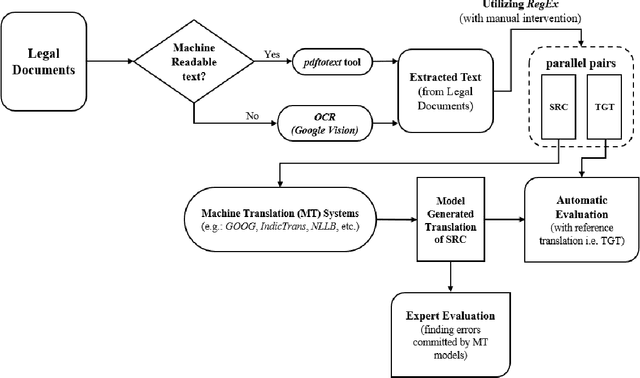

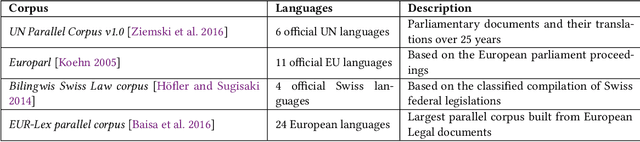
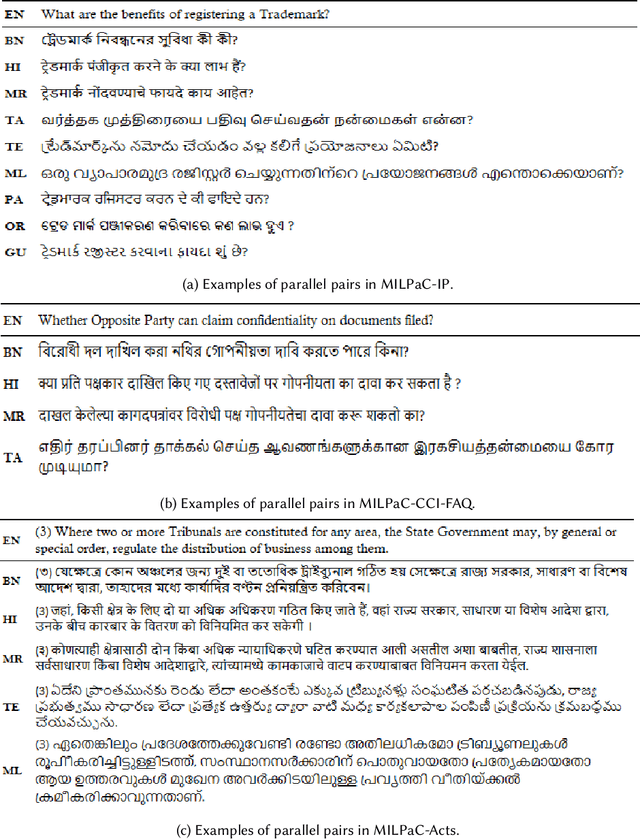
Most legal text in the Indian judiciary is written in complex English due to historical reasons. However, only about 10% of the Indian population is comfortable in reading English. Hence legal text needs to be made available in various Indian languages, possibly by translating the available legal text from English. Though there has been a lot of research on translation to and between Indian languages, to our knowledge, there has not been much prior work on such translation in the legal domain. In this work, we construct the first high-quality legal parallel corpus containing aligned text units in English and nine Indian languages, that includes several low-resource languages. We also benchmark the performance of a wide variety of Machine Translation (MT) systems over this corpus, including commercial MT systems, open-source MT systems and Large Language Models. Through a comprehensive survey by Law practitioners, we check how satisfied they are with the translations by some of these MT systems, and how well automatic MT evaluation metrics agree with the opinions of Law practitioners.
Analyzing Different Expert-Opined Strategies to Enhance the Effect on the Goal of a Multi-Attribute Decision-Making System Using a Concept of Effort Propagation and Application in Enhancement of High School Students' Performance
Jul 05, 2023In many real-world multi-attribute decision-making (MADM) problems, mining the inter-relationships and possible hierarchical structures among the factors are considered to be one of the primary tasks. But, besides that, one major task is to determine an optimal strategy to work on the factors to enhance the effect on the goal attribute. This paper proposes two such strategies, namely parallel and hierarchical effort assignment, and propagation strategies. The concept of effort propagation through a strategy is formally defined and described in the paper. Both the parallel and hierarchical strategies are divided into sub-strategies based on whether the assignment of efforts to the factors is uniform or depends upon some appropriate heuristics related to the factors in the system. The adapted and discussed heuristics are the relative significance and effort propagability of the factors. The strategies are analyzed for a real-life case study regarding Indian high school administrative factors that play an important role in enhancing students' performance. Total effort propagation of around 7%-15% to the goal is seen across the proposed strategies given a total of 1 unit of effort to the directly accessible factors of the system. A comparative analysis is adapted to determine the optimal strategy among the proposed ones to enhance student performance most effectively. The highest effort propagation achieved in the work is approximately 14.4348%. The analysis in the paper establishes the necessity of research towards the direction of effort propagation analysis in case of decision-making problems.
Iterative Hierarchy and Ranking Process (IHRP): A Novel Effective Hierarchy Method for Densely Connected Systems and Case Study in Student Performance Assessment
Jun 17, 2023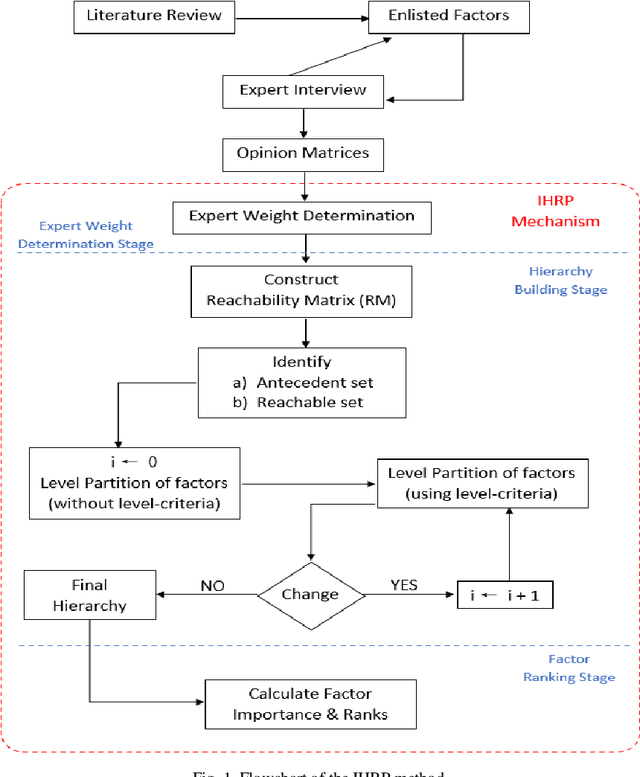
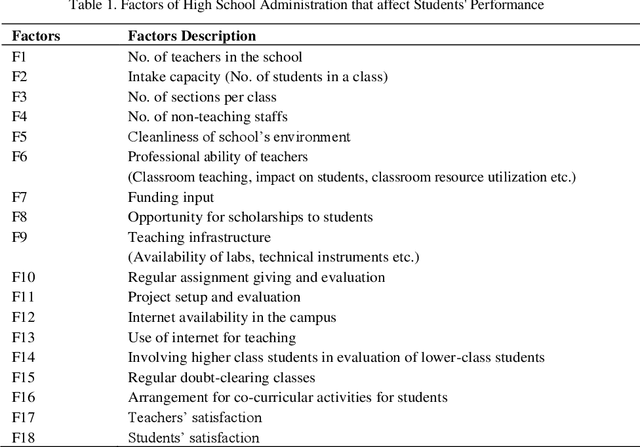
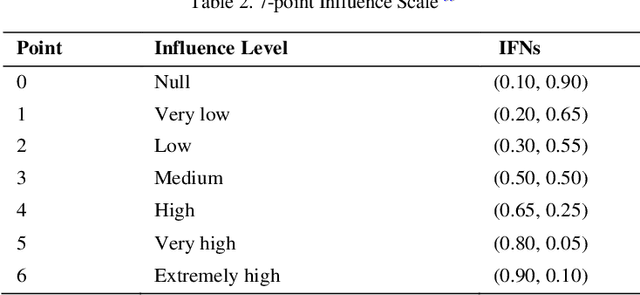
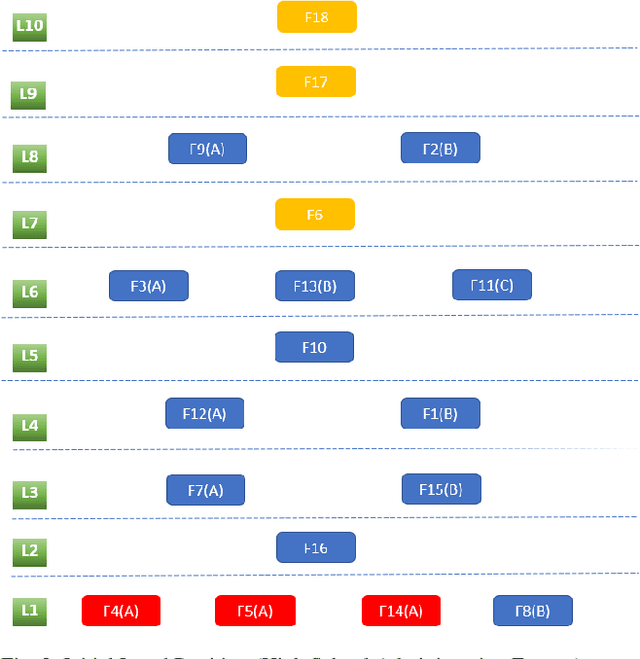
In real-life decision-making problems, determining the influences of the factors on the decision attribute is one of the primary tasks. To affect the decision attribute most, finding a proper hierarchy among the factors and determining their importance values in the system becomes quite important. Interpretive structural modeling (ISM) is a widely used hierarchy-building method that mines factor inter-influences based on expert opinions. This paper discusses one of the main drawbacks of the conventional ISM method in systems where the factors are densely interrelated. We refer to such systems as "dense systems". We propose a novel iterative hierarchy-building technique, called 'Iterative Hierarchy and Ranking Process'(IHRP) which performs effectively in such dense systems. To take the vagueness of the expert opinions into account, intuitionistic fuzzy linguistics has been used in the research work. In this paper, we propose a two-stage calculation of the relative importance of the factors in the system based on their hierarchical positions and rank the factors accordingly. We have performed a case study on student performance assessment by taking up novel Indian high-school administrative factors' data collected by surveying the experts in this field. A comparative study has been conducted in terms of the correlation of the factor ranking achieved by the proposed method and conventional ISM method with that of standard outranking methods like TOPSIS, and VIKOR. Our proposed IHRP framework achieves an 85-95% correlation compared to a 50-60% correlation for the conventional ISM method. This proves the effectiveness of the proposed method in determining a better hierarchy than the conventional method, especially in dense systems.