 Add to Chrome
 Add to Firefox
 Add to Edge
Network Structure in UK Payment Flows: Evidence on Economic Interdependencies and Implications for Real-Time Measurement
Apr 02, 2026
Network analysis of inter-industry payment flows reveals structural economic relationships invisible to traditional bilateral measurement approaches, with significant implications for real-time economic monitoring. Analysing 532,346 UK payment records (2017--2024) across 89 industry sectors, we demonstrate that graph-theoretic features which include centrality measures and clustering coefficients improve payment flow forecasting by 8.8 percentage points beyond traditional time-series methods. Critically, network features prove most valuable during economic disruptions: during the COVID-19 pandemic, when traditional forecasting accuracy collapsed (R2} falling from 0.38 to 0.19), network-enhanced models maintained substantially better performance, with network contributions reaching +13.8 percentage points. The analysis identifies Financial Services, Wholesale Trade, and Professional Services as structurally central industries whose network positions indicate systemic importance beyond their transaction volumes. Network density increased 12.5\% over the sample period, with visible disruption during 2020 followed by recovery exceeding pre-pandemic integration levels. These findings suggest payment network monitoring could enhance official statistics production by providing leading indicators of structural economic change and improving nowcasting accuracy during periods when traditional temporal patterns prove unreliable.

High-Order Evolving Graphs for Enhanced Representation of Traffic Dynamics
Sep 18, 2024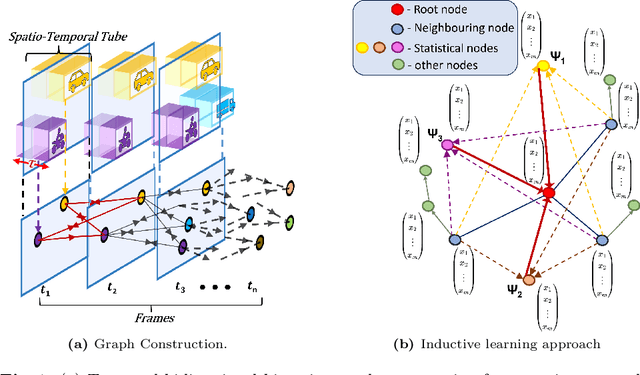

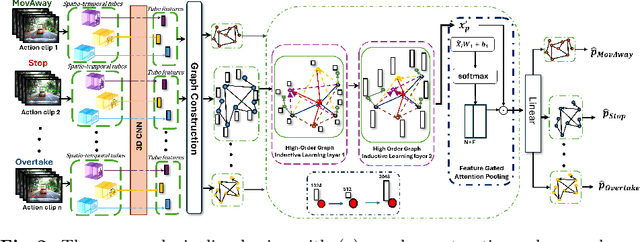
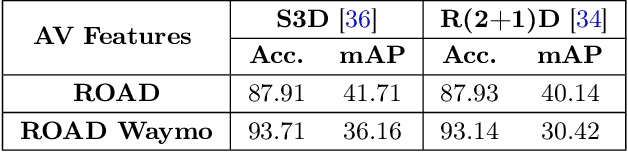
We present an innovative framework for traffic dynamics analysis using High-Order Evolving Graphs, designed to improve spatio-temporal representations in autonomous driving contexts. Our approach constructs temporal bidirectional bipartite graphs that effectively model the complex interactions within traffic scenes in real-time. By integrating Graph Neural Networks (GNNs) with high-order multi-aggregation strategies, we significantly enhance the modeling of traffic scene dynamics, providing a more accurate and detailed analysis of these interactions. Additionally, we incorporate inductive learning techniques inspired by the GraphSAGE framework, enabling our model to adapt to new and unseen traffic scenarios without the need for retraining, thus ensuring robust generalization. Through extensive experiments on the ROAD and ROAD Waymo datasets, we establish a comprehensive baseline for further developments, demonstrating the potential of our method in accurately capturing traffic behavior. Our results emphasize the value of high-order statistical moments and feature-gated attention mechanisms in improving traffic behavior analysis, laying the groundwork for advancing autonomous driving technologies. Our source code is available at: https://github.com/Addy-1998/High_Order_Graphs