 Add to Chrome
 Add to Firefox
 Add to Edge
Kinetic-Mamba: Mamba-Assisted Predictions of Stiff Chemical Kinetics
Dec 16, 2025
Accurate chemical kinetics modeling is essential for combustion simulations, as it governs the evolution of complex reaction pathways and thermochemical states. In this work, we introduce Kinetic-Mamba, a Mamba-based neural operator framework that integrates the expressive power of neural operators with the efficient temporal modeling capabilities of Mamba architectures. The framework comprises three complementary models: (i) a standalone Mamba model that predicts the time evolution of thermochemical state variables from given initial conditions; (ii) a constrained Mamba model that enforces mass conservation while learning the state dynamics; and (iii) a regime-informed architecture employing two standalone Mamba models to capture dynamics across temperature-dependent regimes. We additionally develop a latent Kinetic-Mamba variant that evolves dynamics in a reduced latent space and reconstructs the full state on the physical manifold. We evaluate the accuracy and robustness of Kinetic-Mamba using both time-decomposition and recursive-prediction strategies. We further assess the extrapolation capabilities of the model on varied out-of-distribution datasets. Computational experiments on Syngas and GRI-Mech 3.0 reaction mechanisms demonstrate that our framework achieves high fidelity in predicting complex kinetic behavior using only the initial conditions of the state variables.

NeuroSEM: A hybrid framework for simulating multiphysics problems by coupling PINNs and spectral elements
Jul 30, 2024
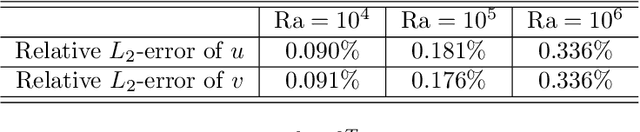
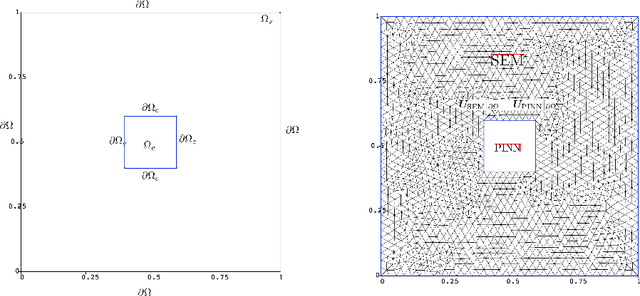
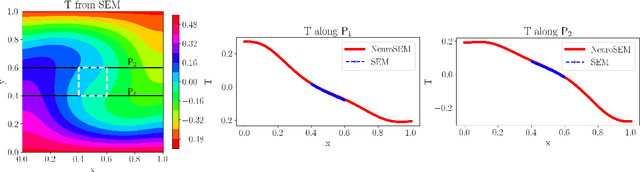
Multiphysics problems that are characterized by complex interactions among fluid dynamics, heat transfer, structural mechanics, and electromagnetics, are inherently challenging due to their coupled nature. While experimental data on certain state variables may be available, integrating these data with numerical solvers remains a significant challenge. Physics-informed neural networks (PINNs) have shown promising results in various engineering disciplines, particularly in handling noisy data and solving inverse problems. However, their effectiveness in forecasting nonlinear phenomena in multiphysics regimes is yet to be fully established. This study introduces NeuroSEM, a hybrid framework integrating PINNs with the high-fidelity Spectral Element Method (SEM) solver, Nektar++. NeuroSEM leverages strengths of both PINNs and SEM, providing robust solutions for multiphysics problems. PINNs are trained to assimilate data and model physical phenomena in specific subdomains, which are then integrated into Nektar++. We demonstrate the efficiency and accuracy of NeuroSEM for thermal convection in cavity flow and flow past a cylinder. The framework effectively handles data assimilation by addressing those subdomains and state variables where data are available. We applied NeuroSEM to the Rayleigh-B\'enard convection system, including cases with missing thermal boundary conditions. Our results indicate that NeuroSEM accurately models the physical phenomena and assimilates the data within the specified subdomains. The framework's plug-and-play nature facilitates its extension to other multiphysics or multiscale problems. Furthermore, NeuroSEM is optimized for an efficient execution on emerging integrated GPU-CPU architectures. This hybrid approach enhances the accuracy and efficiency of simulations, making it a powerful tool for tackling complex engineering challenges in various scientific domains.