 Add to Chrome
 Add to Firefox
 Add to Edge
PLATO: Pointer Learner for Agent and Task Openness
Jul 29, 2026
Open agent systems (OASYS) are increasingly prevalent in real-world domains where the sets of agents and tasks change unpredictably over time. Such openness, including agent openness (AO) and task openness (TO), poses a fundamental challenge to multi-agent reinforcement learning (MARL), which typically assumes fixed state and action spaces. Existing methods address openness only partially: padding and masking approaches introduce artificial bounds, while recent graph-based or hypergraph methods handle one dimension of openness but still depend on restrictive assumptions. In this paper, we introduce Pointer Learner for Agent and Task Openness (PLATO), a pointer-network-based actor combined with a centralized graph neural network (GNN) critic, trained with multi-agent proximal policy optimization under a centralized training and decentralized execution paradigm. Our pointer-based actor outputs distributions directly over the current task set. This directly supports changing action spaces without masking or retraining. Our GNN critic encodes agent-task interactions as a graph that changes shape with task and agent composition. Together, these components consider AO and TO without the boundedness of existing approaches. We formalize PLATO in a Task-and-Agent-Open Markov Game (TaAgO-MG), extending prior task-open formulations, and prove it is well-defined over the resulting unbounded state and action spaces. We evaluate PLATO with the Methods for Open Agent Systems Evaluation Initiative (MOASEI) wildfire suppression domain, an environment designed for open multi-agent system evaluation, and we demonstrate strong performance and more consistent zero-shot generalization than state-of-the-art baselines in OASYS.

An Algorithmic Introduction to Savings Circles
Mar 23, 2022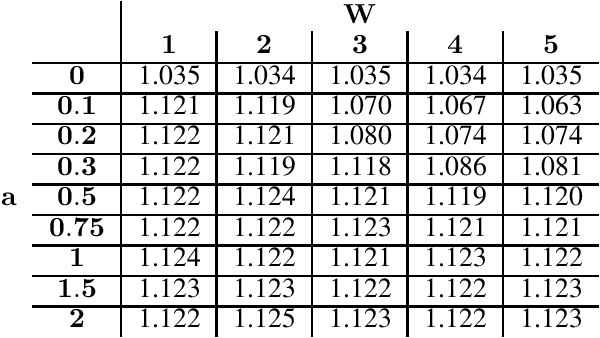
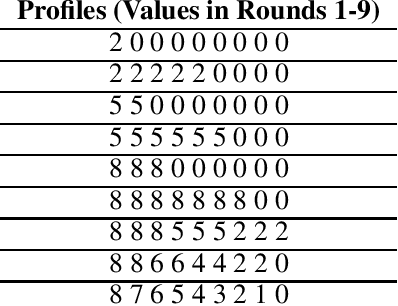
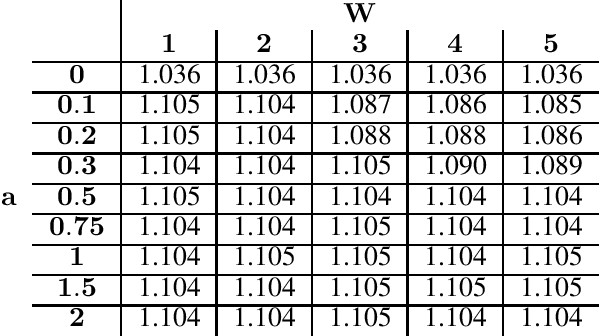
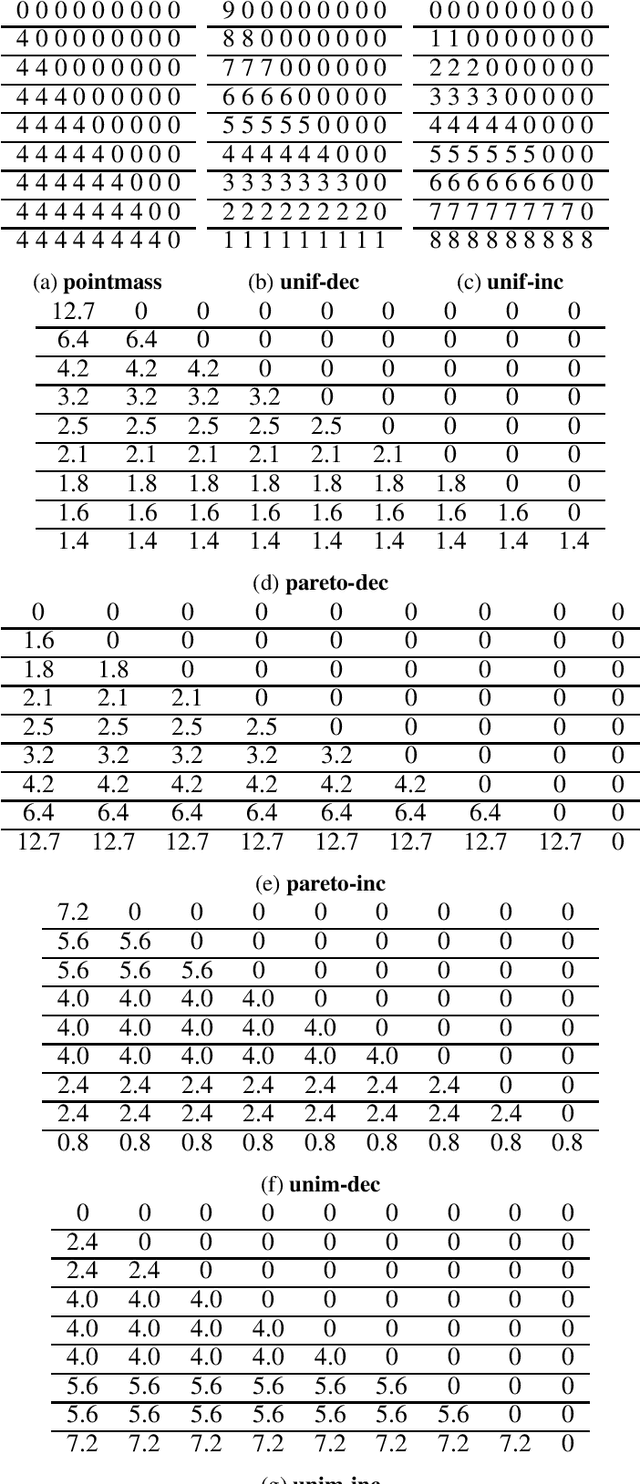
Rotating savings and credit associations (roscas) are informal financial organizations common in settings where communities have reduced access to formal financial institutions. In a rosca, a fixed group of participants regularly contribute sums of money to a pot. This pot is then allocated periodically using lottery, aftermarket, or auction mechanisms. Roscas are empirically well-studied in economics. They are, however, challenging to study theoretically due to their dynamic nature. Typical economic analyses of roscas stop at coarse ordinal welfare comparisons to other credit allocation mechanisms, leaving much of roscas' ubiquity unexplained. In this work, we take an algorithmic perspective on the study of roscas. Building on techniques from the price of anarchy literature, we present worst-case welfare approximation guarantees. We further experimentally compare the welfare of outcomes as key features of the environment vary. These cardinal welfare analyses further rationalize the prevalence of roscas. We conclude by discussing several other promising avenues.