 Add to Chrome
 Add to Firefox
 Add to Edge
BERT and CNN integrated Neural Collaborative Filtering for Recommender Systems
Dec 17, 2025
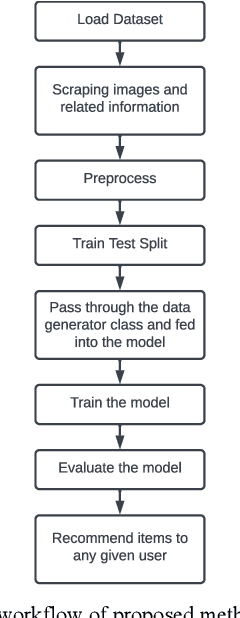
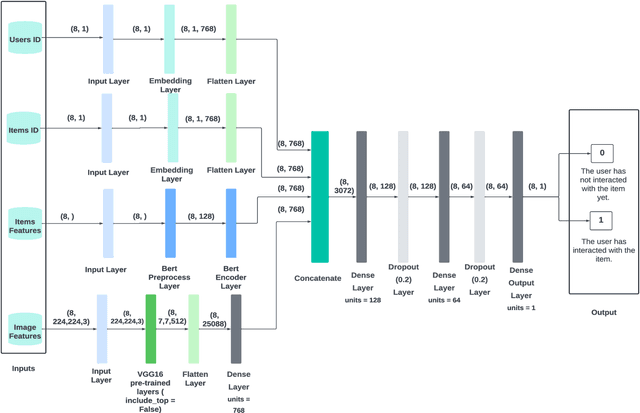
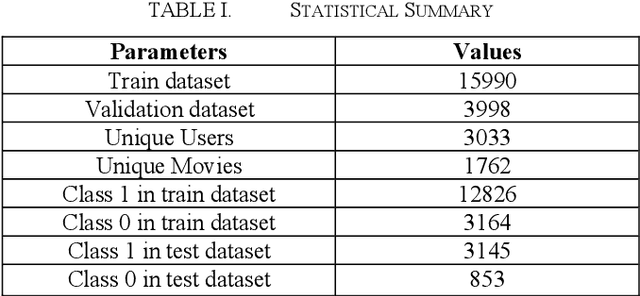
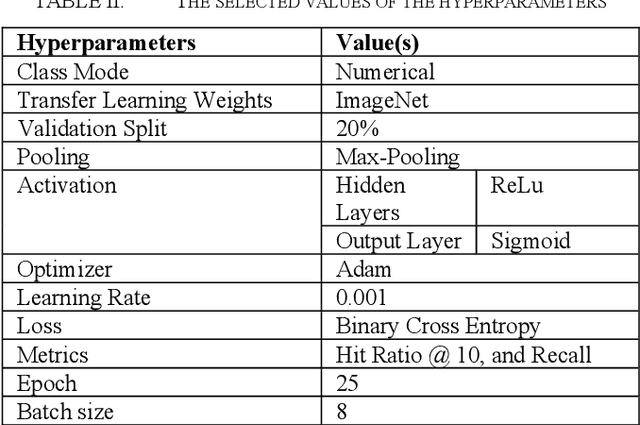
Every day, a significant number of users visit the internet for different needs. The owners of a website generate profits from the user interaction with the contents or items of the website. A robust recommendation system can increase user interaction with a website by recommending items according to the user's unique preferences. BERT and CNN-integrated neural collaborative filtering (NCF) have been proposed for the recommendation system in this experiment. The proposed model takes inputs from the user and item profile and finds the user's interest. This model can handle numeric, categorical, and image data to extract the latent features from the inputs. The model is trained and validated on a small sample of the MovieLens dataset for 25 epochs. The same dataset has been used to train and validate a simple NCF and a BERT-based NCF model and compared with the proposed model. The proposed model outperformed those two baseline models. The obtained result for the proposed model is 0.72 recall and 0.486 Hit Ratio @ 10 for 799 users on the MovieLens dataset. This experiment concludes that considering both categorical and image data can improve the performance of a recommendation system.

Brain Tumor Segmentation using Enhanced U-Net Model with Empirical Analysis
Oct 24, 2022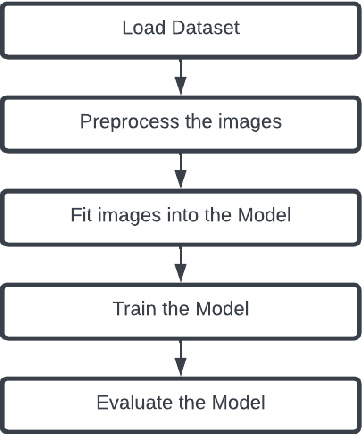

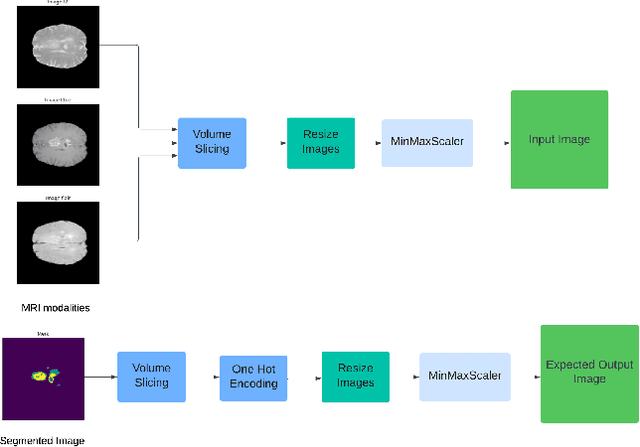
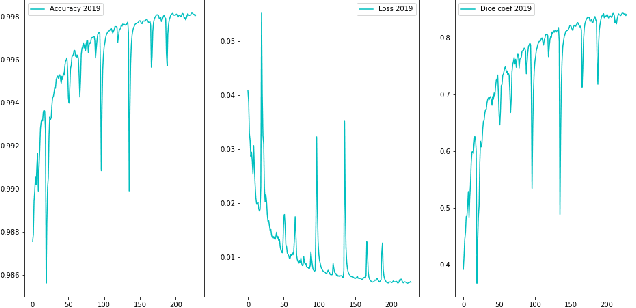
Cancer of the brain is deadly and requires careful surgical segmentation. The brain tumors were segmented using U-Net using a Convolutional Neural Network (CNN). When looking for overlaps of necrotic, edematous, growing, and healthy tissue, it might be hard to get relevant information from the images. The 2D U-Net network was improved and trained with the BraTS datasets to find these four areas. U-Net can set up many encoder and decoder routes that can be used to get information from images that can be used in different ways. To reduce computational time, we use image segmentation to exclude insignificant background details. Experiments on the BraTS datasets show that our proposed model for segmenting brain tumors from MRI (MRI) works well. In this study, we demonstrate that the BraTS datasets for 2017, 2018, 2019, and 2020 do not significantly differ from the BraTS 2019 dataset's attained dice scores of 0.8717 (necrotic), 0.9506 (edema), and 0.9427 (enhancing).