 Add to Chrome
 Add to Firefox
 Add to Edge
Validation of Diagnostic Artificial Intelligence Models for Prostate Pathology in a Middle Eastern Cohort
Dec 19, 2025
Background: Artificial intelligence (AI) is improving the efficiency and accuracy of cancer diagnostics. The performance of pathology AI systems has been almost exclusively evaluated on European and US cohorts from large centers. For global AI adoption in pathology, validation studies on currently under-represented populations - where the potential gains from AI support may also be greatest - are needed. We present the first study with an external validation cohort from the Middle East, focusing on AI-based diagnosis and Gleason grading of prostate cancer. Methods: We collected and digitised 339 prostate biopsy specimens from the Kurdistan region, Iraq, representing a consecutive series of 185 patients spanning the period 2013-2024. We evaluated a task-specific end-to-end AI model and two foundation models in terms of their concordance with pathologists and consistency across samples digitised on three scanner models (Hamamatsu, Leica, and Grundium). Findings: Grading concordance between AI and pathologists was similar to pathologist-pathologist concordance with Cohen's quadratically weighted kappa 0.801 vs. 0.799 (p=0.9824). Cross-scanner concordance was high (quadratically weighted kappa > 0.90) for all AI models and scanner pairs, including low-cost compact scanner. Interpretation: AI models demonstrated pathologist-level performance in prostate histopathology assessment. Compact scanners can provide a route for validation studies in non-digitalised settings and enable cost-effective adoption of AI in laboratories with limited sample volumes. This first openly available digital pathology dataset from the Middle East supports further research into globally equitable AI pathology. Funding: SciLifeLab and Wallenberg Data Driven Life Science Program, Instrumentarium Science Foundation, Karolinska Institutet Research Foundation.

A Novel Poisoned Water Detection Method Using Smartphone Embedded Wi-Fi Technology and Machine Learning Algorithms
Feb 13, 2023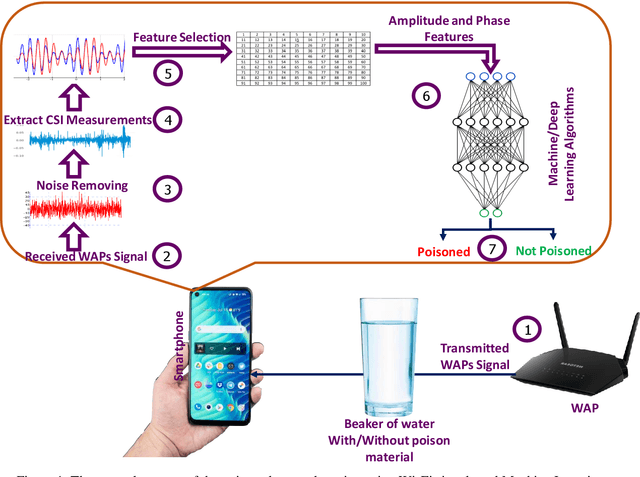
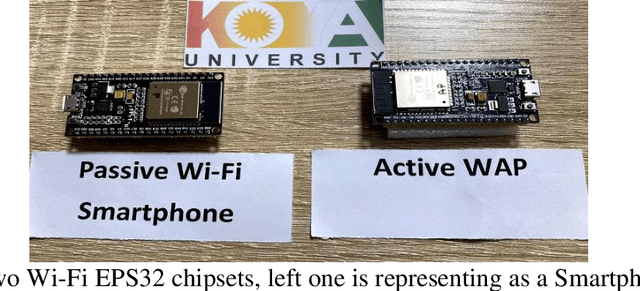
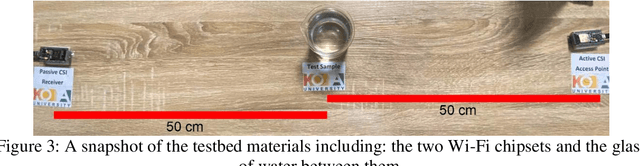
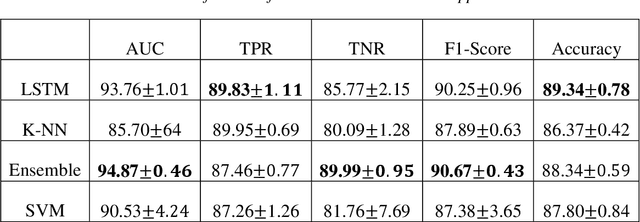
Water is a necessary fluid to the human body and automatic checking of its quality and cleanness is an ongoing area of research. One such approach is to present the liquid to various types of signals and make the amount of signal attenuation an indication of the liquid category. In this article, we have utilized the Wi-Fi signal to distinguish clean water from poisoned water via training different machine learning algorithms. The Wi-Fi access points (WAPs) signal is acquired via equivalent smartphone-embedded Wi-Fi chipsets, and then Channel-State-Information CSI measures are extracted and converted into feature vectors to be used as input for machine learning classification algorithms. The measured amplitude and phase of the CSI data are selected as input features into four classifiers k-NN, SVM, LSTM, and Ensemble. The experimental results show that the model is adequate to differentiate poison water from clean water with a classification accuracy of 89% when LSTM is applied, while 92% classification accuracy is achieved when the AdaBoost-Ensemble classifier is applied.