 Add to Chrome
 Add to Firefox
 Add to Edge
The Energy Blind Spot: NVIDIA's Flagship Edge AI Hardware Cannot Support Process-Level Energy Attribution
May 26, 2026
Agentic AI workloads - where a single user goal triggers multi-step orchestration, tool calls, retries, and failure recovery - are being targeted for edge deployment, with NVIDIA, Dell, HP, ASUS, MSI, Acer, and Gigabyte all shipping GB10-based desktop AI systems in 2026. We recently demonstrated that orchestration structure dominates agentic energy cost, with workflows consuming 4.33x more energy per successful goal than linear baselines and OOI reaching 7.63x for multi-step reasoning tasks. Separately, Rajat et al. show that CPU-side processing accounts for up to 90.6% of total latency and 44% of total dynamic energy in agentic workloads. We report a systematic energy-observability audit of the ASUS Ascent GX10 (GB10 SoC) and find that the platform exposes no CPU energy counter, no INA power-rail monitor, no IPMI/BMC, and no SCMI powercap protocol through any supported software interface. The only on-device energy telemetry is instantaneous GPU power via NVML. We further discover that the MediaTek firmware already computes per-rail energy internally via an undocumented ACPI interface (SPBM), but NVIDIA states there are "no plans to expose CPU rail information." On-device per-process energy attribution - as performed on x86 via RAPL - is therefore not reproducible on this platform through supported interfaces. We formalize a hardware requirements specification for energy-attributed AI, propose an interim calibration bridge using external DC metering combined with GPU subtraction, and identify a standards-track path via SCMI powercap. Our findings motivate the low-carbon computing community to demand energy observability as a first-class hardware requirement.

BugGen: A Self-Correcting Multi-Agent LLM Pipeline for Realistic RTL Bug Synthesis
Jun 12, 2025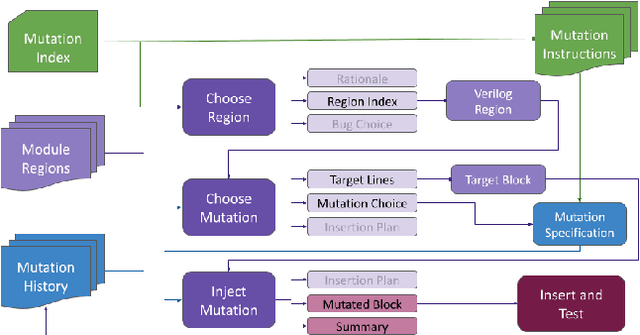
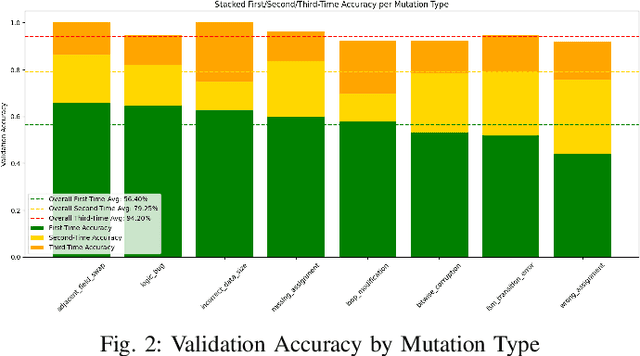
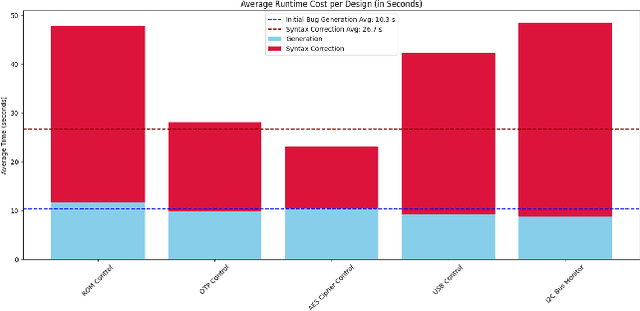
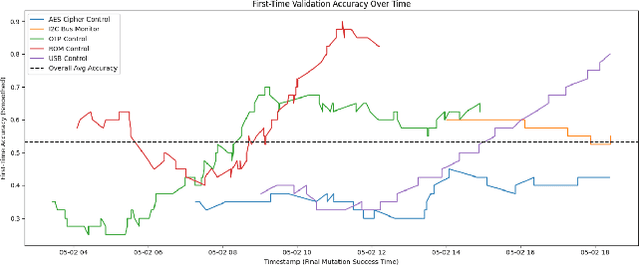
Hardware complexity continues to strain verification resources, motivating the adoption of machine learning (ML) methods to improve debug efficiency. However, ML-assisted debugging critically depends on diverse and scalable bug datasets, which existing manual or automated bug insertion methods fail to reliably produce. We introduce BugGen, a first of its kind, fully autonomous, multi-agent pipeline leveraging Large Language Models (LLMs) to systematically generate, insert, and validate realistic functional bugs in RTL. BugGen partitions modules, selects mutation targets via a closed-loop agentic architecture, and employs iterative refinement and rollback mechanisms to ensure syntactic correctness and functional detectability. Evaluated across five OpenTitan IP blocks, BugGen produced 500 unique bugs with 94% functional accuracy and achieved a throughput of 17.7 validated bugs per hour-over five times faster than typical manual expert insertion. Additionally, BugGen identified 104 previously undetected bugs in OpenTitan regressions, highlighting its utility in exposing verification coverage gaps. Compared against Certitude, BugGen demonstrated over twice the syntactic accuracy, deeper exposure of testbench blind spots, and more functionally meaningful and complex bug scenarios. Furthermore, when these BugGen-generated datasets were employed to train ML-based failure triage models, we achieved high classification accuracy (88.1%-93.2%) across different IP blocks, confirming the practical utility and realism of generated bugs. BugGen thus provides a scalable solution for generating high-quality bug datasets, significantly enhancing verification efficiency and ML-assisted debugging.