 Add to Chrome
 Add to Firefox
 Add to Edge
Back analysis of microplane model parameters using soft computing methods
Feb 10, 2009
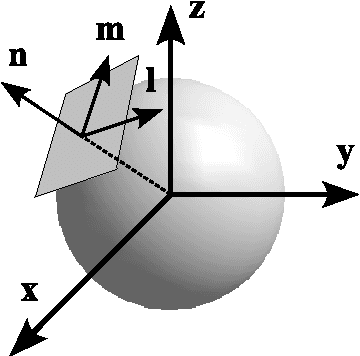


A new procedure based on layered feed-forward neural networks for the microplane material model parameters identification is proposed in the present paper. Novelties are usage of the Latin Hypercube Sampling method for the generation of training sets, a systematic employment of stochastic sensitivity analysis and a genetic algorithm-based training of a neural network by an evolutionary algorithm. Advantages and disadvantages of this approach together with possible extensions are thoroughly discussed and analyzed.
* 21 pages, 27 figures, 7 tables

Novel anisotropic continuum-discrete damage model capable of representing localized failure of massive structures. Part II: identification from tests under heterogeneous stress field
Feb 10, 2009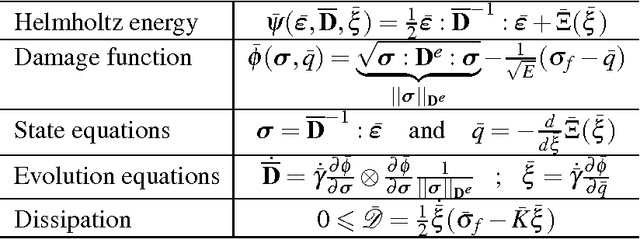


In Part I of this paper we have presented a simple model capable of describing the localized failure of a massive structure. In this part, we discuss the identification of the model parameters from two kinds of experiments: a uniaxial tensile test and a three-point bending test. The former is used only for illustration of material parameter response dependence, and we focus mostly upon the latter, discussing the inverse optimization problem for which the specimen is subjected to a heterogeneous stress field.
* 18 pages, 12 figures, 6 tables
A competitive comparison of different types of evolutionary algorithms
Feb 10, 2009


This paper presents comparison of several stochastic optimization algorithms developed by authors in their previous works for the solution of some problems arising in Civil Engineering. The introduced optimization methods are: the integer augmented simulated annealing (IASA), the real-coded augmented simulated annealing (RASA), the differential evolution (DE) in its original fashion developed by R. Storn and K. Price and simplified real-coded differential genetic algorithm (SADE). Each of these methods was developed for some specific optimization problem; namely the Chebychev trial polynomial problem, the so called type 0 function and two engineering problems - the reinforced concrete beam layout and the periodic unit cell problem respectively. Detailed and extensive numerical tests were performed to examine the stability and efficiency of proposed algorithms. The results of our experiments suggest that the performance and robustness of RASA, IASA and SADE methods are comparable, while the DE algorithm performs slightly worse. This fact together with a small number of internal parameters promotes the SADE method as the most robust for practical use.
* 25 pages, 8 figures, 5 tables
Improvements of real coded genetic algorithms based on differential operators preventing premature convergence
Feb 10, 2009


This paper presents several types of evolutionary algorithms (EAs) used for global optimization on real domains. The interest has been focused on multimodal problems, where the difficulties of a premature convergence usually occurs. First the standard genetic algorithm (SGA) using binary encoding of real values and its unsatisfactory behavior with multimodal problems is briefly reviewed together with some improvements of fighting premature convergence. Two types of real encoded methods based on differential operators are examined in detail: the differential evolution (DE), a very modern and effective method firstly published by R. Storn and K. Price, and the simplified real-coded differential genetic algorithm SADE proposed by the authors. In addition, an improvement of the SADE method, called CERAF technology, enabling the population of solutions to escape from local extremes, is examined. All methods are tested on an identical set of objective functions and a systematic comparison based on a reliable methodology is presented. It is confirmed that real coded methods generally exhibit better behavior on real domains than the binary algorithms, even when extended by several improvements. Furthermore, the positive influence of the differential operators due to their possibility of self-adaptation is demonstrated. From the reliability point of view, it seems that the real encoded differential algorithm, improved by the technology described in this paper, is a universal and reliable method capable of solving all proposed test problems.
* 23 pages, 2 figures, 4 tables
Optimal design and optimal control of structures undergoing finite rotations and elastic deformations
Feb 10, 2009


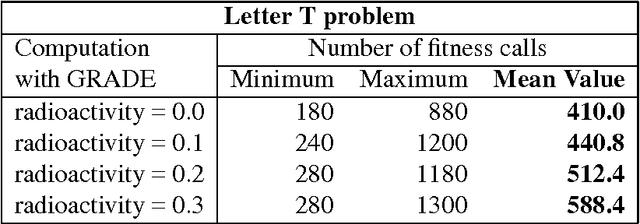
In this work we deal with the optimal design and optimal control of structures undergoing large rotations. In other words, we show how to find the corresponding initial configuration and the corresponding set of multiple load parameters in order to recover a desired deformed configuration or some desirable features of the deformed configuration as specified more precisely by the objective or cost function. The model problem chosen to illustrate the proposed optimal design and optimal control methodologies is the one of geometrically exact beam. First, we present a non-standard formulation of the optimal design and optimal control problems, relying on the method of Lagrange multipliers in order to make the mechanics state variables independent from either design or control variables and thus provide the most general basis for developing the best possible solution procedure. Two different solution procedures are then explored, one based on the diffuse approximation of response function and gradient method and the other one based on genetic algorithm. A number of numerical examples are given in order to illustrate both the advantages and potential drawbacks of each of the presented procedures.
* 35 pages, 11 figures