 Add to Chrome
 Add to Firefox
 Add to Edge
ThermalTap: Passive Application Fingerprinting in VR Headsets via Thermal Side Channels
May 13, 2026
Standalone virtual reality (VR) headsets process highly sensitive personal, professional, and health-related data, yet their susceptibility to non-contact physical side channels remains largely unexplored. Existing side-channel attacks typically require malicious software execution or physical access to peripherals, making them conspicuous and potentially patchable. This paper introduces ThermalTap, the first passive, non-contact side-channel attack that fingerprints VR applications solely from the long-wave infrared (LWIR) radiation emitted by the headset chassis. By treating a headset's thermal signature as a high-fidelity proxy for internal computational workloads, ThermalTap enables remote application inference at meter-scale distances without any device interaction. To achieve robust performance in real-world settings, the system combines a commodity thermal camera with a multi-modal sensor suite (capturing ambient temperature, humidity, and airflow) to normalize environmental noise. We evaluate ThermalTap using six applications across three commercial standalone headsets. In indoor settings, ThermalTap identifies applications with over 90% accuracy using only 10 seconds of thermal camera data. Under outdoor conditions, with longer session-level observations, several applications remain identifiable despite environmental variability, with the strongest outdoor application reaching 81% accuracy. Our findings establish thermal radiation as a fundamental and unavoidable privacy risk for immersive systems, exposing a critical security gap that bypasses current software-level protections and physical access controls.

We Have a Package for You! A Comprehensive Analysis of Package Hallucinations by Code Generating LLMs
Jun 12, 2024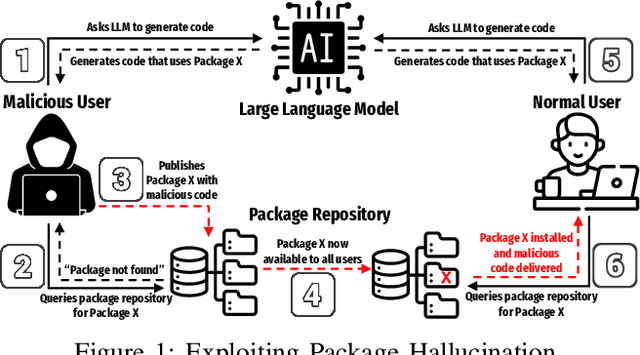
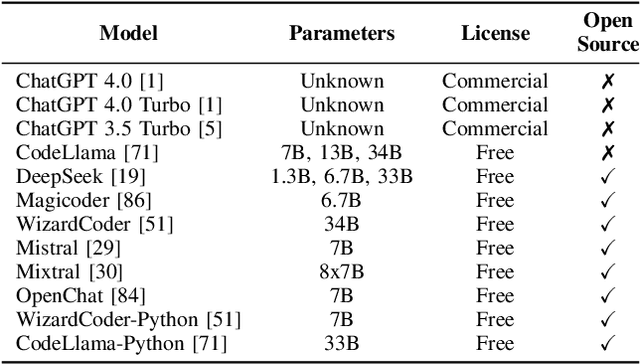
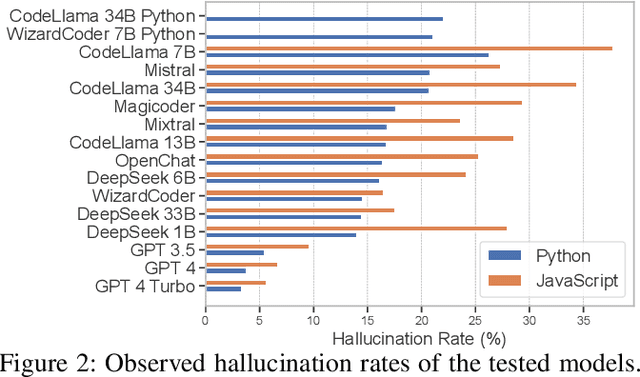
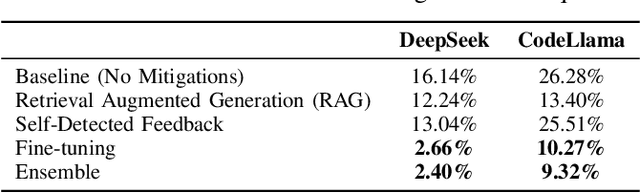
The reliance of popular programming languages such as Python and JavaScript on centralized package repositories and open-source software, combined with the emergence of code-generating Large Language Models (LLMs), has created a new type of threat to the software supply chain: package hallucinations. These hallucinations, which arise from fact-conflicting errors when generating code using LLMs, represent a novel form of package confusion attack that poses a critical threat to the integrity of the software supply chain. This paper conducts a rigorous and comprehensive evaluation of package hallucinations across different programming languages, settings, and parameters, exploring how different configurations of LLMs affect the likelihood of generating erroneous package recommendations and identifying the root causes of this phenomena. Using 16 different popular code generation models, across two programming languages and two unique prompt datasets, we collect 576,000 code samples which we analyze for package hallucinations. Our findings reveal that 19.7% of generated packages across all the tested LLMs are hallucinated, including a staggering 205,474 unique examples of hallucinated package names, further underscoring the severity and pervasiveness of this threat. We also implemented and evaluated mitigation strategies based on Retrieval Augmented Generation (RAG), self-detected feedback, and supervised fine-tuning. These techniques demonstrably reduced package hallucinations, with hallucination rates for one model dropping below 3%. While the mitigation efforts were effective in reducing hallucination rates, our study reveals that package hallucinations are a systemic and persistent phenomenon that pose a significant challenge for code generating LLMs.