 Add to Chrome
 Add to Firefox
 Add to Edge
UNATE: UNsupervised ATomic Embedding for crystal structures property prediction
May 25, 2026
Accurately predicting crystal properties is critical for accelerating materials discovery, but it is often limited by scarce labeled data and costly theoretical calculations. To alleviate this, we propose UNATE (Unsupervised Atomic Embedding), a framework that leverages structural information extracted from unlabeled crystal structures. UNATE integrates an unsupervised denoising autoencoder with self-supervised contrastive learning to learn robust atomic representations, which are then used as input features for downstream property prediction. Experimental results show that replacing raw atomic numbers with UNATE-pretrained node embeddings yields a 2.7\% improvement over the full-data baseline. Notably, the benefits become more pronounced in scenarios with limited labeled data, reaching improvements of up to 10\% when only 25\% of the labeled data is used.

Machine Learning Multiscale Interactions
May 25, 2026Realistic physical systems are characterised by emergent interactions across multiple length and time scales, posing a significant challenge for predictive machine learning (ML) models. Most scientific ML models focus on a narrow range of interactions. While machine learning force fields (MLFFs) offer near-quantum accuracy, the ubiquitous message-passing layers miss long-range many-body effects. Here we introduce the Multiscale Structural Ensemble (MuSE), a hierarchical model that uses Soft Coarse-Graining Pooling to construct coarse representations from smooth fractional assignments of atoms to coarse nodes, enabling MLFF modules to operate across multiple scales. MuSE is architecture-agnostic and coupled with SO3krates, MACE, and PaiNN MLFFs for both molecules and materials. We demonstrate the power of MuSE through Hessian-based benchmarks, folding trajectories for biomolecules, and energy profiles in molecule-graphene nanostructures, where MuSE accurately captures quantum-mechanical interactions at relevant scales -- unlike other recent long-range ML models.
A Cartesian Encoding Graph Neural Network for Crystal Structures Property Prediction: Application to Thermal Ellipsoid Estimation
Jan 30, 2025

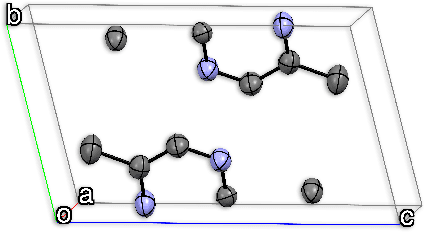

In diffraction-based crystal structure analysis, thermal ellipsoids, quantified via Anisotropic Displacement Parameters (ADPs), are critical yet challenging to determine. ADPs capture atomic vibrations, reflecting thermal and structural properties, but traditional computation is often expensive. This paper introduces CartNet, a novel graph neural network (GNN) for efficiently predicting crystal properties by encoding atomic geometry into Cartesian coordinates alongside the crystal temperature. CartNet integrates a neighbour equalization technique to emphasize covalent and contact interactions, and a Cholesky-based head to ensure valid ADP predictions. We also propose a rotational SO(3) data augmentation strategy during training to handle unseen orientations. An ADP dataset with over 200,000 experimental crystal structures from the Cambridge Structural Database (CSD) was curated to validate the approach. CartNet significantly reduces computational costs and outperforms existing methods in ADP prediction by 10.87%, while delivering a 34.77% improvement over theoretical approaches. We further evaluated CartNet on other datasets covering formation energy, band gap, total energy, energy above the convex hull, bulk moduli, and shear moduli, achieving 7.71% better results on the Jarvis Dataset and 13.16% on the Materials Project Dataset. These gains establish CartNet as a state-of-the-art solution for diverse crystal property predictions. Project website and online demo: https://www.ee.ub.edu/cartnet