 Add to Chrome
 Add to Firefox
 Add to Edge
FORGE:Fine-grained Multimodal Evaluation for Manufacturing Scenarios
Apr 08, 2026
The manufacturing sector is increasingly adopting Multimodal Large Language Models (MLLMs) to transition from simple perception to autonomous execution, yet current evaluations fail to reflect the rigorous demands of real-world manufacturing environments. Progress is hindered by data scarcity and a lack of fine-grained domain semantics in existing datasets. To bridge this gap, we introduce FORGE. Wefirst construct a high-quality multimodal dataset that combines real-world 2D images and 3D point clouds, annotated with fine-grained domain semantics (e.g., exact model numbers). We then evaluate 18 state-of-the-art MLLMs across three manufacturing tasks, namely workpiece verification, structural surface inspection, and assembly verification, revealing significant performance gaps. Counter to conventional understanding, the bottleneck analysis shows that visual grounding is not the primary limiting factor. Instead, insufficient domain-specific knowledge is the key bottleneck, setting a clear direction for future research. Beyond evaluation, we show that our structured annotations can serve as an actionable training resource: supervised fine-tuning of a compact 3B-parameter model on our data yields up to 90.8% relative improvement in accuracy on held-out manufacturing scenarios, providing preliminary evidence for a practical pathway toward domain-adapted manufacturing MLLMs. The code and datasets are available at https://ai4manufacturing.github.io/forge-web.

FairGC: Fairness-aware Graph Condensation
Mar 30, 2026Graph condensation (GC) has become a vital strategy for scaling Graph Neural Networks by compressing massive datasets into small, synthetic node sets. While current GC methods effectively maintain predictive accuracy, they are primarily designed for utility and often ignore fairness constraints. Because these techniques are bias-blind, they frequently capture and even amplify demographic disparities found in the original data. This leads to synthetic proxies that are unsuitable for sensitive applications like credit scoring or social recommendations. To solve this problem, we introduce FairGC, a unified framework that embeds fairness directly into the graph distillation process. Our approach consists of three key components. First, a Distribution-Preserving Condensation module synchronizes the joint distributions of labels and sensitive attributes to stop bias from spreading. Second, a Spectral Encoding module uses Laplacian eigen-decomposition to preserve essential global structural patterns. Finally, a Fairness-Enhanced Neural Architecture employs multi-domain fusion and a label-smoothing curriculum to produce equitable predictions. Rigorous evaluations on four real-world datasets, show that FairGC provides a superior balance between accuracy and fairness. Our results confirm that FairGC significantly reduces disparity in Statistical Parity and Equal Opportunity compared to existing state-of-the-art condensation models. The codes are available at https://github.com/LuoRenqiang/FairGC.
Prototype-Enhanced Multi-View Learning for Thyroid Nodule Ultrasound Classification
Mar 30, 2026Thyroid nodule classification using ultrasound imaging is essential for early diagnosis and clinical decision-making; however, despite promising performance on in-distribution data, existing deep learning methods often exhibit limited robustness and generalisation when deployed across different ultrasound devices or clinical environments. This limitation is mainly attributed to the pronounced heterogeneity of thyroid ultrasound images, which can lead models to capture spurious correlations rather than reliable diagnostic cues. To address this challenge, we propose PEMV-thyroid, a Prototype-Enhanced Multi-View learning framework that accounts for data heterogeneity by learning complementary representations from multiple feature perspectives and refining decision boundaries through a prototype-based correction mechanism with mixed prototype information. By integrating multi-view representations with prototype-level guidance, the proposed approach enables more stable representation learning under heterogeneous imaging conditions. Extensive experiments on multiple thyroid ultrasound datasets demonstrate that PEMV-thyroid consistently outperforms state-of-the-art methods, particularly in cross-device and cross-domain evaluation scenarios, leading to improved diagnostic accuracy and generalisation performance in real-world clinical settings. The source code is available at https://github.com/chenyangmeii/Prototype-Enhanced-Multi-View-Learning.
Debiasing Large Language Models via Adaptive Causal Prompting with Sketch-of-Thought
Jan 13, 2026Despite notable advancements in prompting methods for Large Language Models (LLMs), such as Chain-of-Thought (CoT), existing strategies still suffer from excessive token usage and limited generalisability across diverse reasoning tasks. To address these limitations, we propose an Adaptive Causal Prompting with Sketch-of-Thought (ACPS) framework, which leverages structural causal models to infer the causal effect of a query on its answer and adaptively select an appropriate intervention (i.e., standard front-door and conditional front-door adjustments). This design enables generalisable causal reasoning across heterogeneous tasks without task-specific retraining. By replacing verbose CoT with concise Sketch-of-Thought, ACPS enables efficient reasoning that significantly reduces token usage and inference cost. Extensive experiments on multiple reasoning benchmarks and LLMs demonstrate that ACPS consistently outperforms existing prompting baselines in terms of accuracy, robustness, and computational efficiency.
Effective Policy Learning for Multi-Agent Online Coordination Beyond Submodular Objectives
Sep 26, 2025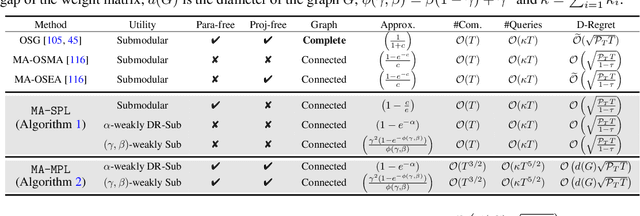

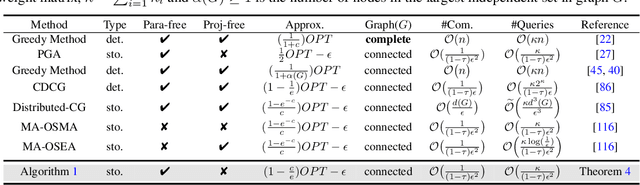
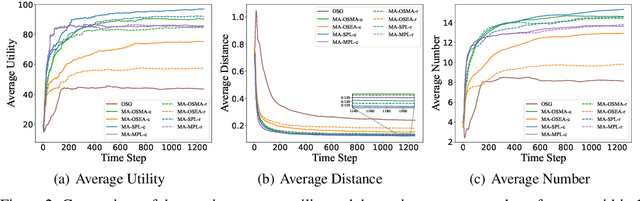
In this paper, we present two effective policy learning algorithms for multi-agent online coordination(MA-OC) problem. The first one, \texttt{MA-SPL}, not only can achieve the optimal $(1-\frac{c}{e})$-approximation guarantee for the MA-OC problem with submodular objectives but also can handle the unexplored $\alpha$-weakly DR-submodular and $(\gamma,\beta)$-weakly submodular scenarios, where $c$ is the curvature of the investigated submodular functions, $\alpha$ denotes the diminishing-return(DR) ratio and the tuple $(\gamma,\beta)$ represents the submodularity ratios. Subsequently, in order to reduce the reliance on the unknown parameters $\alpha,\gamma,\beta$ inherent in the \texttt{MA-SPL} algorithm, we further introduce the second online algorithm named \texttt{MA-MPL}. This \texttt{MA-MPL} algorithm is entirely \emph{parameter-free} and simultaneously can maintain the same approximation ratio as the first \texttt{MA-SPL} algorithm. The core of our \texttt{MA-SPL} and \texttt{MA-MPL} algorithms is a novel continuous-relaxation technique termed as \emph{policy-based continuous extension}. Compared with the well-established \emph{multi-linear extension}, a notable advantage of this new \emph{policy-based continuous extension} is its ability to provide a lossless rounding scheme for any set function, thereby enabling us to tackle the challenging weakly submodular objectives. Finally, extensive simulations are conducted to validate the effectiveness of our proposed algorithms.
MaskPro: Linear-Space Probabilistic Learning for Strict (N:M)-Sparsity on Large Language Models
Jun 15, 2025The rapid scaling of large language models (LLMs) has made inference efficiency a primary bottleneck in the practical deployment. To address this, semi-structured sparsity offers a promising solution by strategically retaining $N$ elements out of every $M$ weights, thereby enabling hardware-friendly acceleration and reduced memory. However, existing (N:M)-compatible approaches typically fall into two categories: rule-based layerwise greedy search, which suffers from considerable errors, and gradient-driven combinatorial learning, which incurs prohibitive training costs. To tackle these challenges, we propose a novel linear-space probabilistic framework named MaskPro, which aims to learn a prior categorical distribution for every $M$ consecutive weights and subsequently leverages this distribution to generate the (N:M)-sparsity throughout an $N$-way sampling without replacement. Furthermore, to mitigate the training instability induced by the high variance of policy gradients in the super large combinatorial space, we propose a novel update method by introducing a moving average tracker of loss residuals instead of vanilla loss. Finally, we conduct comprehensive theoretical analysis and extensive experiments to validate the superior performance of MaskPro, as well as its excellent scalability in memory efficiency and exceptional robustness to data samples. Our code is available at https://github.com/woodenchild95/Maskpro.git.
Improving large language models with concept-aware fine-tuning
Jun 09, 2025Large language models (LLMs) have become the cornerstone of modern AI. However, the existing paradigm of next-token prediction fundamentally limits their ability to form coherent, high-level concepts, making it a critical barrier to human-like understanding and reasoning. Take the phrase "ribonucleic acid" as an example: an LLM will first decompose it into tokens, i.e., artificial text fragments ("rib", "on", ...), then learn each token sequentially, rather than grasping the phrase as a unified, coherent semantic entity. This fragmented representation hinders deeper conceptual understanding and, ultimately, the development of truly intelligent systems. In response, we introduce Concept-Aware Fine-Tuning (CAFT), a novel multi-token training method that redefines how LLMs are fine-tuned. By enabling the learning of sequences that span multiple tokens, this method fosters stronger concept-aware learning. Our experiments demonstrate significant improvements compared to conventional next-token finetuning methods across diverse tasks, including traditional applications like text summarization and domain-specific ones like de novo protein design. Multi-token prediction was previously only possible in the prohibitively expensive pretraining phase; CAFT, to our knowledge, is the first to bring the multi-token setting to the post-training phase, thus effectively democratizing its benefits for the broader community of practitioners and researchers. Finally, the unexpected effectiveness of our proposed method suggests wider implications for the machine learning research community. All code and data are available at https://github.com/michaelchen-lab/caft-llm
Towards Heterogeneous Continual Graph Learning via Meta-knowledge Distillation
May 23, 2025Machine learning on heterogeneous graphs has experienced rapid advancement in recent years, driven by the inherently heterogeneous nature of real-world data. However, existing studies typically assume the graphs to be static, while real-world graphs are continuously expanding. This dynamic nature requires models to adapt to new data while preserving existing knowledge. To this end, this work addresses the challenge of continual learning on heterogeneous graphs by introducing the Meta-learning based Knowledge Distillation framework (MKD), designed to mitigate catastrophic forgetting in evolving heterogeneous graph structures. MKD combines rapid task adaptation through meta-learning on limited samples with knowledge distillation to achieve an optimal balance between incorporating new information and maintaining existing knowledge. To improve the efficiency and effectiveness of sample selection, MKD incorporates a novel sampling strategy that selects a small number of target-type nodes based on node diversity and maintains fixed-size buffers for other types. The strategy retrieves first-order neighbors along metapaths and selects important neighbors based on their structural relevance, enabling the sampled subgraphs to retain key topological and semantic information. In addition, MKD introduces a semantic-level distillation module that aligns the attention distributions over different metapaths between teacher and student models, encouraging semantic consistency beyond the logit level. Comprehensive evaluations across three benchmark datasets validate MKD's effectiveness in handling continual learning scenarios on expanding heterogeneous graphs.
Fairness in Graph Learning Augmented with Machine Learning: A Survey
Apr 30, 2025Augmenting specialised machine learning techniques into traditional graph learning models has achieved notable success across various domains, including federated graph learning, dynamic graph learning, and graph transformers. However, the intricate mechanisms of these specialised techniques introduce significant challenges in maintaining model fairness, potentially resulting in discriminatory outcomes in high-stakes applications such as recommendation systems, disaster response, criminal justice, and loan approval. This paper systematically examines the unique fairness challenges posed by Graph Learning augmented with Machine Learning (GL-ML). It highlights the complex interplay between graph learning mechanisms and machine learning techniques, emphasising how the augmentation of machine learning both enhances and complicates fairness. Additionally, we explore four critical techniques frequently employed to improve fairness in GL-ML methods. By thoroughly investigating the root causes and broader implications of fairness challenges in this rapidly evolving field, this work establishes a robust foundation for future research and innovation in GL-ML fairness.
Crisp: Cognitive Restructuring of Negative Thoughts through Multi-turn Supportive Dialogues
Apr 24, 2025Cognitive Restructuring (CR) is a psychotherapeutic process aimed at identifying and restructuring an individual's negative thoughts, arising from mental health challenges, into more helpful and positive ones via multi-turn dialogues. Clinician shortage and stigma urge the development of human-LLM interactive psychotherapy for CR. Yet, existing efforts implement CR via simple text rewriting, fixed-pattern dialogues, or a one-shot CR workflow, failing to align with the psychotherapeutic process for effective CR. To address this gap, we propose CRDial, a novel framework for CR, which creates multi-turn dialogues with specifically designed identification and restructuring stages of negative thoughts, integrates sentence-level supportive conversation strategies, and adopts a multi-channel loop mechanism to enable iterative CR. With CRDial, we distill Crisp, a large-scale and high-quality bilingual dialogue dataset, from LLM. We then train Crispers, Crisp-based conversational LLMs for CR, at 7B and 14B scales. Extensive human studies show the superiority of Crispers in pointwise, pairwise, and intervention evaluations.